

FAQS
China Top Outdoor Gas Heater Manufacturers for Global Buyers
China has become a major sourcing base for outdoor gas heater products, supported by mature metalworking, gas-control, and export supply chains. For global buyers, this creates both opportunity and responsibility. A competitive factory is not defined by price alone. It must demonstrate stable combustion, consistent assembly, traceable materials, and practical after-sales support.
Industry research shows continued demand for outdoor comfort in restaurants, hotels, terraces, and private gardens. Grand View Research’s Outdoor Heating Market reports identify commercial hospitality as an important application segment, while Fortune Business Insights also forecasts steady market growth through the next decade. However, reported market values differ considerably. The numbers are not perfectly comparable. Some studies include electric infrared heaters, fire pits, and broader outdoor heating equipment.
That detail matters.
A reliable China outdoor gas heater manufacturer should provide documented testing, clear fuel specifications, and production evidence. Buyers should examine burner performance, flame-failure protection, gas pressure settings, ignition systems, and weather-resistant finishes. Relevant requirements may include EN 14543, CSA, CE-related conformity procedures, or destination-market rules, depending on the sales region. Certification alone is not enough. Factory audits, sample testing, and batch inspection remain essential.
The best suppliers combine engineering experience with flexible customization. They can adjust heat output, reflector size, wheel design, packaging, and branding without weakening safety controls. This guide introduces leading Chinese manufacturers for global buyers and compares their capabilities, product focus, certifications, and export reliability. Some supplier information can change quickly, so independent verification is still necessary before placing an order.
Types of Outdoor Gas Heaters Made in China
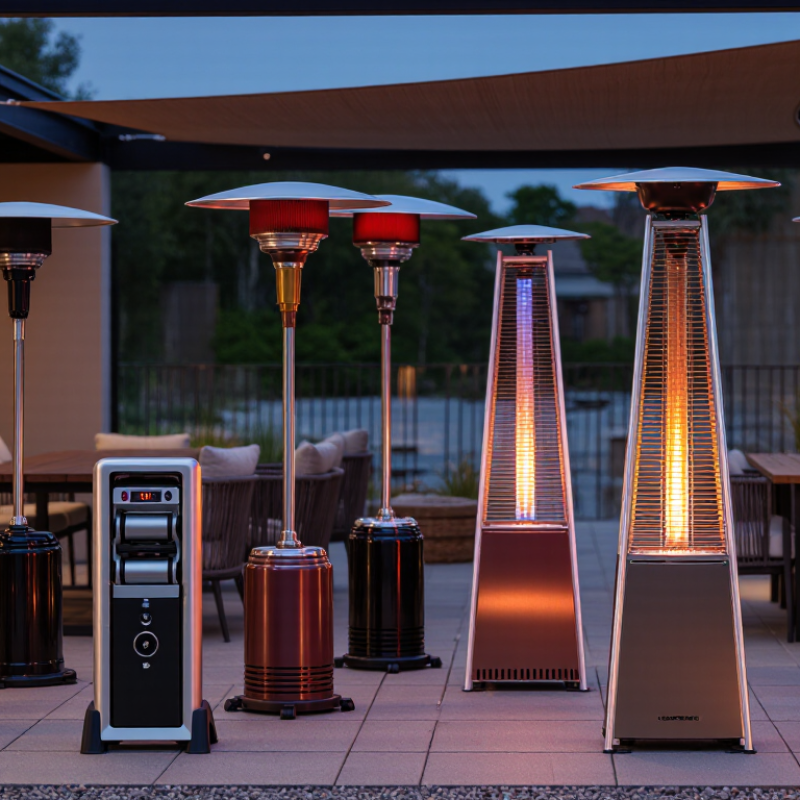
China’s outdoor gas heater manufacturers produce several formats for global buyers. Mushroom heaters use LPG and direct warmth downward across patios. Pyramid heaters add a visible flame column and suit hospitality spaces. Wall-mounted and ceiling-mounted gas units save floor space, but installation requires careful ventilation planning. Portable tabletop models serve smaller terraces and outdoor dining tables.
Grand View Research estimates the global outdoor heating market at about USD 1.4 billion in 2023, with growth above 6% annually through 2030. Its analysis identifies gas and electric systems as major product categories. MarketsandMarkets also reports rising demand for commercial outdoor heating, driven by restaurants, hotels, and extended outdoor seating. This supports China’s broad production mix, including stainless-steel housings, ceramic burners, flame-failure protection, and adjustable heat controls. Yet, product quality varies. A lower purchase price can hide weak regulators, poor welds, or unstable bases.
Tips: Match the heater to wind exposure, fuel access, and seating distance. Ask for thermal-output data, gas-consumption figures, factory inspection records, and independent safety testing. Check whether replacement burners and regulators remain available. Outdoor conditions are harsh. Even attractive finishes may corrode near saltwater. A practical sample test often reveals more than a polished catalogue. хәв
| Outdoor Gas Heater Type | Typical Heat Output | Common Fuel Options | Typical Heating Area | Main Construction Materials | Key Features | Typical Applications | Important Buyer Specifications |
|---|---|---|---|---|---|---|---|
| Mushroom Patio Heater | 40,000–48,000 BTU/h (11.7–14.1 kW) |
LPG/Propane Natural Gas | Approximately 15–25 m², depending on wind and ambient temperature | Stainless steel or coated steel body; aluminum reflector; stainless steel burner | Freestanding design, directional reflector, adjustable heat control, wheels on many models | Restaurant terraces, hotel patios, gardens, outdoor dining areas | Gas inlet type, cylinder compartment size, tip-over switch, flame-failure protection, reflector diameter |
| Pyramid Flame Heater | 30,000–50,000 BTU/h (8.8–14.7 kW) |
LPG/Propane Natural Gas | Approximately 12–20 m² | Aluminum or steel frame; borosilicate or tempered glass tube; stainless steel burner | Visible flame column, decorative appearance, electronic or piezo ignition, protective mesh | Hotels, resorts, cafés, event venues, outdoor lounges | Glass tube diameter and height, safety guard design, ignition system, wind resistance, drainage arrangement |
| Tabletop Gas Heater | 10,000–20,000 BTU/h (2.9–5.9 kW) |
LPG/Propane | Approximately 6–12 m² | Aluminum or stainless steel housing; steel reflector; tempered glass components on selected designs | Compact footprint, low installation requirement, portable operation, suitable for table-level warmth | Small balconies, restaurant tables, patios, camping and leisure areas | Gas cartridge or cylinder compatibility, base stability, operating time, carry weight, clearance requirements |
| Gas Fire Pit Table | 40,000–60,000 BTU/h (11.7–17.6 kW) |
LPG/Propane Natural Gas | Approximately 15–25 m² | Powder-coated steel, aluminum, stainless steel burner pan, tempered glass wind guard | Integrated table surface, decorative lava rock or fire glass, concealed gas compartment | Residential patios, hospitality areas, garden seating and outdoor entertainment spaces | Burner pan drainage, media quantity, tabletop dimensions, gas hose routing, weather cover, ignition type |
| Wall-Mounted Gas Heater | 20,000–40,000 BTU/h (5.9–11.7 kW) |
LPG/Propane Natural Gas | Approximately 10–20 m² | Powder-coated steel or stainless steel casing; ceramic or metal radiant burner | Space-saving installation, directional radiant heat, reduced floor obstruction | Covered balconies, restaurant walls, patios and commercial outdoor seating | Mounting bracket strength, minimum wall clearances, ventilation requirements, gas connection location |
| Ceiling-Mounted Infrared Heater | 30,000–100,000 BTU/h (8.8–29.3 kW) |
Natural Gas LPG/Propane | Approximately 20–45 m² per unit, subject to mounting height and wind exposure | Stainless steel or coated steel housing; ceramic tile or metal radiant emitter | Overhead installation, efficient radiant heat delivery, minimal floor space usage | Large terraces, stadium concourses, warehouses, hospitality and commercial venues | Mounting height, ventilation, exhaust requirements, gas pressure, control zoning and installation access |
| Portable Camping Gas Heater | 5,000–20,000 BTU/h (1.5–5.9 kW) |
Propane Butane | Approximately 5–12 m² in suitable outdoor conditions | Steel or aluminum body; ceramic radiant panel; heat-resistant grille | Lightweight format, folding or carry-handle design, quick ignition, compact storage | Camping, fishing, hunting, workshops and emergency outdoor use | Outdoor-use classification, ventilation warnings, cylinder connection, oxygen-depletion protection and tip-over shutoff |
| Commercial Radiant Tube Heater | 50,000–150,000 BTU/h (14.7–44.0 kW) |
Natural Gas LPG/Propane | Approximately 30–80 m², depending on layout and mounting height | Steel or stainless steel emitter tube; aluminum or steel reflector; coated steel control housing | Long-area radiant coverage, modular installation, suitable for semi-enclosed commercial spaces | Large restaurant terraces, workshops, warehouses, transport facilities and event structures | Flue or ventilation design, tube length, mounting height, burner control, zone management and local code compliance |
| Buyer note: Heat output, coverage and fuel compatibility are typical product ranges rather than fixed specifications. Actual performance depends on burner design, gas pressure, installation height, wind conditions, enclosure design and local safety regulations. For international procurement, request the applicable certification documents, gas pressure data, installation manual, packaging specifications and replacement-parts list before ordering. | |||||||
Related Posts
-
How to Choose the Best Natural Gas Patio Heater for Your Needs?
-
How to Choose the Best Gas Patio Heater for Your Business
-
Top 10 Outdoor Gas Heaters for Your Patio Comfort and Warmth?
-
Exploring Innovations in Gas Patio Heater Products at the 2025 Canton Fair
-
2026 Top Outdoor Gas Heaters: Ultimate Buying Guide and Reviews
-

Top 10 Gas Patio Heater Options for Your Outdoor Space?