How to Choose the Best Gas Patio Heater for Your Business
A patio can look inviting at noon and feel empty once the evening air turns cold. For restaurants, hotels, and event venues, that change can affect how long guests stay outdoors. A gas patio heater may help extend comfortable use of an outdoor area, but choosing one involves more than comparing heat-output figures.
Start with the space. Measure the patio, note whether it is open or partly sheltered, and consider where guests sit, walk, and gather. A tall heater beside a narrow walkway may create an awkward obstacle, even if its coverage looks impressive on paper. Check the manufacturer’s stated heating range, fuel requirements, stability, and required clearances. Follow the operating and maintenance instructions, and make sure the intended location is suitable for the model. Details matter.
Then weigh daily operations. Staff may need to move, clean, or inspect the unit, while managers need to plan fuel supply, storage, and routine upkeep. Compare the purchase price with expected operating costs and the effort involved in keeping the heater ready for service. These costs add up. A model with attractive output is not automatically the best fit; noise, appearance, and ease of use can matter just as much to guests and staff.
This guide examines the practical trade-offs behind selecting a gas patio heater for a business. It focuses on matching heater type and capacity to the setting, checking features that affect day-to-day use, and asking useful questions before buying. Some choices remain a judgment call. A quick site assessment can reveal issues that product photos cannot.
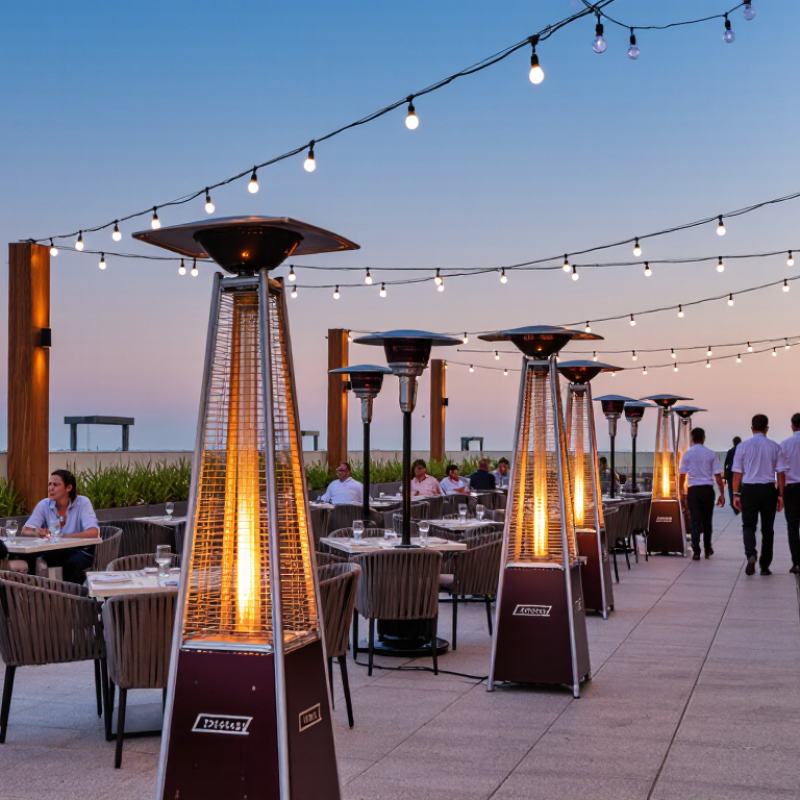
Understanding How Gas Patio Heaters Work
Choosing a gas patio heater for a business starts with understanding its heat path. Gas flows from a cylinder or fixed line through a regulator. The regulator lowers pressure before fuel reaches the control valve. A burner then mixes gas with air and creates a controlled flame. The flame heats a metal emitter, which sends infrared energy toward tables, chairs, and nearby guests. A reflector directs some heat downward instead of letting it rise.
For a restaurant or hotel, this mechanism affects every buying decision. Propane models offer flexible placement, while natural-gas units need a permanent connection. Heat output is usually measured in BTUs, but a larger number does not guarantee comfort. Wind, ceiling height, seating density, and open sides change real performance.
During site checks, I look for even warmth at guest level, not just a bright burner. A unit may feel powerful beside one table and weak across the patio. That difference matters during busy service.
Ventilation is essential because combustion consumes oxygen and produces exhaust gases. Outdoor heaters still need clearances from walls, umbrellas, awnings, and combustible furniture. Built-in safety controls may stop gas flow if the flame goes out or the unit tilts.
Staff should inspect hoses, connections, reflectors, and burner openings before use. I once treated heat output as the main buying factor; that was too narrow. Fuel access, serviceability, stability, and daily operating habits deserve equal attention. A licensed professional should verify fixed connections and local installation requirements.
Assessing Your Business’s Outdoor Heating Needs
Choosing a gas patio heater should begin with your business’s outdoor heating needs, not a product catalog. Observe the space during a busy evening. Record seating capacity, table spacing, wind exposure, and the coldest operating hours. NOAA’s 1991–2020 Climate Normals provide local temperature data, helping you estimate seasonal demand instead of relying on guesswork.
Fuel planning also matters. The U.S. Energy Information Administration reports that propane contains approximately 91,452 Btu per gallon. Natural gas contains about 1,036 Btu per cubic foot. Compare these figures with the heater’s rated output and expected operating hours. A restaurant with exposed sidewalks may need more units than a sheltered courtyard. However, adding more heaters is not always better. Poor placement can create hot spots while leaving customers near the entrance uncomfortable.
Tips: Create a simple heat map of the seating area. Mark windy corners, shaded tables, and frequently used walkways. Ask staff where guests actually complain about cold. Check ventilation, clearance, storage, and local fire requirements with a qualified professional. ASHRAE guidance emphasizes thermal comfort as a balance of air temperature, air movement, humidity, clothing, and activity. That means a single temperature reading may mislead you. My own practical mistake was measuring the center of a patio and ignoring the draft beside the building. Reflect on the whole customer experience, not only the heater’s output.
Comparing Heater Types, Fuel Options, and Heat Output
Choosing the best gas patio heater starts with the space, not the catalogue. In my site checks, mushroom-style heaters spread warmth broadly across dining areas. Their visible flame creates atmosphere, but wind can weaken comfort at the table. Infrared models deliver more focused heat toward people and often suit narrow terraces. They may feel less decorative. That trade-off matters.
Fuel choice affects installation, running cost, and daily convenience. LPG cylinders offer flexible placement, but staff must monitor refills and storage carefully. Natural gas can support frequent use, although fixed connections limit layout changes. Electric infrared heaters avoid combustion fumes and may simplify indoor-adjacent applications, but they need suitable electrical capacity.
Heat output deserves more attention than headline numbers. Compare BTU or kilowatts with ceiling height, open sides, and local wind. A high-output unit is not automatically better. It can waste fuel while leaving nearby guests uncomfortable.
A lesson from the field: My early mistake was judging performance during a calm afternoon. Evening drafts told a different story. Test the heater where customers actually sit, then measure comfort at table height.
Keep controls accessible, and check that the unit includes stable construction, flame protection, and clear maintenance guidance. I would also question vague heat-area claims. Real patios rarely match laboratory conditions.
Evaluating Safety, Installation, and Operating Costs
Choosing a gas patio heater for a business begins with safety, not appearance.
During site checks, I look for stable bases, guarded burners, and clear overhead space. A busy café needs equipment that remains steady when chairs shift or wind rises. Verify flame-failure protection, automatic shutoff, and accessible controls before comparing heat output. Never place a heater near awnings, stored cartons, or customer traffic. Required clearances matter, even when a patio feels open.
Installation affects both risk and daily expense. Use a qualified gas technician to inspect connections, ventilation, regulators, and cylinder storage. Local requirements may differ, so confirm permits and inspection needs before delivery. A poorly positioned unit can waste heat against a wall and encourage staff to increase fuel use. Track weekly gas consumption, service visits, and downtime for a realistic operating-cost estimate.
My early estimates were too optimistic. Windy evenings changed everything.
Tips
Measure the seating area at closing time, when drafts are easier to notice. Choose several smaller units if one large heater creates hot and cold zones. Train staff to check hoses, odors, and unusual flame color each shift. Keep a written maintenance log. It sounds tedious, but one missed inspection can cost more than expected. Ask suppliers for fuel-consumption figures at different settings, not only maximum output.
Selecting a Heater Based on Durability and Maintenance
For a business, durability starts with the heater’s daily environment, not its showroom finish. In my experience managing outdoor seating, wind, rain, spilled drinks, and constant moving expose weak construction quickly. Choose corrosion-resistant metal, stable feet, protected controls, and a burner guard that does not rattle. A heavy unit feels reassuring, but weight alone proves little. Inspect welds, fasteners, wheels, and the heat reflector before buying. Ask for documented testing and a clear parts supply process.
Maintenance should fit a busy team. A useful heater allows staff to wipe surfaces, clear the burner area, and check the hose without dismantling half the unit. Keep a written inspection log. Record ignition problems, unusual flames, loose fittings, and damaged seals. Clean grease and dust before they harden. Small neglect becomes expensive. Have qualified technicians inspect gas connections and safety devices according to local requirements. Never treat a weak flame as a minor inconvenience; it may indicate blockage, pressure trouble, or a damaged component.
Weather covers help, but they are not magic. They trap moisture when fitted over a warm heater. Let the unit cool and dry first. I once stored equipment too quickly after a damp evening, and surface corrosion appeared within weeks. That mistake changed our routine. Still, maintenance plans can fail during peak season. Build spare cleaning tools and replacement parts into the operating budget. A heater that takes longer to service may look cheaper initially, yet staff time and downtime quietly raise its real cost. Test the routine with the people who will perform it. Their criticism may reveal flaws that specifications miss.