FAQS
Why Choose an IR Panel Heater for Efficient Heating?
Why choose an ir panel heater when conventional systems already fill many homes? The answer begins with how heat feels, not only how it is measured. An ir panel heater warms people and nearby surfaces through infrared radiation. You may notice a calmer, more even sensation beside a wall-mounted panel. Cold corners can still exist, however. Room size, insulation, ceiling height, and panel placement all matter.
Dr. Richard Lowes, a heating policy specialist, has said, “Low-carbon heating succeeds when performance, comfort, and real household use are considered together.” This principle fits infrared heating well. A panel can operate quietly, without moving air or creating fan noise. It may also support room-by-room control, especially when paired with suitable thermostats and timers. A bathroom mirror panel, for example, can provide targeted warmth during a short morning routine. A living-room panel may need different settings during a quiet evening.
The technology is not magic.
Its efficiency depends on correct design. Poor insulation can increase heat loss, while an oversized panel may waste energy through unnecessary operation. We should also question broad claims about “instant savings.” Actual results depend on electricity prices, control habits, building fabric, and comfort expectations. This guide examines those practical details closely. It considers installation, running costs, safety, maintenance, and everyday comfort. The goal is not to praise every product. It is to identify when an ir panel heater makes sensible heating sense.
What Is an Infrared Panel Heater and How Does It Work?
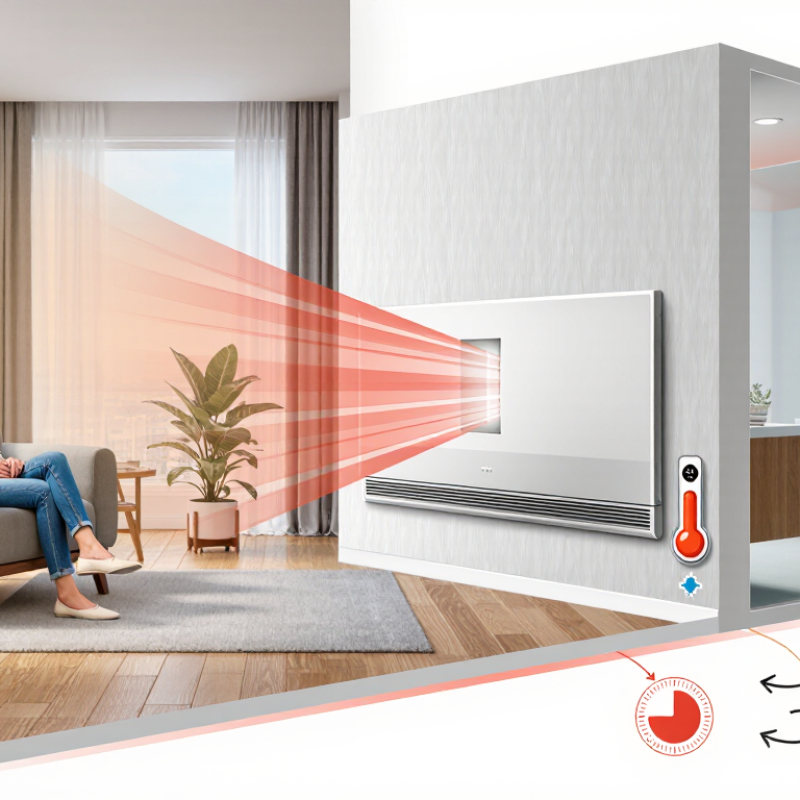
An infrared panel heater uses electricity to produce gentle, long-wave infrared radiation. Unlike a conventional heater, it does not rely mainly on blowing warm air around a room. The panel radiates heat toward nearby walls, floors, furniture, and people. These surfaces absorb the energy and release warmth gradually. Think of sunlight touching a cool tiled floor.
In daily use, the panel surface becomes warm, while a thermostat controls its operating time. A person sitting within its range may feel comfortable before the entire room reaches the same temperature. This can reduce the need to heat unused areas. However, infrared heating is not magic. Poor insulation, draughty windows, or incorrect panel placement can reduce comfort and increase electricity use.
A practical installation needs careful sizing. A professional should assess room dimensions, insulation, ceiling height, and expected occupancy. Mounting height also matters. A ceiling panel can spread heat differently from a wall-mounted unit. Keep the surface clear, and follow electrical safety instructions. Infrared warmth often feels steady and quiet, with no fan noise or moving dust. Still, the first impression can be misleading. Warm skin does not always mean evenly heated air. Using a reliable thermostat and checking room temperature at different points gives a more honest picture of performance.
How Infrared Heating Delivers Heat Efficiently
Infrared panel heaters deliver warmth through radiant energy rather than relying only on moving air. They warm people, floors, walls, and furniture directly. A sunlit chair feels warm for a similar reason.
This method can feel efficient in occupied rooms. Heat reaches nearby surfaces without waiting for a large volume of air to warm. That may reduce the need for high thermostat settings. Even so, performance depends on insulation, room layout, ceiling height, and panel placement. Poorly insulated rooms can still lose heat quickly. Infrared heating is not magic. It works best when the heated surface has a clear view of the occupied area.
A well-positioned panel can warm a desk, sofa, or reading corner with noticeable comfort. The air may remain slightly cooler, which can reduce stuffiness. However, comfort is personal, and cold drafts can weaken the experience. Independent testing, correct sizing, and a reliable thermostat matter more than attractive promises. My practical concern is simple: a powerful panel in the wrong position may waste energy while leaving another corner cold.
Tips: Mount the panel where people spend time. Avoid blocking it with tall furniture. Use a thermostat with accurate temperature control. Check insulation around windows and doors. Compare electricity use during similar weather, not just one evening. A small notebook can reveal more than guesswork.
Key Benefits of Choosing an Infrared Panel Heater
An infrared panel heater delivers warmth through radiant energy rather than relying only on moving hot air. It warms people, floors, walls, and furniture within its coverage area. I noticed the comfort feels gentler, especially near a desk or reading chair. The air also feels less dusty because the system creates limited air movement. It is not silent in every installation, but most panels operate quietly.
Energy efficiency depends on room insulation, panel position, and thermostat settings. A well-placed panel can provide targeted heat instead of warming unused areas. This may reduce unnecessary heating in home offices, bedrooms, or small living spaces. Many models use wall-mounted controls or smart thermostats for accurate temperature management. However, lower energy use is never automatic. Poor insulation can still waste heat.
Infrared panels have few moving parts, so maintenance is usually simple. Wiping the surface and checking electrical connections can support reliable operation. Installation still deserves professional attention, especially near bathrooms or older wiring. My first assumption was that one panel would suit every room. That was too simple. Room shape, ceiling height, furniture, and daily habits all affect performance. A heating assessment gives more dependable results than choosing by appearance alone.
Factors to Consider Before Installing One
Why Choose an IR Panel Heater for Efficient Heating?
Before installing an infrared panel heater, inspect the room rather than trusting advertised efficiency. I once assumed one panel would warm a large, poorly insulated room. That assumption was wrong. Infrared heat warms people and surfaces directly, but cold walls and draughts still reduce comfort.
Measure the room’s floor area, ceiling height, window size, and insulation quality. A small bedroom may need less output than a high-ceilinged living space. Check the panel’s wattage against the circuit’s capacity. An electrician should inspect wiring, especially in older homes. Overloaded circuits can create serious risks.
Placement also matters. Mounting the panel near a frequently used seating area can improve perceived warmth. Keep curtains, furniture, and bedding away from its surface. Bathroom installation requires equipment rated for damp locations and correct positioning near water. Do not guess here.
Use a thermostat with accurate temperature control. Timers can prevent unnecessary heating during empty hours, although settings need adjustment after real use. Watch the room for several days. A comfortable surface temperature may still leave your feet cold. That small mismatch deserves attention. Infrared heating is not automatically cheaper in every property. Electricity prices, insulation, room use, and thermostat habits all influence running costs. A professional assessment may feel excessive, but it can prevent an expensive installation mistake.
Why Choose an IR Panel Heater for Efficient Heating?
Infrared panel heaters convert nearly all consumed electricity into heat at the point of use. Their practical efficiency advantage depends on room insulation, thermostat settings, electricity prices, and how much of the room requires heating.
Typical useful heat delivered from 1 kWh of purchased energy. Infrared panels and electric resistance heaters are shown at approximately 1.0 kWh of heat, modern gas boilers at about 0.9 kWh, and air-source heat pumps at approximately 3.0 kWh under favorable operating conditions. Actual performance varies with installation, weather, controls, and building conditions.
How to Use and Maintain an Infrared Panel Heater
Using and maintaining an infrared panel heater requires more than switching it on. The International Energy Agency reports that buildings consume about 30% of global final energy, with space heating as a major share. Infrared panels heat nearby surfaces and occupants directly, rather than warming the entire room immediately. Place the panel where its radiation remains unobstructed. Keep sofas, curtains, and laundry away from its surface.
Set the thermostat gradually. A room thermometer helps prevent uncomfortable temperature swings and wasted electricity. The U.S. Department of Energy notes that lowering a heating setting by 7–10°F for eight hours can save up to 10% annually in suitable systems. That figure is not guaranteed for every infrared installation. Room insulation, outdoor temperature, and usage habits matter. Measure actual consumption with a plug-in energy monitor when practical. Small data beats guesswork.
Dust the panel when it is switched off and completely cool. Use a soft, dry cloth; avoid spraying liquid near controls or electrical connections. Check the cable, wall mounting, and thermostat regularly for looseness or discoloration. Do not cover the heater, even briefly. Follow the manufacturer’s clearance requirements, because installation details differ. The IEA stresses that better insulation can reduce heating demand substantially, so a powerful panel cannot repair a cold, leaky room. I once treated fast surface warmth as proof of low energy use. It was not. Comfort arrived quickly, but the meter told a more complicated story.
Why Choose an IR Panel Heater for Efficient Heating? - How to Use and Maintain an Infrared Panel Heater
| Category | Typical Information | Practical Benefit | Use and Maintenance Guidance |
|---|---|---|---|
| Heating method | Infrared panels primarily transfer radiant heat to people, walls, floors, and furniture instead of relying only on circulating air. | Provides a direct, comfortable heat sensation and can reduce the movement of dust caused by strong air circulation. | Position the panel so its front surface has a clear view of the occupied area. Do not cover the heating surface. |
| Electrical power | Common household infrared panels are often rated from approximately 300 W to 1,000 W, depending on their size and intended room use. | The fixed electrical rating makes energy use easy to estimate and compare. | Estimated energy use = rated power in kilowatts × operating hours. A 600 W panel running for 5 hours uses about 3 kWh before thermostat cycling. |
| Room suitability | Required output depends on room size, insulation, ceiling height, window area, outdoor temperature, and local climate. | Correct sizing helps prevent slow warm-up, excessive operation, or unnecessary electricity use. | Use the manufacturer’s room-sizing guidance or obtain a heat-loss calculation for rooms with poor insulation or large windows. |
| Temperature control | A compatible thermostat can switch the panel on and off to maintain a selected room temperature. | Automatic control avoids continuous full-power operation and improves comfort. | Place the thermostat away from direct sunlight, drafts, doors, and the immediate heat path of the panel. |
| Warm-up behavior | Radiant warmth may be felt relatively quickly, while the room’s air and surrounding surfaces can take longer to reach the target temperature. | Suitable for steady heating and occupied zones rather than instant whole-room heating in every situation. | Preheat the room when needed and keep doors and windows closed while the heater is operating. |
| Installation position | Panels may be wall-mounted or ceiling-mounted when permitted by the installation instructions. | Wall or ceiling installation saves floor space and can distribute radiant heat across the occupied zone. | Use suitable fixings, maintain the specified clearances, and avoid mounting near curtains, furniture, water sources, or flammable materials. |
| Air quality | Infrared panels do not require a fan to distribute heat and do not burn fuel inside the room. | No combustion emissions are produced indoors by an electric panel, although normal ventilation is still necessary. | Do not use the heater to replace ventilation. Keep indoor air fresh and address moisture at its source. |
| Noise level | A panel without a fan generally operates with little or no operating noise. | Useful for bedrooms, studies, libraries, and other quiet spaces. | Occasional clicking during thermostat switching or minor expansion sounds can occur; disconnect the unit if unusual noises persist. |
| Cleaning | Dust can collect on the panel surface and mounting area over time. | A clean surface supports normal heat transfer and keeps the unit looking tidy. | Switch off and allow the panel to cool. Wipe it with a soft, dry or slightly damp cloth. Do not spray liquid directly onto it or use abrasive cleaners. |
| Safety clearance | Clearance requirements vary by model and installation orientation. | Adequate clearance reduces the risk of overheating and accidental contact with hot surfaces. | Follow the supplied manual rather than relying on a universal distance. Keep clothing, bedding, paper, and other combustible items away. |
| Electrical safety | Electric heaters draw substantial current while operating, especially at higher wattages. | A correctly installed circuit helps reduce the risk of overheating plugs, sockets, and wiring. | Use the correct voltage and a properly rated outlet. Avoid extension leads unless explicitly approved, and never use a damaged cord or plug. |
| Energy efficiency | Electric resistance heaters convert nearly all electricity consumed at the point of use into heat, but total running cost still depends on electricity price and operating time. | Efficient operation is most likely when heating is targeted, the room is well insulated, and thermostat schedules match occupancy. | Improve window and door sealing, use reasonable temperature settings, and turn the heater down when the room is unoccupied. |
| Inspection frequency | Routine visual checks can identify dust buildup, loose fixtures, discoloration, damaged cables, or unusual odors. | Early detection helps prevent avoidable faults and supports safe long-term operation. | Inspect before each heating season and stop using the panel if there are burn marks, exposed wires, repeated tripping, or a persistent burning smell. |
Related Posts
-
2025 Top Rated IR Panel Heaters: The Ultimate Guide to Energy Efficient Heating Solutions
-
Top 10 Tips for Using Infrared Panels for Energy Efficiency and Comfort
-
What is an Infrared Shop Heater and How Does It Work?
-
Exploring the Benefits of IR Panel Heaters: A Modern Solution for Cost-Effective Heating
-

Top Benefits of Using Infrared Shop Heaters for Your Workspace Efficiency
-
Top 10 Wall Mounted Infrared Heaters for Global Buyers
Skip to content