
FAQS

What Are the Top Camping LED Emergency Lights?

Choosing the best Camping Led Emergency Lights requires more than comparing brightness on a product page. A reliable light must perform inside a damp tent, beside a cooking area, or during an unexpected roadside stop. The U.S. Bureau of Economic Analysis reported that outdoor recreation generated $639.5 billion in U.S. economic output in 2023. That scale reflects growing demand for practical, dependable outdoor equipment.

Energy performance also matters. The U.S. Department of Energy states that LED bulbs use at least 75% less energy and last up to 25 times longer than incandescent bulbs. For campers, this can mean fewer battery changes during a weekend trip. Still, advertised runtime can be confusing. It often depends on brightness, battery type, temperature, and charging habits. Lumens alone do not tell the whole story.

This guide compares Camping Led Emergency Lights through useful field criteria, including beam coverage, runtime, charging options, weather resistance, controls, and portability. The IEC 60529 standard provides a recognized method for evaluating water and dust protection through IP ratings. However, an IP rating does not guarantee perfect performance after drops, damaged seals, or poor maintenance. Real use is messier. A lamp may shine brightly but feel unstable on a narrow table. Another may offer less power but remain useful all night. The strongest choice should balance measurable specifications with hands-on reliability, safe handling, and the needs of each camping environment.
What Are the Top Camping LED Emergency Lights?

Types of Camping LED Emergency Lights

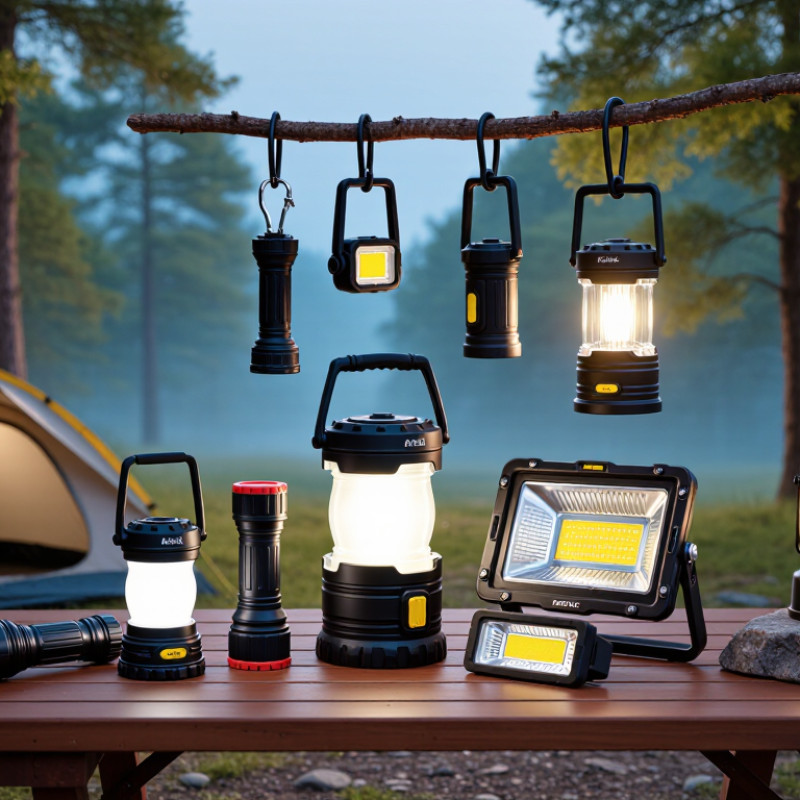
Camping LED emergency lights come in several useful types, and each suits a different problem. Lanterns spread soft light across a tent, picnic table, or cooking area. Headlamps keep both hands free for pitching poles or checking a map. Flashlights provide a narrow, longer-reaching beam, but they illuminate less space. Area lights with adjustable panels can cover a larger campsite. They are practical during power failures, too.

Rechargeable models reduce disposable battery waste and usually offer stronger brightness. Solar-charging lights can help during extended trips, although cloudy weather slows charging. Hand-crank lights provide backup power without sunlight, but repeated cranking becomes tiring. The U.S. Department of Energy reports that LEDs use at least 75% less energy and last up to 25 times longer than incandescent lighting. That efficiency matters when carrying limited batteries.

Weather resistance separates useful lights from disappointing ones. Look for a clear ingress-protection rating, sealed charging ports, and impact-resistant housing. A 300–600 lumen lantern often suits a small tent, while a headlamp around 100–300 lumens supports close work. Higher output is not always better; bright glare can ruin night vision. My own campsite checks are not perfectly scientific. Still, runtime, switch design, and battery indicators often matter more than headline brightness. The National Fire Protection Association recommends keeping portable lighting away from flammable materials, a reminder that safe placement deserves equal attention.

Key Features to Compare Before Choosing

When comparing camping LED emergency lights, start with usable brightness, not the highest advertised number. A 300-lumen light can illuminate a tent, while 1,000 lumens may create harsh glare. Check whether brightness is measured consistently, because packaging claims can be difficult to compare. Look for several modes, including low, medium, high, red, and flashing emergency output. Red light protects night vision better. Glare wastes battery.

Battery performance matters more than a bright initial hour. Compare runtime at each setting, recharge time, battery type, and remaining-charge indicators. A USB-C port is convenient, but a built-in battery can become useless if it fails in the field. For longer trips, consider replaceable cells or a hand-crank backup, though both add weight. I once selected a lightweight lamp with impressive output; its battery indicator proved unreliable in cold weather. Cold weather changes everything.

Examine durability closely. An IPX4 rating may handle splashes, while stronger water protection suits exposed campsites. A stable base, hanging hook, magnetic mount, and recessed switch improve hands-free use. Avoid lights that roll away or activate inside a crowded pack. Test the switch with wet fingers and gloves; small controls often become frustrating after dark. Weight also deserves honest attention, especially when walking to remote campsites. I prefer a dependable medium setting over spectacular brightness that drains power quickly.

Top LED Light Options for Camping Emergencies

Top LED Light Options for Camping Emergencies

A dependable camping emergency light should do more than shine brightly. Choose an LED lantern with adjustable brightness, a wide beam, and a stable base. A 300 to 1,000 lumen range suits most campsites, though higher output drains batteries faster. Test the lowest setting before bed. It may provide enough light for reading without disturbing nearby campers.

A compact headlamp is useful when both hands are busy. Look for a comfortable strap, simple controls, and a red-light mode. Red light helps preserve night vision and reduces glare inside a tent. Water resistance matters during sudden rain. Check the product rating carefully, because “water resistant” does not always mean waterproof. I once trusted a loose charging cover and lost power after one wet evening.

Battery options deserve close attention. Rechargeable models reduce waste and work well with a power bank. However, a light with replaceable batteries can be more reliable on longer trips. Cold weather may shorten battery life, especially during early morning use. Store spare batteries in a dry pouch, not loose inside a backpack. A hanging hook, magnetic base, and battery indicator also add practical value. I prefer testing every light at home, but I sometimes forget to check the charging cable. That small mistake can matter when darkness arrives far from the car.

What Are the Top Camping LED Emergency Lights?

Typical runtime at medium brightness is a practical way to compare LED lighting options for camping emergencies. These representative category-level figures reflect commonly published specifications and may vary by battery type, temperature, and brightness setting.

Key takeaway: Battery-powered lanterns and headlamps generally provide the longest operating time for routine campsite use, while handheld flashlights and area lights usually prioritize higher light output over extended runtime.

How to Use and Maintain Camping Emergency Lights

What Are the Top Camping LED Emergency Lights?

A reliable camping LED emergency light should be bright, stable, and simple to operate. Before leaving, test every mode in a dark room. Check the main beam, low setting, and flashing signal. A light with adjustable brightness usually saves battery during long evenings. Keep the control button easy to find with cold or wet hands.

Charge the light fully before departure, then inspect its cable, lens, and battery compartment. Do not charge a wet or visibly damaged unit. During camp, place the lamp on a dry, level surface away from fabric, fuel, and direct rain. Hang it high enough to spread light, but secure it against wind. Keep a spare power source nearby. Small details matter.

After use, wipe away dust and moisture with a soft cloth. Let the light dry completely before storage. Remove replaceable batteries if the lamp will sit unused for several months. Store it in a cool, dry place, not inside a hot vehicle. I have found that battery indicators can be misleading, especially after repeated charging. Test the lamp again before each trip. A weak beam is easy to ignore at home, but inconvenient beside a dark trail. Replace worn batteries according to the manufacturer’s instructions, and never mix old and new cells.

Safety Tips for Reliable Outdoor Lighting

What Are the Top Camping LED Emergency Lights?

Safety Tips for Reliable Outdoor Lighting

A dependable camping LED emergency light should offer stable brightness, simple controls, and strong battery performance. Choose a model with adjustable output rather than maximum brightness alone. A low setting can preserve power during long nights. A red-light mode may protect night vision around tents and sleeping areas. Check the battery indicator before leaving home. I once trusted an old charge display and ended up replacing batteries beside a dark trail.

Water resistance also matters. Look for clear protection information, such as an IP rating, and keep charging ports tightly closed outdoors. Place the light where people can see it without staring directly into the beam. Hanging it from a tent loop usually spreads light better than placing it on the ground. Keep one light near the cooking area and another beside the entrance. Never leave a hot lamp against fabric, dry leaves, or other flammable materials.

Test every emergency light before the trip. Run it for several hours, inspect the switch, and confirm the spare batteries work. Rechargeable units should include a suitable charging cable and a backup power plan. A hand-crank or solar feature can help, but these options may charge slowly in poor weather. Do not assume a waterproof light is indestructible. Mud, freezing temperatures, and repeated drops can weaken its seals. I still forget small checks sometimes, especially when packing quickly. A written gear list prevents that careless mistake.

What Are the Top Camping LED Emergency Lights? - Safety Tips for Reliable Outdoor Lighting

Comparison of common camping and emergency LED light types. Specifications are representative operating ranges and should be verified against the product manual.
Light Type Best Use Typical Brightness Typical Runtime Power Source Weather Protection Key Advantage
360-Degree Camping Lantern Tent interiors, cooking areas, and shared campsites 300–1,000 lumens 5–200 hours, depending on brightness Rechargeable battery or disposable cells Often IPX4–IPX7 Provides broad, shadow-reducing illumination
Rechargeable Area Light Large campsites, emergency rooms, and outdoor work 500–2,000 lumens 3–100 hours Built-in lithium-ion battery Commonly IPX4–IP65 High output with adjustable brightness and direction
Solar-Rechargeable Lantern Off-grid camping and extended power outages 50–500 lumens 6–100 hours after charging Solar panel with USB or battery backup Usually IPX4 or higher Can be recharged without grid electricity
Hand-Crank Emergency Light Short-term emergencies and backup preparedness kits 10–150 lumens Usually minutes per crank session; battery backup varies Hand crank with internal battery Often splash-resistant Does not depend on stored batteries or mains power
Headlamp Hiking, navigation, repairs, and hands-free tasks 100–600 lumens 2–150 hours Rechargeable battery or AAA/AA cells Commonly IPX4–IPX8 Keeps both hands available while moving
Lantern and Flashlight Combination General camping, vehicle emergencies, and home outages 100–800 lumens 4–150 hours Rechargeable or disposable batteries Often IPX4–IPX7 Combines area lighting with focused beam distance
LED String or Task Lights Shelters, cooking stations, walkways, and camp decoration 50–500 lumens total 5–100 hours USB rechargeable or disposable cells Typically IPX4–IP65 Improves visibility along specific areas and paths

Safety Tips for Reliable Outdoor Lighting

Safety Check Recommended Practice Why It Matters
Check the IP Rating Use at least splash resistance for ordinary outdoor use; keep non-waterproof lights sheltered. Helps prevent rain and moisture from damaging the light or creating electrical hazards.
Protect Batteries Use the specified charger, keep charging ports dry, and remove disposable batteries during long-term storage. Reduces the risk of overheating, leakage, corrosion, and battery damage.
Avoid Open Flames Choose LED lighting instead of candles or fuel lanterns inside tents and near dry materials. LEDs produce light without an exposed flame or combustion fumes.
Carry a Backup Pack a second light source and spare batteries or a charged power bank. Provides redundancy if the primary light is lost, damaged, or depleted.
Use the Lowest Useful Setting Select low or medium brightness for routine tasks and reserve maximum output for emergencies. Extends runtime and reduces glare for nearby campers.
Test Before Departure Fully charge rechargeable units and verify switches, modes, seals, and battery levels before every trip. Identifies failures before the light is needed in darkness or bad weather.