

FAQS
What Are the Top Types of Wheel Luggage in 2026?
Wheel Luggage has become more varied, lighter, and easier to match to different trips. In 2026, shoppers can choose compact carry-ons, spacious checked cases, soft-sided bags, hard-shell designs, and spinner models with four rotating wheels. Each type makes a different trade-off. A hard shell may protect packed items, while a soft-sided case can offer a little more give. Two-wheel bags often handle uneven sidewalks well; four-wheel spinners glide neatly through airport terminals. The right choice depends on where you travel, what you carry, and how often you lift your bag.
“Test the wheels under a real load, not just on a showroom floor,” says luggage product specialist Maya Chen. Her advice points to a detail that is easy to overlook: wheels, handles, and frame joints all affect how a bag feels after a long day. A smooth terminal floor is forgiving. A cracked pavement edge is not.
This guide compares the top types of wheel luggage in 2026, with practical notes on maneuverability, capacity, durability, and storage. You’ll see where each style performs well—and where it may frustrate you. A small caveat matters: product labels alone cannot predict long-term performance. Wheel materials, construction, and packing weight can change the experience. Sometimes, the best-looking bag is not the easiest one to pull.
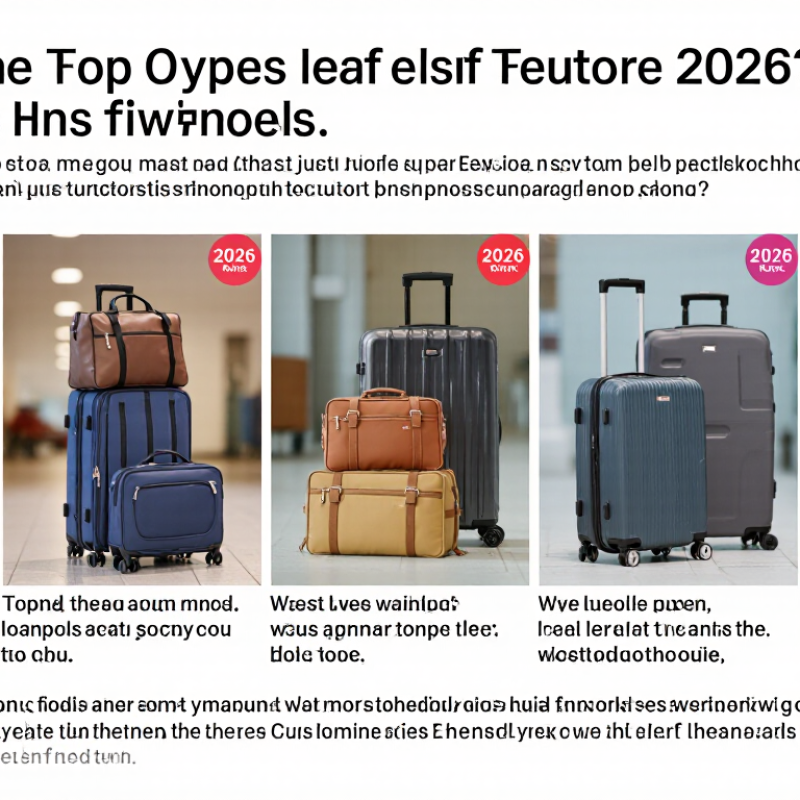
How Wheel Luggage Types Are Classified in 2026
Wheel luggage in 2026 is commonly classified by size and intended use. Carry-on cases are designed for short trips and overhead storage, while medium and large checked cases hold more clothing and bulky items. Exact size limits vary by carrier, so measure the case with its wheels and handles included. A few centimeters can matter.
Wheel arrangement is another useful category. Two-wheel cases usually roll behind the traveler and can feel steadier on uneven pavement. Four-wheel spinner cases turn easily in tight airport aisles, though they may drift on sloped floors. Small detail, big difference. Wheel size, bearing quality, and how firmly each wheel is attached also affect handling; a smooth showroom floor tells you little about rough sidewalks.
Construction creates a further classification: hard-sided cases, soft-sided cases, and wheeled bags with flexible bodies. Hard shells resist knocks and are easy to wipe clean. Soft sides may offer exterior pockets and a little give when packed. These groups overlap, which makes labels less tidy than they sound. For a fair comparison, look at capacity, wheel layout, handle stability, and the kind of surfaces you travel across. A useful classification should match real packing habits, not just a product description.
What Are the Top Types of Wheel Luggage in 2026? — How Wheel Luggage Types Are Classified
| Luggage Type | Typical Wheel Setup | How It Moves | Common Formats | Best Suited For | Key Considerations |
|---|---|---|---|---|---|
| Two-Wheel Upright (Roller) | Two wheels recessed into the case near its base | Tilts and rolls behind the traveler | Carry-on cases, Checked Suitcases, soft-sided bags | Uneven pavements, ramps, and travelers who prefer pulling luggage behind them | Usually needs to be tilted while moving; the case may occupy less floor space than a spinner when parked. |
| Four-Wheel Spinner | Four swivel wheels, generally one at each lower corner | Rolls upright in any direction and can be pushed beside the traveler | Carry-on cases, medium suitcases, large checked bags | Airports, stations, and other smooth indoor surfaces | Easy to maneuver in tight spaces; wheels are more exposed than recessed two-wheel designs. |
| Eight-Wheel Dual-Spinner | Four swivel wheel housings, each with a pair of wheels | Moves upright in multiple directions; paired wheels share contact with the floor | Carry-on and checked suitcases | Travelers who want a spinner-style rolling experience and a multi-wheel layout | “Eight-wheel” typically describes the wheel count, not eight separate corner assemblies; performance depends on wheel quality and case design. |
| Soft-Sided Rolling Luggage | Usually two wheels or four spinner wheels | Rolling behavior depends on the wheel configuration | Roller bags, wheeled duffels, soft-sided suitcases | Travelers who value exterior pockets or a flexible bag body | Fabric construction may flex to fit irregular contents; pocket layout and water resistance vary by model. |
| Hard-Sided Rolling Luggage | Usually two wheels or four spinner wheels | Rolling behavior depends on the wheel configuration | Hard-shell carry-ons and checked suitcases | Travelers who prefer a structured case with a rigid outer shell | Shell materials and opening styles differ; a hard shell does not by itself guarantee a particular level of impact protection. |
| Wheeled Duffel | Commonly two larger wheels with a pull handle | Typically tilts and rolls behind the user | Travel duffels and large-capacity soft bags | Road trips, longer trips, or packing bulky and irregular items | Capacity and shape can vary widely; check packed dimensions and whether the bag has internal organization. |