
FAQS
Best RFID Locker System Supplier in China?
Choosing the best RFID locker system supplier in China is not just a price comparison. The right partner should understand how lockers will be used, where they will be installed, and who will maintain them. A Rfid Locker System may serve a workplace, campus, gym, or parcel room, but each setting has different access and capacity needs. Small details matter. Think about door size, daily user volume, network stability, and what happens when power is interrupted.
A capable supplier should explain its hardware and software clearly. Ask for practical information about RFID card compatibility, user permissions, audit records, remote management, and integration options. Request a demonstration using the same locker configuration you plan to purchase. A smooth video demo helps, but it does not replace testing real doors, readers, and management screens. Look for documented quality procedures, clear warranty terms, responsive technical support, and relevant installation experience. These details are more useful than broad claims about being a leading manufacturer.
Still, no supplier is perfect for every project. A lower quote may exclude installation, customization, or long-term support, while a feature-rich system may add complexity that users do not need. Compare written specifications and ask which parts can be verified before shipment. Consider replacement parts and software updates, too. One overlooked point can become inconvenient later. This guide will outline how to assess suppliers, compare system features, and ask sharper questions before making a decision. The goal is not to find the biggest promise. It is to find a supplier whose capabilities fit your site and whose answers remain clear when practical questions arise.
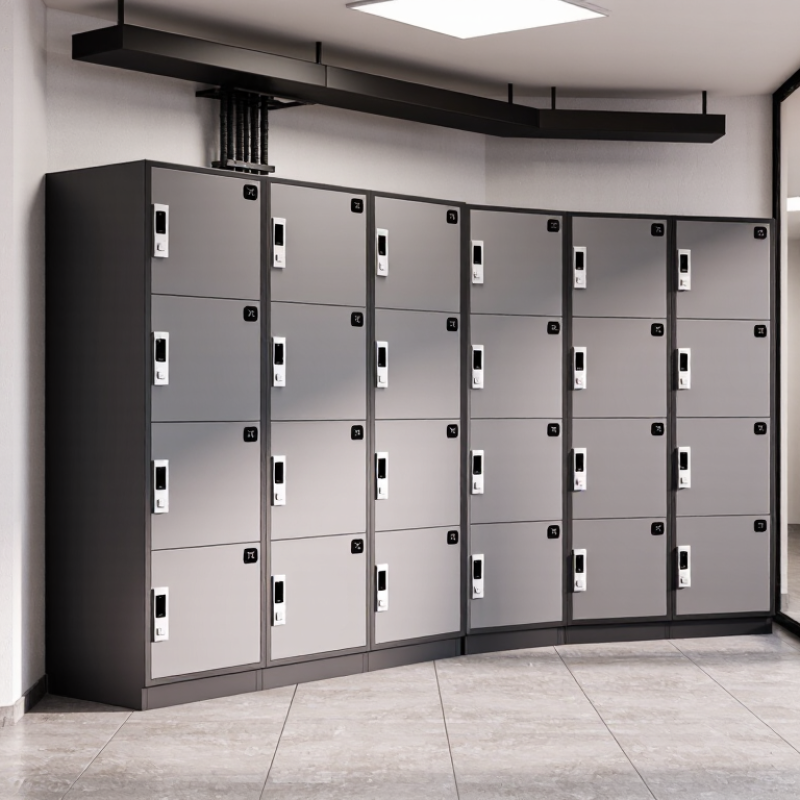
What Is an RFID Locker System?
An RFID locker system uses radio-frequency identification to manage access to individual storage compartments. A user presents an RFID card, key fob, or compatible credential to a reader. The controller checks that credential and unlocks an assigned locker if access is authorized. Inside a typical installation, readers connect to electronic locks and management software. Staff can use the software to assign lockers, review access records, and change permissions. The exact features depend on the system and its configuration.
These systems are used in workplaces, schools, gyms, and shared storage areas. For example, an employee might tap a card and hear a soft click as a locker opens. Some systems support fixed assignments; others allow users to select an available compartment. RFID can make access faster than managing many physical keys, but it is not magic. Poorly placed readers, weak network connections, or unclear user instructions can cause frustration. A careful site assessment matters. So does testing with the actual cards and doors before installation. I have seen small workflow details, like where users queue, overlooked during planning.
Tips: Confirm credential compatibility, emergency access procedures, and offline behavior. Test the system during busy periods, not only in an empty room.
What this means for RFID locker systems: RFID systems commonly operate in LF, HF, or UHF bands. HF locker solutions often use 13.56 MHz; UHF frequencies vary by region. The best option depends on the required read distance, tag type, and local regulations.
How RFID Locker Systems Work
Best RFID Locker System Supplier in China?
How RFID Locker Systems Work
An RFID locker links a reader, tagged items, electronic locks, and management software. A user presents an authorized card or credential. The controller checks access permissions, then releases the assigned door. Inside, a reader detects the item’s RFID tag when the door closes. The software records the item, locker, user, and time. No line of sight is needed, unlike barcode scanning. Still, metal doors and crowded tags can weaken reads. Antenna placement needs testing.
For example, a shared equipment room can log a tablet entering locker 12 and flag its return. Staff can review missing-item records without checking every shelf by hand. Grand View Research valued the global RFID market at USD 14.5 billion in 2023 and projected an 11.0% compound annual growth rate from 2024 to 2030. This broad market estimate signals investment in RFID, not guaranteed locker performance. Test read accuracy with the actual tags, doors, and items. Small details matter. A system may miss a tag if metal blocks the signal or several items sit too close together. That is worth checking before deployment.
Key Features to Compare in RFID Locker Systems
When comparing RFID locker systems from suppliers in China, start with read accuracy, not headline range. Ask for test results using your actual locker material, tag type, and item placement. Metal doors and closely packed objects can cause missed reads. Request a live demonstration with a full locker bank, including a door-open and door-closed test. Check whether the system records each access event with a timestamp and user credential. Clear audit logs matter.
Integration is another key feature. Confirm compatibility with your access-control platform, management software, and network setup. Ask how the system handles outages, software updates, and replacement parts. Zebra’s 2023 Warehousing Vision Study reported that 83% of surveyed decision-makers planned to invest in technology for real-time visibility by 2028. This is not locker-specific, but it highlights why reliable status data matters. Request the supplier’s warranty terms, spare-parts lead times, and references from installations with similar doors and usage levels.
Tips: Test real items. Bring a metal water bottle, a small parcel, and a tag placed inside a bag. Compare scan results across repeated trials. Ask who handles commissioning and staff training. One overlooked detail: a system may work well in a demo, yet need careful tuning in a crowded corridor.
How to Evaluate RFID Locker Suppliers in China
Best RFID Locker System Supplier in China?
How to Evaluate RFID Locker Suppliers in China
China offers many RFID locker suppliers, but a polished demo proves little. Start with your use case: staff storage, parcel collection, or shared equipment. Ask suppliers to test the actual items you will store, especially metal tools or liquid containers, which can affect tag reading. Small details matter.
Check the reader frequency, tag compatibility, offline behavior, and event logs. A supplier should explain how the locker handles missed reads, network outages, and emergency access. Request a pilot with real users, not just an empty cabinet. Measure successful reads, door-opening time, and support response. RFID standards such as ISO/IEC 14443 and ISO/IEC 15693 describe different tag technologies; confirm which one fits your workflow before comparing quotes.
Industry growth makes careful evaluation more important. Fortune Business Insights estimated the global RFID market at USD 14.5 billion in 2023 and projected USD 31.6 billion by 2032. That figure covers RFID broadly, not lockers, but it signals a crowded supply landscape. Ask for a bill of materials, warranty terms, software update policy, and references for comparable installations. Verify sample results independently. A supplier may overlook a weak spot. That is worth discussing openly.
| Evaluation Dimension | Suggested Weight | What to Verify | Evidence to Request | Warning Signs |
|---|---|---|---|---|
| RFID technology and compatibility | 15% | Confirm the supported RFID frequency, tag standards, reader configuration, and compatibility with the tags and cards used in your project. Common RFID frequency categories include LF, HF, and UHF; they are not interchangeable. | Reader and tag datasheets; supported standards and frequency details; results from a test using your sample tags. | Claims of universal compatibility without specifying frequency, standards, or test conditions. |
| System functionality and software | 15% | Check locker assignment, access permissions, event logs, user management, and the workflows required for your application. Confirm whether the system supports required integrations. | Live demonstration; software feature list; API documentation where integration is required; sample access and audit logs. | Software capabilities are described only in general terms, or essential features are presented as future development. |
| Security and data handling | 12% | Review authentication, authorization, account management, data storage, backups, and the process for software updates. Clarify which party controls and can access system data. | Written security architecture; user-role examples; data-flow description; update and backup procedures. | No clear explanation of who can access data or how access credentials and system updates are managed. |
| Mechanical build and materials | 12% | Assess cabinet material, dimensions, door construction, hinges, locking components, finish, and suitability for the intended indoor or outdoor environment. | Dimensioned drawings; material and finish specifications; sample cabinet or production photos; environmental limitations in writing. | Material thickness, finish, or environmental suitability is not specified in the quotation or drawings. |
| Customization and engineering capability | 10% | Determine whether the supplier can meet required locker counts, compartment sizes, cabinet layouts, interfaces, and site constraints without changing essential requirements. | Project-specific drawings; interface requirements; written list of standard features and custom work. | Custom requirements are accepted verbally but are absent from the technical proposal. |
| Testing and quality control | 10% | Ask how components and finished systems are inspected, how issues are recorded, and whether the supplier tests the configured system before shipment. | Inspection checklist; functional test procedure; sample test report; documented handling of defects. | No defined acceptance checks or no final system test before dispatch. |
| Installation and integration support | 8% | Clarify installation responsibilities, commissioning steps, network and power requirements, training, and the support available for third-party integrations. | Installation guide; site-preparation checklist; commissioning plan; support scope and response process. | Responsibilities for site work, commissioning, or integration are unclear. |
| Warranty and after-sales service | 8% | Review warranty duration, covered parts and labor, exclusions, replacement procedures, and the availability of spare components and technical assistance. | Written warranty terms; spare-parts list; support contact process; stated service response expectations. | Warranty terms are only verbal or exclude key components without clear disclosure. |
| Lead time and delivery planning | 5% | Compare the quoted production schedule, approval milestones, packaging, shipping terms, and the effect of custom work on delivery timing. | Order schedule with milestones; packaging details; written delivery terms; confirmation of shipment responsibilities. | Delivery dates are promised without considering design approval, testing, or shipping arrangements. |
| Commercial clarity and total cost | 5% | Compare the complete project scope, including hardware, software, customization, installation, training, shipping, and recurring fees where applicable. | Itemized quotation; payment terms; list of exclusions; written confirmation of recurring charges, if any. | A low headline price omits required software, integration, installation, or other project costs. |
| Suggested total | 100%. Apply the same criteria and scoring method to every supplier under consideration. | |||
| Practical scoring method: rate each dimension from 1 (insufficient evidence) to 5 (strong, documented evidence), multiply the rating by its suggested weight, and compare the resulting weighted scores. Verify project-specific requirements through demonstrations, written specifications, and sample testing before placing an order. | ||||
Installation and Support Considerations for Chinese Suppliers
A reliable RFID locker system supplier should explain installation requirements before equipment arrives. Ask for a site survey covering wall material, power access, network coverage, and daily user traffic. A concrete wall may need different anchors from a partition wall. Small details matter.
Confirm who handles wiring, locker assembly, and system configuration. Request a written installation schedule, including downtime and responsibilities for your facilities team. For multi-floor sites, ask how technicians will test each locker bank and verify card or mobile access. A handover should include admin training, user instructions, and a clear record of settings. Keep a copy.
Support quality becomes visible after launch. Check the supplier’s response hours, remote diagnostic process, and local technician availability in China. Ask what information support staff need when a door fails to unlock, such as the locker number, event log, and error code. Spare readers and lock parts can reduce delays, but confirm stock levels and replacement lead times in writing. Test the escalation route before opening day. It sounds fussy, perhaps, yet a real fault is a poor time to discover nobody owns the next step. Also discuss software updates and backup procedures; these are easy to overlook during procurement. A short pilot can expose awkward workflows, though it may not reveal every issue.
Skip to content
