
FAQS

China Top CNC Gundrilling Machine Manufacturers

China’s machine-tool sector offers a wide range of deep-hole drilling equipment, from standard production models to customized systems. This guide to China Top CNC Gundrilling Machine Manufacturers helps buyers understand what to compare before requesting quotations. A Cnc Gundrilling Machine can produce accurate, deep holes in suitable workpieces, but performance depends on machine design, tooling, setup, and operator skill. Details matter.

When reviewing suppliers, look beyond brochure specifications. Ask about drilling diameter and depth, spindle power, workpiece capacity, control system, and available coolant filtration. A sample test on a comparable material can reveal more than a headline accuracy figure. Request clear information on commissioning, spare parts, training, and response times. These practical checks help distinguish a capable manufacturing partner from a sales listing with limited technical support.

Manufacturer claims should be verified through factory records, customer references, product documentation, and, where practical, an independent inspection. Compare quotations on equivalent configurations; a lower price may exclude tooling, installation, or essential service. No supplier is perfect. Even a well-equipped factory may have limits in customization or after-sales coverage, so buyers should define their production needs before choosing. This overview sets out a careful starting point for assessing Chinese manufacturers, asking informed questions, and selecting equipment that fits real machining requirements rather than relying on promotional promises.
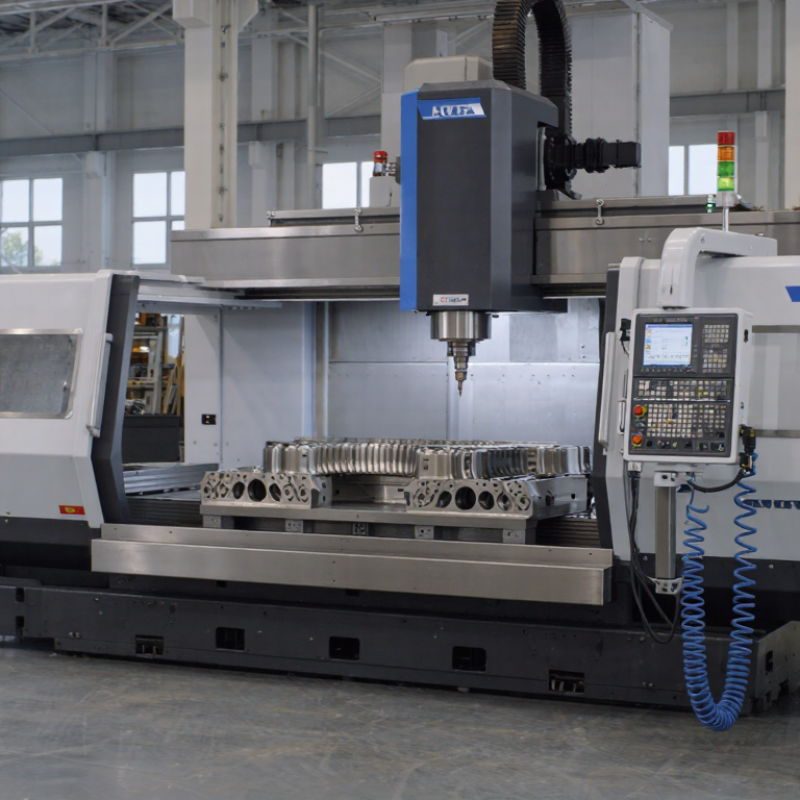
China Top CNC Gundrilling Machine Manufacturers

What CNC Gundrilling Machines Are and How They Work

A CNC gundrilling machine produces long, narrow holes with controlled position and depth. A specialized single-lip drill cuts the hole while pressurized coolant flows through its internal channel. The coolant carries chips back along a flute and helps manage heat.

That matters. In many setups, the drill rotates while the workpiece stays fixed, though machine designs can differ. Guide bushings support the tool near the entry point, helping reduce wandering in deep holes.

CNC controls feed, speed, and drilling depth, but setup still matters. The operator checks alignment, secures the workpiece, and selects cutting conditions for its material and dimensions. Coolant flow must remain steady; blocked passages can leave chips inside the hole and damage the tool. A long steel shaft, for example, may need careful support to limit vibration.

Small errors build up. Gundrilling can achieve consistent, straight bores, but it is not automatic perfection. Tool wear, material variation, and an imperfect setup can affect the result, so inspection remains part of the process.

China’s CNC Gundrilling Manufacturing Landscape

China’s CNC gundrilling manufacturing landscape is shaped by machining clusters, skilled process teams, and demand for deep, straight bores. Manufacturers serve sectors such as automotive, energy, moldmaking, and precision equipment. Their capabilities vary widely. A useful evaluation looks beyond machine capacity.

A production-ready system may include a rigid bed, controlled spindle, steady workholding, and high-pressure coolant delivery. These features help manage heat and carry chips from narrow holes. Buyers should also ask about bore diameter ranges, depth-to-diameter limits, tooling support, and inspection methods. A sample test in the intended material can reveal more than a brochure. Details matter.

China’s supplier base includes both focused specialists and broader machine-tool producers. Some offer engineering changes, while others rely on standard configurations. Response quality can be uneven. That deserves early attention. Ask for documented tolerance results, service procedures, spare-part lead times, and operator training plans. Reliable performance depends on the whole process, not just the machine. Published accuracy figures may reflect ideal conditions, so confirm how they are measured during repeated production. A factory visit or witnessed trial can clarify practical fit, though scheduling is not always easy.

Leading Chinese Manufacturers and Their Product Specialties

China’s CNC gundrilling manufacturers often specialize in different production needs. Some build compact machines for narrow bores in hydraulic parts and precision components. Others focus on long-bed systems that handle shafts, molds, and larger workpieces. Their equipment may include high-pressure coolant delivery, guided drill supports, and CNC controls for steady feed rates. These details matter when a bore must stay straight across a long distance.

Several manufacturers also offer customized fixtures or automated loading for repeat production. A practical comparison should cover drilling diameter, maximum depth, spindle range, and workpiece support. Ask how the machine performs with your material and drill size, not only what its catalog lists. Request sample results or a test cut when possible. Specs can look convincing on paper; real parts may behave differently.

Tips: Check coolant pressure, chip removal, and service access before choosing. Ask for tolerance data from comparable work. Small differences in setup can affect bore quality, and supplier information may not answer every question. Leave room for verification.

China Top CNC Gundrilling Machine Manufacturers - Leading Chinese Manufacturers and Their Product Specialties

The profiles below describe common product specialties offered by Chinese machine-tool manufacturers. Company names and brands are intentionally omitted. Configurations and capacity vary by manufacturer and model.

Manufacturer specialization Typical product focus Common configuration Typical applications What to confirm when sourcing
Deep-hole gun drilling CNC machines for producing long, relatively small-diameter holes with gun drills and high-pressure coolant. Single- or multi-spindle layouts; horizontal or vertical designs; workpiece travel and drilling depth depend on the model. Moulds, dies, hydraulic components, shafts, and precision mechanical parts. Supported hole-diameter and depth ranges, straightness and surface-finish specifications, coolant pressure, and workpiece envelope.
Small-diameter precision drilling Machines designed for precision deep holes where tool size, runout control, and stable coolant delivery are important. Fine-feed systems, precision spindles, and dedicated tool-guiding arrangements; exact supported diameters are model-specific. Precision instrument parts, mould components, and small mechanical components. Minimum drill diameter, spindle runout, repeatability, achievable hole depth, and suitable tool specifications.
Large-workpiece and long-bed drilling Heavy-duty equipment intended for long or large workpieces and extended drilling travel. Long-bed frames, substantial workpiece support, and configurable travel; bed length and load capacity differ by model. Long shafts, large moulds, hydraulic cylinders, and other long components requiring deep holes. Maximum workpiece length and weight, usable travel, support method, machine footprint, and loading requirements.
BTA and deep-hole drilling systems Deep-hole equipment using BTA (single-tube) drilling, a process commonly used for larger hole diameters than gun drilling. Specialized tooling, high-volume coolant supply, and chip evacuation through the drill tube; the usable diameter range is machine- and process-dependent. Large hydraulic parts, rollers, cylinders, and industrial components with deeper, larger-diameter holes. Compatible drilling process, minimum and maximum hole diameters, coolant and filtration needs, and chip-handling provisions.
Multi-spindle and production drilling Machines configured to drill multiple holes or parts in a cycle to support repeat production. Multiple drilling heads or spindles, dedicated fixtures, and CNC-controlled cycles; spindle count and layout are configuration-specific. Batch production of components with recurring deep-hole patterns. Required hole pattern, fixture design, simultaneous spindle capacity, changeover time, and production-cycle expectations.
Customized deep-hole machining cells Purpose-built systems combining deep-hole drilling with workholding, loading, or additional machining operations. Application-specific CNC layouts, fixtures, coolant systems, and optional automation designed around the part and process. Components with specialized geometry, repeatable production requirements, or integrated process needs. Part drawings, material, hole requirements, automation scope, acceptance criteria, and after-sales service arrangements.

Note: Gun drilling and BTA drilling are distinct deep-hole machining processes. Confirm the required process and machine capability against the workpiece drawing and the supplier's technical documentation.

Industries Served by Chinese Gundrilling Machine Makers

Chinese CNC gundrilling machine makers serve aerospace, automotive, energy, and medical manufacturing. These industries need deep, straight holes in long or compact components. Examples include landing-gear parts, fuel-system components, hydraulic cylinders, and surgical instruments. Boeing’s 2024 Commercial Market Outlook forecasts demand for 43,975 new commercial airplanes from 2024 to 2043. That outlook points to sustained aircraft production, where precise bores help support reliable assemblies. A deep hole is not just a feature; its alignment can affect fit and performance.

Automotive production also creates demand for accurate drilling in shafts, injectors, and thermal-management parts. The International Energy Agency reported nearly 14 million electric cars sold worldwide in 2023, about 18% of total car sales. This shift brings new machining needs for components such as motor shafts and cooling plates, though designs vary widely.

Energy equipment makers also use deep-hole drilling for valves and fluid-handling parts. Medical manufacturers require clean, consistent bores, but material choice and inspection requirements differ by application. A machine’s specifications alone cannot guarantee process quality.

Tips: Match spindle speed, coolant delivery, and workholding to the material and hole depth. Ask for a sample cut and inspect straightness, surface finish, and chip evacuation. Small setup details matter. The best choice may still need adjustment on the shop floor.

How to Evaluate and Select a CNC Gundrilling Manufacturer

China Top CNC Gundrilling Machine Manufacturers
How to Evaluate and Select a CNC Gundrilling Manufacturer

When evaluating a CNC gundrilling manufacturer, look beyond brochure specifications. Ask which hole diameters, depths, and materials the machine can process consistently. Deep-hole accuracy depends on the full setup: spindle stability, guide bushings, coolant pressure, and chip filtration. Request measured results from a sample matching your material and hole depth. Numbers need proof.

Discuss how the supplier checks straightness, diameter, and surface finish, and ask to see the inspection method. A controlled test cut can reveal vibration, chip evacuation problems, or uneven tool wear. Check whether operators receive practical training and whether technical support can respond with clear troubleshooting steps. No shop is perfect. Pay attention to how openly the team explains limits, setup changes, and maintenance needs. A precise machine still depends on a sound process.

Tips: Share your drawings, material grade, tolerance, and expected production volume before comparing quotations. Ask for a written acceptance plan and a demonstration using relevant workpieces. Confirm lead times for wear parts, service response, and coolant-system maintenance. Small details matter. If a supplier cannot explain how it will verify your critical hole dimensions, pause and ask again.