
FAQS

China Top Outdoor Wall Heater Suppliers for Global Buyers

Choosing reliable China outdoor wall heater suppliers requires more than comparing online prices. Global buyers need evidence of manufacturing experience, product consistency, and responsive communication. A capable supplier should explain heating output, energy use, mounting options, weather resistance, and expected service life clearly. Details matter.

This guide examines manufacturers serving commercial and residential outdoor projects. It considers factory capabilities, quality-control procedures, certifications, customization support, minimum order quantities, packaging, and export experience. Buyers can also review materials, heating elements, safety controls, IP ratings, and temperature performance under practical conditions. These details help restaurants, hotels, patios, terraces, and hospitality venues select equipment with fewer surprises. Product samples and inspection records remain valuable, even when a supplier presents impressive photographs.

Reliable sourcing is rarely effortless. Some suppliers communicate well but provide limited technical documentation. Others offer competitive pricing but need stronger after-sales support. That trade-off deserves attention. We encourage buyers to verify test reports, production capacity, warranty terms, spare-part availability, and shipping responsibilities before signing agreements. Regional installation rules may also affect the final choice. This article does not treat every factory claim as fact; it highlights questions that experienced buyers should ask. With careful comparison, an outdoor wall heater supplier can become a stable long-term partner rather than a short-term purchasing option. Performance should be measured in real use, not promises alone.
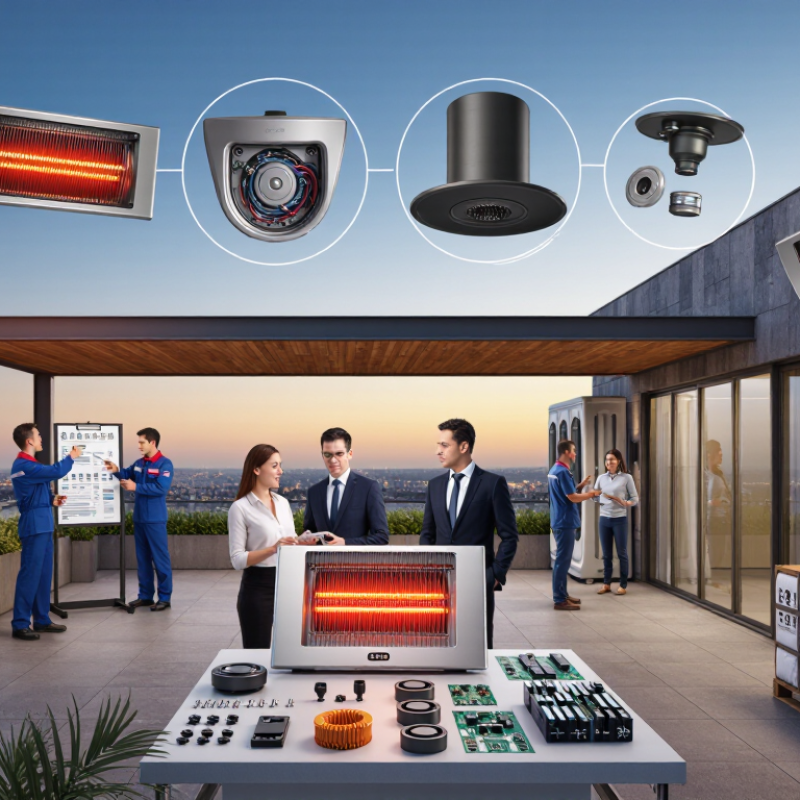
China Top Outdoor Wall Heater Suppliers for Global Buyers

Types of Outdoor Wall Heaters Available from Chinese Suppliers

China Top Outdoor Wall Heater Suppliers for Global Buyers

Types of Outdoor Wall Heaters Available from Chinese Suppliers

Chinese suppliers commonly offer electric infrared, gas-fired, freestanding, and wall-mounted outdoor heaters. Electric infrared models are popular for balconies, cafés, and covered patios. They transfer heat directly to people and nearby surfaces, rather than warming the entire air volume. Typical commercial units range from 1,500 to 3,000 watts. Short-wave infrared produces fast heat, while carbon or medium-wave elements feel softer and more stable.

Gas patio heaters suit open terraces where electrical capacity is limited. Common designs include mushroom-top, tower, and compact wall-mounted units. They usually use LPG or natural gas, but fuel compatibility must match the destination market. Ask suppliers for burner testing, hose specifications, flame-failure protection, and ventilation guidance. A polished product sheet is not enough.

Grand View Research estimated the global outdoor heating market at roughly USD 1.3 billion in 2022, with projected growth of about 6.8% annually through 2030. The International Energy Agency reports that buildings consume nearly 30% of global final energy. These figures explain the interest in efficient radiant heating, although outdoor performance depends heavily on wind and placement. Check IP ratings, mounting distance, thermostat accuracy, and test reports under recognized standards. In practical sourcing, a higher wattage does not always mean better comfort. Reflective panels, installation height, and local climate can matter more. Some supplier claims still need careful verification.

Key Features and Performance Standards for Global Buyers

Global buyers need more than a heater that looks powerful. Outdoor wall heater performance depends on heat distribution, weather resistance, and electrical safety. A useful specification should state wattage, coverage area, operating temperature, and control method. High wattage alone proves little.

Look closely. An IP rating helps indicate protection against dust and water, but it does not replace correct installation. Check the enclosure material, mounting hardware, cable quality, and corrosion resistance for coastal environments. Infrared elements should provide steady radiant heat without excessive glare or uneven hot spots. Adjustable output and timer controls can reduce energy waste in restaurants, terraces, and covered patios.

Reliable suppliers should provide test reports and market-specific compliance documents. Depending on the destination, buyers may request evidence related to IEC requirements, CE marking, UKCA marking, or North American electrical certifications. Safety features should include overheating protection, stable wall brackets, grounding guidance, and clear installation instructions. Ask whether performance tests were completed under realistic outdoor conditions. Indoor laboratory figures can be optimistic.

Some product sheets remain vague about wind, humidity, and long-term corrosion. That is a warning sign. In practical purchasing work, installation details often matter as much as heater output. A strong supplier explains replacement parts, warranty limits, packaging protection, and after-sales response times. One overlooked issue is voltage compatibility. A heater designed for one electrical system may need a different version elsewhere. Check it carefully.

China Top Outdoor Wall Heater Suppliers for Global Buyers - Key Features and Performance Standards for Global Buyers

Evaluation Dimension Recommended Requirement Common Commercial Range Relevant Performance or Compliance Reference Buyer Verification Point
Heating Technology Infrared radiant heating for directional outdoor comfort Short-wave, medium-wave, or carbon infrared systems Radiant heat should be evaluated separately from indoor air-heating performance Request heating-element type, warm-up time, and measured heat-distribution data
Rated Electrical Power Select power according to mounting height, exposure, climate, and covered area Approximately 1,500–3,200 W for many wall-mounted commercial models Electrical input must match the destination market’s voltage, frequency, and circuit capacity Confirm rated voltage, frequency, current draw, plug type, and circuit protection requirements
Operating Voltage Factory configuration suitable for the importing country Common configurations include 220–240 V AC and 110–120 V AC Country-specific electrical safety and EMC requirements apply Check product label, test report, wiring diagram, and installation manual
Ingress Protection Outdoor-rated enclosure with protection against dust and water exposure IP24 is a basic outdoor reference; higher ratings may be preferred for exposed locations IEC 60529 defines IP code testing and classification Verify the exact IP rating on the test report rather than relying only on marketing claims
Recommended Mounting Height Installation height must preserve clearance and provide effective radiant coverage Often approximately 1.8–2.5 m, subject to the product manual and local code Manufacturer clearance instructions and local electrical regulations are controlling Request diagrams showing minimum ceiling, wall, side, and combustible-material clearances
Heating Coverage Coverage should be stated for a defined outdoor environment and mounting position Commonly marketed as approximately 8–20 m², depending on wind, temperature, and enclosure Outdoor coverage is not a fixed universal value and should not be compared without test conditions Ask for test conditions, ambient temperature, wind conditions, mounting height, and target comfort temperature
Temperature Control Adjustable output or thermostat-based control for energy management Multiple power levels, electronic thermostat, timer, or remote control options Controls should not bypass thermal safety devices or create unsafe cycling Confirm control range, timer duration, remote frequency, memory function, and replacement availability
Heating Element Life Long-life element with documented replacement procedure Often specified by suppliers as approximately 5,000–10,000 operating hours, depending on element type Service life is influenced by cycling, moisture, vibration, and operating environment Request life-test method, spare-part pricing, replacement instructions, and warranty terms
Safety Protection Overheat protection, thermal cut-out, stable mounting, and protected wiring Manual reset or automatic thermal protection, depending on design Applicable household or commercial appliance safety standards must be identified for the destination market Review safety test reports, abnormal-operation results, grounding continuity, and installation warnings
Materials and Corrosion Resistance Corrosion-resistant housing and fasteners for the intended outdoor environment Aluminum or stainless-steel components are commonly used; coating quality varies Salt-air, coastal, and high-humidity locations require additional material and coating assessment Request material declarations, coating specification, salt-spray data where relevant, and fastener grade
Energy Efficiency Use radiant heat only where occupants and target zones are positioned within the beam Electric resistance heaters convert nearly all electrical input into heat, but comfort efficiency depends on placement Do not compare radiant heaters with heat pumps using the same efficiency metric Compare wattage, control modes, operating schedule, coverage, and measured comfort results
Electromagnetic Compatibility Stable operation without harmful emissions or excessive susceptibility to interference Requirements depend on the destination market and product configuration IEC 61000 series and applicable regional EMC regulations may be relevant Request EMC test reports covering the exact model, rated power, controller, and market version
Compliance Documentation Complete technical file for import, installation, and after-sales service Declaration of conformity, test reports, user manual, wiring diagram, and product label artwork The required documents vary by destination market, voltage, application, and sales channel Check model numbers, ratings, report dates, laboratory details, and consistency across all documents
Quality Control Documented incoming, in-process, and final inspection procedures Typical checks include dielectric strength, grounding, power consumption, function, appearance, and packaging Inspection criteria should be agreed before production and linked to approved samples Request inspection records, defect classification, sample approval process, and independent pre-shipment inspection options
Packaging and Logistics Packaging must protect the heating element, reflector, housing, and mounting hardware Export cartons with molded protection, moisture control, and clear handling marks Carton dimensions, gross weight, and stacking limits affect freight and warehouse planning Confirm packaging test method, spare-part packing, carton markings, palletization, and shipping damage policy
After-Sales Support Traceable spare parts, technical support, and defined warranty handling Support commonly includes heating elements, remote controls, brackets, fuses, and control components Warranty coverage should distinguish manufacturing defects from incorrect installation or environmental damage Obtain warranty duration, claim procedure, response time, spare-part lead time, and service contact details

Note: Performance ranges are indicative market benchmarks for outdoor electric wall heaters. Final suitability depends on the exact model, installation environment, destination-market regulations, and verified test documentation.

How to Evaluate China-Based Outdoor Wall Heater Manufacturers

China Top Outdoor Wall Heater Suppliers for Global Buyers

Evaluating China-based outdoor wall heater manufacturers requires more than comparing quotations. Grand View Research’s 2024 market assessment projects steady growth in outdoor heating through 2030. That growth attracts capable factories and weak imitators. Request the legal company registration, production address, export history, and audited quality records. A polished showroom proves little. Samples expose reality.

Check whether the heater matches relevant IEC 60335-2-30 requirements and your destination’s certification rules. Ask for test reports covering insulation, leakage current, overheating, water resistance, and tip-free mounting. Confirm the actual IP rating, not only the printed label. Inspect wiring terminals, cable glands, thermal cut-offs, and wall brackets. Test a sample outdoors after rain, wind, and repeated heating cycles. Documents are not enough.

The International Energy Agency reports that electric resistance heating converts nearly all incoming electricity into heat at the point of use. However, outdoor efficiency depends heavily on beam direction, mounting height, and wind exposure. Compare wattage with measured radiant coverage, not marketing claims. Request production samples from different batches, carton drop-test records, spare-part lists, and a written warranty process. One weakness in my own checklist is ignoring after-sales response time. A low defect rate means little if replacement parts arrive after the season ends. Samples can still hide factory variation. Use pre-shipment inspection and retain approval samples.

Customization, Certification, and Export Support Options

For global buyers, the best outdoor wall heater supplier is not always the largest factory. Practical customization matters more. Suppliers may adjust heating power, mounting brackets, cable length, control methods, and housing finishes. Stainless steel, coated aluminum, and weather-resistant plastics suit different climates. Ask for drawings before production.

Small details matter. A sample should be tested outdoors, not only in a showroom. Check heat coverage, surface temperature, wind resistance, and control response.

Custom designs can increase tooling costs and lead times. Early samples may also expose uneven heating. That is inconvenient, but useful. It prevents expensive changes after mass production.

Certification and export support require careful review. Depending on the destination, buyers may need CE, UKCA, ETL, RoHS, EMC, or other applicable documents. Certificates should match the exact model, electrical rating, and factory. Generic files can create customs or marketplace problems. Reliable suppliers provide test reports, declarations, product labels, user manuals, and carton markings. Export teams should also confirm HS codes, packing dimensions, loading plans, and trade terms. Moisture-resistant packaging helps during long sea transport. Installation instructions should use clear diagrams and local language options. Communication can still fail when technical terms are translated poorly, so a pre-shipment document check is worth the extra time.

Ordering, Quality Control, and International Shipping Considerations

China Top Outdoor Wall Heater Suppliers for Global Buyers

Ordering outdoor wall heaters requires more than comparing factory prices. Request wattage, voltage, frequency, heating area, IP rating, materials, and installation drawings. For electric models, ask for testing against IEC 60335-2-30 and verify ingress protection under IEC 60529. A sample should run continuously before approval. Check cable length, plug type, mounting brackets, and carton strength. The ISO Survey 2023 recorded over 1.2 million ISO 9001 certificates worldwide, but certification alone does not prove consistent production. Review batch records, calibration logs, and pre-shipment inspection results. A perfect sample can still hide weak quality control.

International shipping needs early planning. UNCTAD reports that more than 80% of global merchandise trade by volume moves by sea. Confirm the correct HS classification, Incoterm, pallet dimensions, and insurance responsibility before payment. Outdoor heaters may require special labeling, conformity documents, or destination-market energy information. Ask the supplier for a packing list with exact weights and carton counts. Small errors can delay customs clearance. I would also request photos of sealed cartons and container loading. It feels excessive, but one missing bracket can create costly claims.

Tips: Use a third-party inspection before final payment. Test at least two production units, not only the golden sample. Compare measured wattage with the nameplate. Keep written approval for every design change. Shipping quotes are often incomplete, so confirm port charges, destination fees, and delivery terms in writing. Mistakes happen; documented decisions make them manageable.