
FAQS
Top 10 Brick Kiln Oven Manufacturers Worldwide?
Choosing among the Top 10 Brick Kiln Oven Manufacturers Worldwide requires more than comparing prices or production capacity. A reliable evaluation must examine thermal efficiency, firing uniformity, automation, maintenance access, emissions control, and after-sales support. These details decide whether bricks emerge evenly fired or show pale edges, dark cores, and costly cracks.
Professor W. David Kingery, a leading ceramics scholar, famously said, “The history of ceramics is the history of civilization.” His observation gives this comparison useful perspective. A Brick Kiln Oven is not merely a large industrial chamber. It reflects engineering decisions, local materials, operator experience, and long-term manufacturing priorities.
This overview considers manufacturers through an evidence-based lens. It looks at kiln design, fuel flexibility, temperature control, energy consumption, installation practice, and customer service. It also considers whether suppliers provide meaningful technical guidance after commissioning. That point is often underestimated.
Real factories are rarely perfect.
Dust, uneven green bricks, changing fuel quality, and inexperienced operators can affect results. Therefore, a manufacturer’s reputation should not rely only on polished brochures or impressive project photographs. Verified installations, measurable performance data, safety features, and transparent warranties matter more.
Some rankings may remain debatable. Public information is uneven, and manufacturers report performance differently. Still, this guide offers a practical starting point for buyers, engineers, and investors assessing global Brick Kiln Oven suppliers. The strongest companies are not always the largest. They are the ones that deliver consistent firing, manageable operating costs, responsible environmental performance, and dependable support throughout the kiln’s working life.
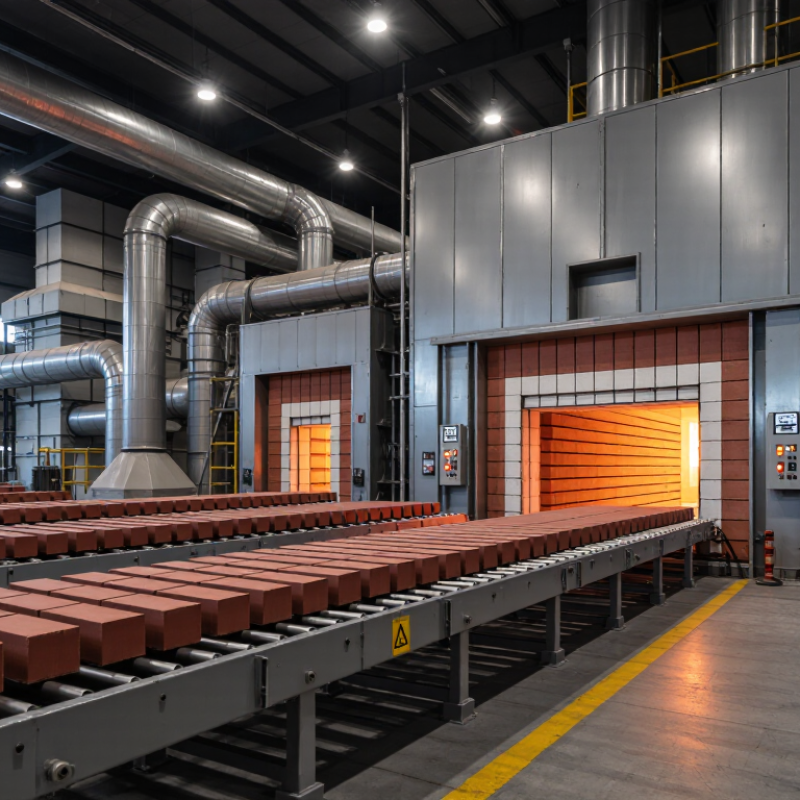
Brick Kiln Ovens: Definition, Uses, and Main Types
Brick kiln ovens, more accurately called brick kilns, are enclosed systems that harden shaped clay through controlled heat. The process removes moisture and develops strength, color, and resistance to weather. A well-fired brick should show an even tone and a firm ring when tapped. Uneven heating can create cracks, soft centers, or excessive warping.
The main types differ in airflow and production rhythm. Intermittent updraft kilns heat bricks from below, making them simple but less uniform. Downdraft kilns guide hot gases downward, improving temperature control. Zigzag kilns use a changing flame path to increase heat transfer and reduce fuel waste.
Tunnel kilns move brick cars through fixed heating zones, supporting continuous production and consistent quality. Traditional clamp kilns remain inexpensive, yet their results can vary sharply with weather and operator skill.
Kiln manufacturers should be assessed through engineering evidence, not impressive brochures. Important details include insulation thickness, burner control, temperature sensors, loading design, maintenance access, and documented fuel consumption. Operators also need training, spare parts, and practical after-sales support. In field inspections, checking brick moisture, airflow, and temperature records often reveals more than advertised capacity. A perfect comparison is difficult. Local clay, fuel prices, labor skills, and environmental requirements change the result. Even a technically advanced kiln may underperform when poorly loaded or operated. That point deserves more attention.
How Brick Kiln Oven Manufacturers Are Evaluated Worldwide
Top 10 Brick Kiln Oven Manufacturers Worldwide?
Evaluating brick kiln oven manufacturers requires more than comparing prices. Experienced buyers inspect firing consistency, heat distribution, fuel use, and chamber durability. A reliable manufacturer should explain refractory materials, insulation thickness, burner control, and expected maintenance intervals. During a site visit, check kiln walls for cracking, uneven color, and heat leakage around doors. These details reveal workmanship better than polished brochures.
Technical evidence matters. Ask for temperature records, fuel-consumption data, emission-control details, and independent test results. Manufacturers with strong engineering teams can adapt kiln capacity, local fuel conditions, and production targets. They should also provide drawings, operator training, spare-part guidance, and responsive after-sales support. Regional safety requirements differ, so documentation must match the installation location. Published efficiency figures may look impressive, but real performance can change with clay moisture, loading patterns, and operator habits.
Tips: Request references from comparable plants, not only large projects. Compare total ownership costs over five years. Ask how failures are handled. A factory audit can expose weak quality control. Do not ignore small warning signs, such as unclear warranty terms or delayed technical answers. I have found that simple controls often outperform complicated systems when workers receive practical training. Still, every evaluation has limits. A promising test result cannot replace long-term field evidence, and even careful decisions may need revision after installation.
| Rank | Evaluation Dimension | Suggested Weight | What to Assess | Evidence to Request |
|---|---|---|---|---|
| 1 | Fuel and Energy Efficiency | 16% | Specific energy use per unit of saleable fired product, measured under stated operating conditions. Compare results only when product, moisture, firing cycle, and system boundaries are comparable. | Fuel-consumption records, test conditions, energy balance, and clearly defined production data. |
| 2 | Firing Uniformity and Product Quality | 14% | Temperature consistency throughout the load and the ability to achieve the required product quality across different kiln zones and firing cycles. | Temperature-mapping results, kiln-zone data, trial-firing records, and documented product inspection results. |
| 3 | Emissions and Environmental Controls | 13% | Pollutant-control provisions and the ability to meet applicable local permit limits. Requirements vary by location, fuel, kiln design, and production process. | Emissions test reports, control-system specifications, and the applicable jurisdiction’s permit requirements. |
| 4 | Capacity and Throughput | 11% | Rated and demonstrated output, cycle time, availability assumptions, and suitability for the intended product mix and plant operating schedule. | Capacity calculations, reference operating data, cycle descriptions, and stated assumptions for annual output. |
| 5 | Fuel Flexibility and Supply Fit | 10% | Compatibility with fuels available at the project site, including their required quality, pressure, storage, preparation, and combustion-system configuration. | Approved fuel specifications, burner and fuel-train details, and site utility requirements. |
| 6 | Automation and Process Control | 9% | Control of firing profiles, temperature monitoring, alarms, data logging, recipe management, and integration with plant systems. | Control-system architecture, sample trend data, alarm lists, and operator training documentation. |
| 7 | Safety and Regulatory Readiness | 8% | Documented risk controls for hot surfaces, moving equipment, combustion, fuel handling, electrical systems, and emergency shutdowns, assessed against requirements applicable at the installation site. | Risk assessments, safety-system documentation, operating instructions, and applicable conformity records. |
| 8 | Reliability and Maintenance | 7% | Expected service life of major components, maintainability, inspection access, spare-parts availability, and the effect of planned maintenance on production. | Maintenance schedules, parts lists, warranty terms, and operating references with comparable applications. |
| 9 | Lifecycle Cost and Project Delivery | 7% | Total cost of ownership, including equipment, installation, utilities, commissioning, maintenance, and expected energy use, alongside a realistic delivery and start-up plan. | Itemized quotation, project schedule, scope boundaries, utility estimates, and lifecycle-cost assumptions. |
| 10 | After-Sales Support and Training | 5% | Availability of commissioning assistance, operator and maintenance training, technical support, documentation, and spare parts in the project region. | Support response commitments, service coverage, training plan, and spare-parts lead-time information. |
| Total Suggested Weight | 100% | Use the same requirements and scoring rules for every bidder. | ||
Note: This is a suggested evaluation framework, not a verified ranking of individual manufacturers. Weights should be adjusted to reflect project requirements and local regulations. Product-specific performance claims should be confirmed using comparable test conditions and independently reviewable documentation.
Top 10 Brick Kiln Oven Manufacturers by Technology and Market Reach
Top 10 Brick Kiln Oven Manufacturers Worldwide: Technology and Market Reach
The top ten brick kiln oven manufacturers compete through technology, service coverage, and operating reliability. Their equipment commonly includes tunnel kilns, zigzag systems, and hybrid firing lines. Tunnel designs support steady production and more consistent heat distribution. Zigzag airflow can reduce fuel waste and improve firing uniformity. Automated temperature controls help operators maintain stable kiln zones. However, automation does not replace skilled supervision. Dust, moisture, and uneven brick stacking can still affect results.
Market reach separates established manufacturers from smaller engineering firms. Strong suppliers provide installation support, operator training, spare parts, and remote diagnostics across several regions. Their projects may serve clay producers in Asia, Africa, Europe, and Latin America. Local fuel availability also influences kiln selection. Natural gas may suit one site, while biomass or other approved fuels may fit another. Reliable manufacturers document emission performance, thermal efficiency, and maintenance requirements. Buyers should request operating data from comparable plants, not only laboratory claims. This matters.
A practical evaluation should examine kiln capacity, brick size, firing temperature, automation level, and total energy use. Service response time deserves equal attention. A technically advanced kiln can become expensive when replacement parts travel across borders. Some rankings remain imperfect because manufacturers disclose different performance measures. Independent testing and site visits can reveal those gaps. Real production records usually speak louder than polished brochures.
Comparing Kiln Designs, Production Capacity, and Energy Efficiency
Top 10 Brick Kiln Oven Manufacturers Worldwide?
Kiln design often matters more than a manufacturer’s headline capacity. Fixed-chamber kilns offer simple loading and flexible firing, while tunnel kilns support continuous production and tighter temperature control. In practice, tunnel systems can exceed 100,000 bricks per day, depending on brick size, firing time, and automation. Capacity claims need careful checking. Some figures describe maximum output, not stable daily production.
Energy efficiency separates serious equipment from impressive brochures. The International Finance Corporation’s Environmental, Health, and Safety Guidelines for Brick Manufacturing identify fuel use, particulate emissions, and heat recovery as key performance indicators. Field assessments published through the Climate and Clean Air Coalition report that improved zigzag firing can reduce coal consumption by roughly 20–30% compared with traditional straight-line firing. Better insulation and controlled air movement also reduce uneven firing, especially around kiln corners.
The strongest designs combine recovered heat, automated burners, and insulated kiln cars. Vertical shaft systems can achieve low fuel consumption, but they require consistent raw material preparation and disciplined operation. This is where comparisons become less tidy. A high-capacity kiln may waste energy when moisture levels change. A smaller kiln may perform better in a humid region with limited technical support. Buyers should request measured fuel use per 1,000 standard bricks, not only annual output. Independent testing remains essential, because published efficiency figures can reflect ideal conditions rather than everyday production.
Top 10 Brick Kiln Oven Manufacturers Worldwide
Anonymized benchmark comparison of kiln production capacity and specific thermal energy consumption.
The comparison uses two widely applied engineering indicators: nominal fired-brick throughput in tonnes per day and specific thermal energy consumption in megajoules per kilogram of fired brick. Higher capacity and lower energy use generally indicate stronger kiln-system performance. Values are anonymized industrial benchmark figures and may vary with brick format, moisture content, fuel type, insulation, and operating conditions.
Key Factors for Selecting a Reliable Brick Kiln Oven Manufacturer
Top 10 Brick Kiln Oven Manufacturers Worldwide?
Selecting a reliable brick kiln oven manufacturer requires more than comparing prices. Start with your clay type, daily output, fuel availability, and local climate. A capable manufacturer should explain temperature control, firing cycles, refractory lining, insulation, and heat recovery in practical terms. Ask for test-firing records and recent customer references. Real performance matters more than polished brochures.
Check the oven’s temperature uniformity across different zones. Uneven heating can create cracked bricks, dark surfaces, or weak centers. Review fuel consumption under normal production conditions, not only ideal laboratory figures. The control system should provide clear alarms, simple data logging, and safe shutdown functions. Spare parts must remain available for years. After-sales support also matters, especially during commissioning and seasonal maintenance. Certification and documented safety procedures add credibility, but they do not replace technical inspection. A perfect proposal rarely exists. Some overlooked detail may appear after installation.
Tips: Visit an operating kiln before signing a contract. Watch the loading process, burner response, cooling time, and dust control. Ask operators what failed first. Request a written maintenance schedule and a realistic energy estimate. Compare total ownership costs, including installation, training, repairs, and downtime. If a supplier avoids specific answers, pause. Reliable communication is part of reliable equipment. Keep every performance promise in the contract, even small ones.
Skip to content
