

FAQS
China Top 10 Recycling Machine Manufacturers?
China has become a major source of recycling equipment for plastics, metals, paper, tires, and mixed municipal waste. However, choosing a reliable Recycling Machine manufacturer requires more than comparing factory prices. Production capacity, material compatibility, energy consumption, automation, safety controls, and after-sales support all affect long-term value.
This guide examines ten leading Chinese manufacturers through practical selection criteria. These criteria include machine design, processing stability, spare-parts availability, export experience, customization capability, and documented customer applications. A strong supplier should explain its test results clearly. It should also provide sample processing data, maintenance schedules, and realistic output expectations. Shiny brochures are not enough.
Ellen MacArthur, founder of the Ellen MacArthur Foundation, said, “Waste is a design flaw.” Her statement highlights an important point: recycling equipment should support better material recovery, not simply move waste from one place to another. The manufacturers discussed here offer different solutions, from plastic washing lines and shredders to sorting systems and complete recycling plants. Their strengths are not identical. Some focus on high-volume production, while others perform better in customized projects or regional installations.
No ranking is perfect. Buyer needs differ. A machine that works well for clean PET bottles may struggle with contaminated film or mixed plastics. Local labor, electricity costs, water treatment, and regulatory requirements also matter. Therefore, this overview should support careful comparison, factory verification, and technical discussion before any purchase decision. Experience matters. So does independent judgment.
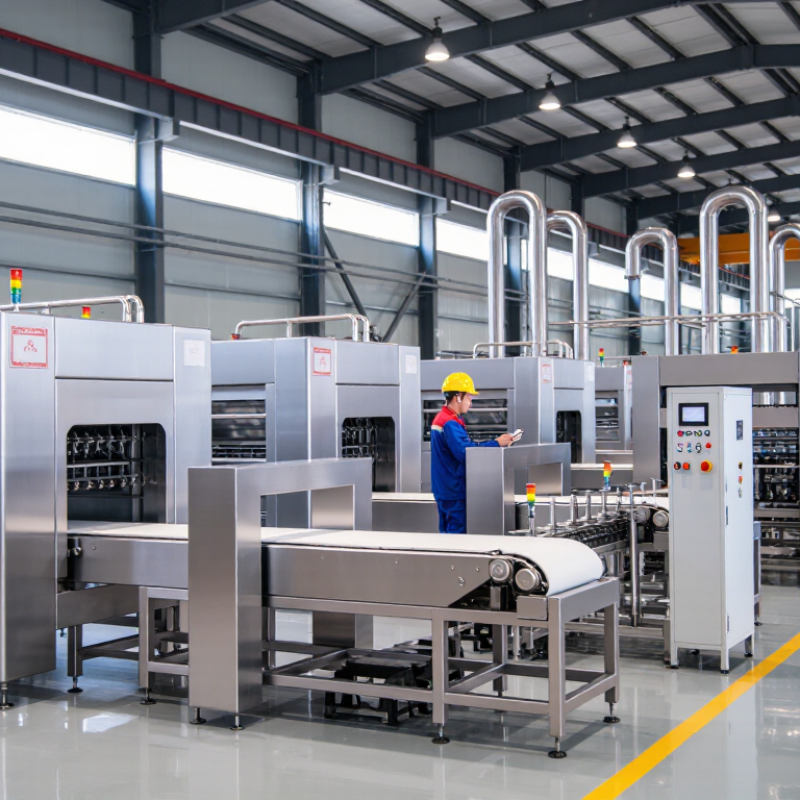
What Defines a Leading Recycling Machine Manufacturer in China
What Defines a Leading Recycling Machine Manufacturer in China
A leading recycling machine manufacturer is defined by measurable performance, not factory size. The OECD’s Global Plastics Outlook reports that global plastic waste reached 353 million tonnes in 2019. Only 9% was recycled. This gap demands equipment that performs beyond showroom demonstrations. Experienced manufacturers should provide material trials, energy readings, output samples, and verified contamination rates. Their engineers must understand moisture, mixed polymers, fiber quality, and feedstock variation. Real production is rarely perfect.
Reliable design also includes safety, maintenance, and traceable components. A serious supplier should explain throughput under defined conditions, not only advertise maximum capacity. The World Bank’s What a Waste 2.0 projects municipal waste could reach 3.40 billion tonnes annually by 2050. That pressure makes uptime and easy servicing essential. Remote diagnostics, spare-parts availability, documented testing, and operator training reveal professional maturity. However, even strong suppliers may underestimate local power stability or changing material quality. Buyers should challenge those assumptions.
Tips: Request a live factory test. Measure output, power use, noise, and residue. Check independent certifications and service response times. Ask for references from similar materials. A lower purchase price can become expensive when blades, filters, or heaters fail early. Review the full operating cost, not just the quotation.
China Top 10 Recycling Machine Manufacturers? - What Defines a Leading Recycling Machine Manufacturer in China
Evidence-based criteria for evaluating recycling equipment manufacturers
| No. | Evaluation Dimension | Measurable Reference or Industry Benchmark | What a Leading Manufacturer Should Demonstrate | Why It Matters |
|---|---|---|---|---|
| 1 | Material-Specific Processing Technology | Equipment designed for defined feedstocks such as PET, PE, PP, films, electronic waste, tires, metals, or organic waste rather than a generic “one-size-fits-all” system. | Documented process flow, material limits, contamination assumptions, moisture range, particle-size range, and confirmed test results for the customer’s actual feedstock. | Recycling performance changes significantly with material type, contamination, moisture, and particle size. |
| 2 | Verified Throughput Capacity | Capacity should be stated in metric tonnes per hour or tonnes per day and linked to specific feedstock conditions, operating hours, and product specifications. | Provides test reports showing rated capacity, actual operating capacity, uptime assumptions, and the quality of the recovered output. | A nominal capacity without feedstock and operating conditions cannot be used for reliable plant planning. |
| 3 | Recovery Rate and Product Purity | Performance should be reported separately as recovery rate, yield, and purity. These values must be measured from representative input samples and defined output streams. | Uses a clear sampling method and reports losses, rejects, moisture, contamination, and the test period instead of presenting one unsupported percentage. | High recovery and high purity are different objectives and may require different process settings. |
| 4 | Compliance and Machine Safety | Relevant references include ISO 12100 for machinery risk assessment, ISO 13849-1 for safety-related control systems, and IEC 60204-1 for electrical equipment of machines. | Supplies risk-assessment documentation, protective guarding, emergency-stop systems, electrical drawings, operating instructions, and conformity documentation appropriate to the destination market. | Safety documentation supports legal compliance, commissioning, operator training, and insurance requirements. |
| 5 | Quality Management | ISO 9001 is an internationally recognized quality-management standard covering controlled processes, customer requirements, corrective actions, and continual improvement. | Maintains traceable production records, inspection procedures, component controls, factory acceptance testing, and documented corrective-action processes. | A controlled manufacturing process reduces variation between the design specification and the delivered machine. |
| 6 | Energy and Water Efficiency | Energy consumption should be reported in kWh per tonne of processed material. Water use should be reported in cubic metres per tonne where wet processing is used. | Provides utility-load calculations, installed electrical power, actual operating consumption, water-treatment requirements, and options for heat or water recovery. | Utilities directly affect operating cost, plant infrastructure, and environmental performance. |
| 7 | Automation and Process Control | A complete control system should include monitoring of key operating conditions, alarms, interlocks, variable-speed drives, and data recording where required. | Offers clear control logic, remote diagnostics where appropriate, access control, fault history, production monitoring, and operator-friendly interfaces. | Effective control improves consistency, troubleshooting speed, safety, and production visibility. |
| 8 | Maintainability and Spare-Parts Support | Critical wear parts should be identified by part number, material, expected service conditions, inspection intervals, and replacement procedures. | Provides spare-parts lists, preventive-maintenance schedules, technical manuals, troubleshooting guides, and defined response procedures. | Downtime and maintenance complexity can have a greater financial impact than the initial equipment price. |
| 9 | Installation and Commissioning Capability | A complete project plan should cover civil requirements, equipment layout, electrical load, utilities, commissioning tests, operator training, and acceptance criteria. | Provides engineering drawings, installation procedures, commissioning records, performance testing, and training for local operators and maintenance personnel. | Recycling lines are integrated systems; poor installation can prevent the equipment from achieving its specified performance. |
| 10 | Lifecycle Value and Environmental Management | Lifecycle evaluation should include purchase cost, utilities, consumables, labor, maintenance, downtime, expected service life, and end-of-life considerations. ISO 14001 is a recognized environmental-management framework. | Provides a total-cost-of-ownership estimate, equipment-life assumptions, upgrade options, waste-reduction measures, and environmental-management evidence where applicable. | The lowest purchase price does not necessarily provide the lowest cost per tonne over the equipment’s operating life. |
Note: Actual recycling performance depends on feedstock composition, contamination, moisture, operating conditions, equipment configuration, and local compliance requirements. Manufacturer claims should be verified through application-specific testing and documented acceptance criteria.