FAQS

China Top 10 Outdoor Propane Heater Suppliers?

China has become a major sourcing base for outdoor heating equipment, including patio, restaurant, and event applications. This guide examines China’s top 10 outdoor propane heater suppliers through practical purchasing criteria, not catalog claims alone. Product range, factory experience, certification readiness, export history, and after-sales support all matter.

Industry data provides useful context. Grand View Research reports continued growth in the global outdoor heating equipment market, supported by expanding outdoor dining and hospitality spaces. Fortune Business Insights also identifies commercial hospitality and residential outdoor living as important demand segments. However, market estimates differ by definition, region, and product category. That difference deserves attention.

A reliable supplier should explain heat output, fuel consumption, ignition design, and safety controls clearly. Look for details such as flame-failure protection, tip-over shutoff, protective grilles, and stable caster construction. A showroom may reveal more than a brochure. Check weld quality, burner consistency, hose connections, and packaging strength before placing a large order.

Compliance must match the destination market. Relevant standards may include CSA, CE, UKCA, or local gas-appliance requirements. NFPA 58 and related propane-safety guidance also provide valuable reference points, although they do not replace local certification. Testing documents should be traceable and issued by recognized laboratories.

This ranking is a sourcing starting point, not a final verdict. Supplier capabilities can change. Verify factory ownership, production capacity, inspection records, warranty terms, and sample performance independently. The best outdoor propane heater supplier is not always the cheapest. It is the one that communicates limitations honestly and delivers consistent, documented quality.
China Top 10 Outdoor Propane Heater Suppliers?

What Are Outdoor Propane Heaters and How Are They Used?

Outdoor propane heaters are fuel-burning appliances designed to warm patios, terraces, gardens, and temporary outdoor seating areas. They usually combine a propane cylinder, regulator, burner, reflector, and safety shutoff system. Propane burns without requiring an electrical connection, which makes these heaters useful where power access is limited.

The U.S. Energy Information Administration reports that one gallon of propane contains approximately 91,500 British thermal units. That energy supports strong radiant heat, especially in open spaces. However, wind quickly reduces comfort. A heater may feel effective near a table but weak several meters away. In practical use, placement matters as much as fuel output. Keep the unit on a stable, nonflammable surface, away from curtains, branches, and building openings. Never use it in enclosed or poorly ventilated areas.

Outdoor heaters are commonly used for restaurants, hospitality venues, residential patios, and event spaces. Commercial models often prioritize higher heat output and longer operating periods. Residential models usually favor easier cylinder replacement and simpler controls. NFPA 58 provides safety guidance for liquefied petroleum gas systems, including cylinder handling and installation practices. The U.S. Consumer Product Safety Commission also repeatedly warns users to inspect hoses, connections, and ventilation before operation. Small leaks can become serious quickly. Supplier claims deserve checking, too; advertised coverage often assumes calm weather. That assumption is easy to miss.

China Top 10 Outdoor Propane Heater Suppliers? What Are Outdoor Propane Heaters and How Are They Used?

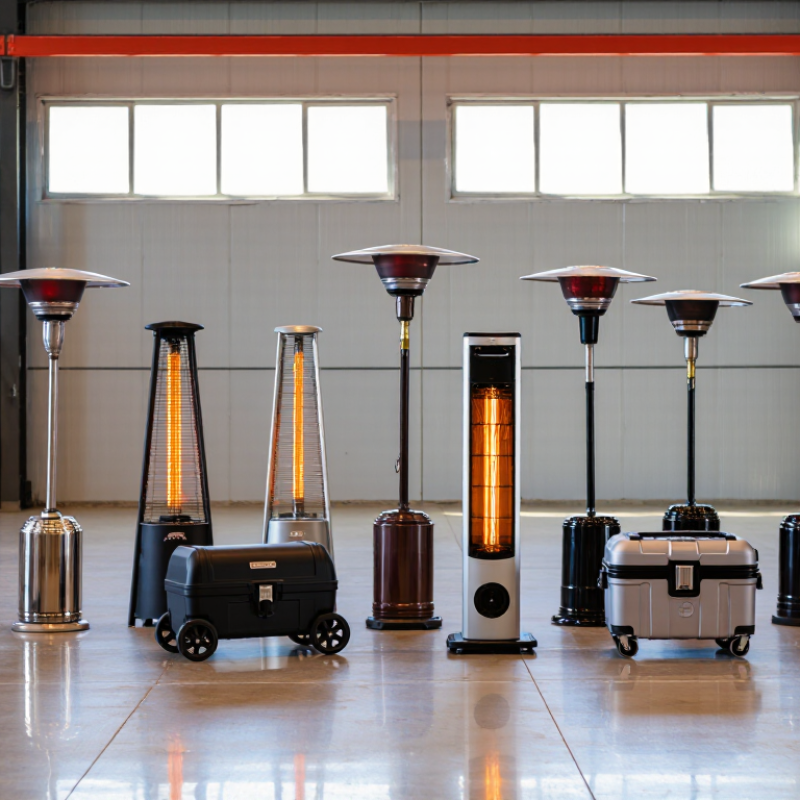
Outdoor propane heaters use liquefied petroleum gas to produce heat for patios, terraces, restaurants, events, and other open-air spaces. Their heating capacity varies by design: portable radiant heaters generally provide lower output, while freestanding and pyramid-style patio heaters commonly deliver approximately 40,000–48,000 BTU per hour. Actual performance depends on fuel pressure, weather conditions, installation, and ventilation.

How to Evaluate China’s Outdoor Propane Heater Suppliers

When evaluating China’s outdoor propane heater suppliers, begin with product safety, not catalog size. The ISO Survey 2023 recorded more than 426,000 ISO 9001 certificates in China, but certification alone proves little about heater performance. Ask for current test reports against the destination market’s requirements, such as ANSI Z83.26 or EN 14543. Verify the issuing laboratory independently.

Inspect the factory in person or through a qualified auditor. Watch a production line, not a showroom. Check burner assembly, thermocouple response, tilt protection, hose connections, and leak-testing records. Request batch traceability for valves and regulators. A reliable supplier should provide drawings, material specifications, inspection plans, and corrective-action records. The U.S. Consumer Product Safety Commission repeatedly highlights fire and burn risks from heating products, so safety controls deserve more attention than surface finish.

Order samples from normal production, then test them after transport and repeated ignition cycles. Measure heat output, gas consumption, flame stability, and shutdown response. Compare the results with the supplier’s declared values. Ask for packaging drop-test evidence and spare-part availability. One weakness remains easy to miss: a factory may pass a sample inspection but change components during mass production. Use a pre-shipment inspection and random production audits. Cost matters, but the cheapest quotation can conceal thinner steel, weaker controls, or incomplete documentation. That is not always obvious.

China’s Top 10 Outdoor Propane Heater Suppliers

China’s Top 10 Outdoor Propane Heater Suppliers are increasingly evaluated by factory capability, safety control, and export reliability. A fixed ranking can mislead. Product quality changes between models and production batches. This list should therefore mean the ten strongest supplier profiles, not a permanent brand ranking.

Market evidence supports careful sourcing. Grand View Research reports that the global outdoor heating market is expanding steadily, driven by restaurants, hotels, and residential patios. The report also identifies gas-fired heaters as an important product segment. Suppliers with ISO 9001 systems, traceable burner testing, and documented leak inspections deserve closer attention. Compliance with relevant requirements, such as CE, UKCA, CSA, or local gas standards, must match the destination market. NFPA 58 remains a useful reference for propane storage and handling practices.

Tips: Request factory audit records, not only certificates. Test ignition, flame stability, tip-over protection, and shutdown performance. Ask for spare-part availability before signing a contract. A clear warranty process matters more than polished catalog photos. In my sourcing experience, sample performance can look excellent while packaging protection remains weak. That detail is easy to overlook. Weather resistance also needs real evidence, such as coating tests and outdoor exposure records. Buyers should compare heating output, fuel consumption, noise, carton strength, and after-sales response. The cheapest quotation may create higher replacement costs later.

China Top 10 Outdoor Propane Heater Suppliers? - China’s Top 10 Outdoor Propane Heater Suppliers

Comparative supplier data is anonymized by request. Product specifications, certifications, minimum order quantities, and lead times vary by model, destination market, and purchase contract; buyers should verify the latest technical documents before ordering.

Rank Supplier Profile Typical Product Range Heating Output Fuel & Connection Common Safety Features Typical Compliance Documents Typical MOQ Indicative Lead Time Customization Capability Buyer Evaluation
1 Supplier Profile 01 Freestanding mushroom and pyramid patio heaters 40,000–48,000 BTU/h
(11.7–14.1 kW)
Propane; low-pressure regulator connection Flame failure shut-off Tilt switch Overheat protection CE-related technical file; model-dependent gas safety documentation 100–300 units 35–55 days after approved sample Color, logo, packaging, wheel and reflector options ★★★★★
Broad outdoor-heater portfolio
2 Supplier Profile 02 Commercial mushroom heaters for restaurants and hospitality 41,000–46,000 BTU/h
(12.0–13.5 kW)
Propane; standard cylinder-compatible hose assembly Anti-tilt switch Pilot safety control Reflector guard CE or UKCA documentation depending on market; test reports by model 100–500 units 40–60 days Private labeling and carton artwork ★★★★☆
Suitable for hospitality purchasing
3 Supplier Profile 03 Pyramid flame and glass-tube patio heaters 38,000–42,000 BTU/h
(11.1–12.3 kW)
Propane; regulator and hose supplied by configuration Flame failure device Tip-over protection Protective mesh CE-related documents; combustion and stability test records where available 100–300 units 35–50 days Glass-tube design, finish, packaging and control layout ★★★★☆
Strong decorative product positioning
4 Supplier Profile 04 Compact tabletop propane heaters 8,000–15,000 BTU/h
(2.3–4.4 kW)
Propane; small-cylinder or hose-adapter configurations Flame monitoring Tip-over shut-off Stable base Market-specific gas appliance documentation; model-level test reports 200–500 units 30–45 days Base shape, finish, control knob and retail packaging ★★★★☆
Good fit for smaller outdoor areas
5 Supplier Profile 05 High-output commercial patio heating systems 45,000–48,000 BTU/h
(13.2–14.1 kW)
Propane; external cylinder connection Thermocouple protection Tilt safety switch Regulator protection CE or destination-market certification package; gas and stability reports 50–200 units 45–65 days Commercial finishes, caster systems and branded controls ★★★★☆
Designed for continuous commercial use
6 Supplier Profile 06 Stainless-steel and weather-resistant outdoor heaters 40,000–46,000 BTU/h
(11.7–13.5 kW)
Propane; low-pressure regulated supply Flame-out protection Anti-tilt control Drainage openings Material declarations; CE-related documentation subject to model and market 100–300 units 40–60 days 304-grade stainless-steel options, finish and enclosure design ★★★★☆
Appropriate for coastal or premium installations
7 Supplier Profile 07 Budget-oriented freestanding patio heaters 40,000–43,000 BTU/h
(11.7–12.6 kW)
Propane; standard hose and regulator assembly Pilot safety valve Tip-over shut-off Mesh guard Basic product test report; certification availability depends on destination 300–1,000 units 30–50 days Limited color, logo and packaging customization ★★★☆☆
Focused on cost-sensitive volume orders
8 Supplier Profile 08 Decorative flame and garden patio-heater models 38,000–42,000 BTU/h
(11.1–12.3 kW)
Propane; cylinder compartment integrated into housing Flame failure shut-off Tilt switch Safety screen CE-related technical documentation; combustion test data by model 100–300 units 40–55 days Housing style, finish, glass tube and packaging customization ★★★☆☆
Emphasis on appearance and retail presentation
9 Supplier Profile 09 OEM and private-label outdoor heater programs 35,000–48,000 BTU/h
(10.3–14.1 kW)
Propane; connection varies by destination market Thermocouple Anti-tip system Overheat control Custom compliance package available according to buyer requirements 100–500 units 45–70 days High: colors, tooling, manuals, labels and retail cartons ★★★☆☆
Better suited to established importers
10 Supplier Profile 10 Portable and seasonal outdoor propane heaters 10,000–40,000 BTU/h
(2.9–11.7 kW)
Propane; portable-cylinder and hose-connected versions Flame monitoring Tip-over protection Protective grille Model-specific safety test reports; destination-market documents upon request 200–500 units 30–55 days Portable form factor, accessories, colors and packaging ★★★☆☆
Flexible range for seasonal distribution

How the Top Suppliers Compare in Products and Capabilities

China’s top ten outdoor propane heater suppliers differ less in appearance than in execution. Most offer mushroom, pyramid, wall-mounted, and portable models. Their heating outputs commonly range from 40,000 to 48,000 Btu per hour. The U.S. Energy Information Administration lists propane at approximately 91,452 Btu per gallon, making fuel efficiency and burner stability important comparison points.

Product depth separates the stronger suppliers. Some provide stainless-steel cabinets, adjustable flame controls, electronic ignition, and replacement parts. Others focus on low-cost models with thinner reflectors and simpler valves. Better factories usually maintain incoming-gas testing, leak checks, flame-failure testing, and aging trials. Ask for documented inspection records, not attractive catalog claims. That matters.

Capability also includes engineering response. Leading suppliers can adapt mounting plates, glass tubes, packaging, and control layouts for different markets. They may support prototype sampling within weeks and manage container loading with fewer damaged reflectors. Yet a large factory is not automatically more reliable. Communication gaps can still delay a modified valve or revised manual. My practical concern is often overlooked: suppliers may describe heat output clearly but explain wind resistance poorly. Buyers should request test conditions, fuel pressure, carton-drop results, and spare-part availability before comparing prices. A lower quotation can become expensive after one winter of service.

What to Check Before Choosing a Chinese Propane Heater Supplier

China Top 10 Outdoor Propane Heater Suppliers?

Before choosing a Chinese propane heater supplier, inspect more than product photos and factory videos. Request a current business license, export history, and clear manufacturing address. Ask whether production is in-house or subcontracted. A polished showroom proves little.

Check the heater’s safety design carefully. Review flame-failure protection, tip-over shutoff, pressure control, hose quality, and ignition performance. Request test reports from recognized laboratories, then verify the report numbers independently. Confirm materials, such as burner metal, reflector finish, and fastener quality. Ask for batch traceability and written inspection records. Local regulations still matter.

Order samples before discussing large quantities. Test ignition repeatedly, including cold starts and mild wind. Watch for unstable flames, uneven heat, loose fittings, or damaged packaging. Ask for replacement-part availability and response times. A reliable supplier should explain tolerances, warranty limits, and corrective actions without vague promises. Factory capacity also deserves attention; a supplier may produce excellent samples but struggle during peak season. No checklist is perfect. I would still request a live production inspection, because documents can become outdated. Clear communication matters too. If answers change between sales staff and engineers, pause the purchase. Compare at least three suppliers using the same questions, specifications, and delivery terms. Feelings are useful, but records are stronger.