Top 10 Professional Card Game Manufacturers in China
China’s card game manufacturing sector combines traditional printing skills with modern automation, serving publishers, retailers, educators, and collectors worldwide. This article introduces ten Professional Card Games Manufacturer candidates for buyers seeking dependable production partners. The selection focuses on verifiable capabilities rather than attractive claims alone.
Each manufacturer is considered through practical purchasing questions. Can the factory produce sharp edges and consistent color across large runs? Does it offer prototypes before mass production? Are paper thickness, coating, tuck boxes, and inserts clearly specified? These details matter when a deck must shuffle smoothly and survive repeated handling. We also examine communication, quality-control procedures, minimum order quantities, packaging, and export experience. Where available, evidence may include factory information, product samples, audit records, and customer feedback. Standards and certifications should still be checked directly for each project.
The list is not a substitute for due diligence. A polished website cannot prove stable production. Nor can a low quotation guarantee value. Buyers should request current samples, confirm approved artwork, review material declarations, and clarify delivery responsibilities in writing. Small inconsistencies can become expensive when thousands of cards are packed together. Some information may change, and public sources are not always complete. That limitation deserves attention. The most suitable supplier depends on game complexity, budget, target market, and required compliance. With careful comparison, this guide can help buyers identify capable Chinese partners and build a more transparent sourcing process.
How China’s Professional Card Game Manufacturing Industry Is Defined
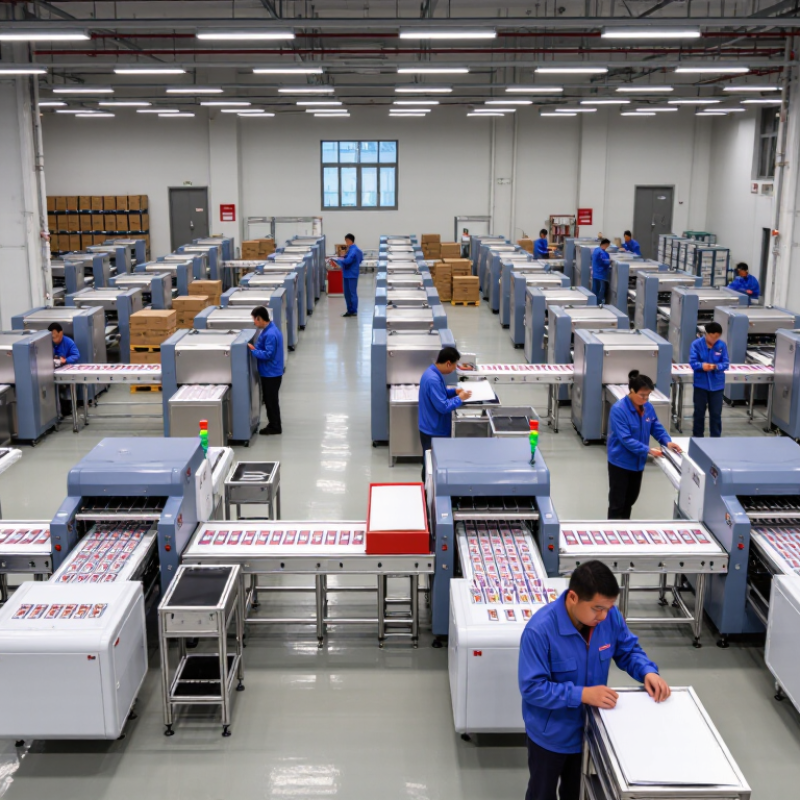
The professional card game manufacturing industry in China is defined by controlled production, not factory size. It connects game development, prepress, printing, finishing, packing, and quality inspection. A capable manufacturer can turn digital artwork into consistent cards across large batches. This requires calibrated color management, stable paper sourcing, accurate cutting, and clean corner finishing. Small details matter. A one-millimeter shift can affect shuffle feel, alignment, and visual balance.
From a buyer’s perspective, professional experience appears during sample development. Skilled teams check color differences, coating durability, card thickness, surface friction, and packaging strength. They may test cards through repeated shuffling and handling. Material specifications should be available, including paper weight, coating type, ink information, and tolerances. Reliable suppliers also provide approval samples, production records, and corrective-action reports. These documents offer stronger evidence than attractive factory photographs.
However, this definition is not perfect. Some manufacturers present polished samples but struggle with repeated production accuracy. A prototype may feel excellent, while the final batch feels slightly rough or bends differently. That gap deserves scrutiny. Buyers should compare multiple samples, inspect random cartons, and ask how defects are recorded. Professional manufacturing is therefore a combination of technical skill, transparent communication, measurable quality, and the willingness to admit occasional mistakes.
Key Criteria for Evaluating Professional Card Game Manufacturers
Top 10 Professional Card Game Manufacturers in China
Key Criteria for Evaluating Professional Card Game Manufacturers
Choosing a professional card game manufacturer requires more than comparing prices. Experience matters. Ask how many similar projects the factory has completed, and request physical samples. Inspect card thickness, surface coating, corner cuts, color consistency, and shuffle feel. A reliable manufacturer should explain its paper grades and production limits clearly.
Quality control must be visible, not promised. Review pre-production proofs, in-line inspection records, and final sampling procedures. Check whether the factory uses calibrated color tools and measures dimensions consistently. Certifications can support credibility, but they should match the actual facility and production process. Visit the site when possible. A short visit can reveal storage conditions, worker organization, and machine maintenance.
Production capacity also deserves careful review. Confirm minimum order quantities, lead times, replacement policies, packaging strength, and shipping documentation. Clear communication is essential when artwork changes late. In my experience, factories often quote confidently before checking every detail. That is a warning sign. Written specifications reduce confusion, though they cannot prevent every mistake. Environmental practices should also be examined, including recyclable packaging and responsible paper sourcing. Cost remains important, but an unusually low quote may hide thinner cards, weaker boxes, or unstable color matching. The best evaluation combines samples, records, factory evidence, and honest discussion about risks. Perfect performance is rare. Careful follow-up matters.
Top 10 Professional Card Game Manufacturers in China
China’s top 10 professional card game manufacturers serve publishers, retailers, and independent designers worldwide. Their strengths usually include custom printing, stable production, and flexible packaging options. Experienced buyers inspect more than product samples. They review factory capacity, material records, quality procedures, and export experience.
A capable manufacturer can produce poker-sized decks, educational cards, strategy games, and premium collector editions. Typical services include artwork checks, color proofing, die-cutting, corner rounding, collation, shrink-wrapping, and carton testing. Paper thickness matters. So does surface texture. Linen finishes can improve grip, while matte coatings reduce glare under strong lights. Reliable suppliers also confirm tolerances before mass production. A small size difference may affect shuffling and box fit.
Factory audits often reveal practical details that catalogs omit. Check lighting, humidity control, worker training, and sample retention. Ask how damaged sheets are recorded. Request inspection photos before shipment. Communication quality matters too, especially when files change across time zones. No factory is perfect. Even an experienced supplier may miss a color shift or miscount a card sheet. That is why staged approvals and independent inspections remain valuable. Buyers should compare pricing with lead times, replacement policies, and packaging strength. The cheapest quotation can create expensive delays. My own evaluation would also consider responsiveness after delivery, because long-term reliability appears during problems, not only during successful orders.
Top 10 Professional Card Game Manufacturers in China
| No. | Comparison Dimension | Common Specification or Option | Practical Verification Point |
| 1 | Poker deck composition | A standard French-suited deck has 52 playing cards; many retail decks also include two jokers. | Confirm card count, jokers, and any instruction or reference cards. |
| 2 | Poker card size | A commonly used poker size is approximately 63.5 × 88.9 mm (2.5 × 3.5 in). | Check finished dimensions and permitted cutting tolerance. |
| 3 | Bridge card size | A common bridge size is approximately 57.15 × 88.9 mm (2.25 × 3.5 in). | Request a physical sample to assess handling and fit in card holders. |
| 4 | Card material | Playing cards are commonly made from coated paperboard; plastic-card options may use materials such as PVC or PET. | Specify material, thickness, flexibility, and intended use before ordering. |
| 5 | Surface finish | Typical options include varnished or coated paper cards and smooth or textured plastic cards. | Evaluate shuffling, glare, print protection, and feel using production samples. |
| 6 | Printing process | Custom decks typically require printed faces and backs, with color specifications agreed before production. | Approve a color proof and check front-to-back alignment and edge consistency. |
| 7 | Custom game components | Custom card games may include non-standard card counts, tokens, score pads, or rule sheets. | Confirm the bill of materials and packaging layout for the complete set. |
| 8 | Packaging formats | Common formats include tuck boxes, rigid boxes, and shrink-wrapped decks. | Check box dimensions, protection during transit, and any required retail labeling. |
| 9 | Quality inspection | Relevant checks include card count, print defects, cutting, surface marks, and packaging condition. | Agree inspection criteria and defect limits before mass production. |
| 10 | Compliance and documentation | Requirements depend on the destination market, product age grading, materials, and packaging. | Verify applicable test reports, declarations, and labeling requirements for the target market. |
Specifications shown are common industry options, not verified company-specific capabilities; actual materials, tolerances, and services vary by supplier.
Manufacturing Capabilities, Product Types, and Market Applications
Top 10 Professional Card Game Manufacturers in China
Chinese card game manufacturers increasingly combine automated printing with skilled hand inspection. Their capabilities often include prepress design, color calibration, sheet printing, die-cutting, corner rounding, collation, and sealed packaging. Some facilities produce thousands of decks daily, while smaller workshops support limited custom runs. Details decide quality. Experienced buyers should request physical samples before approving mass production. Samples reveal weaknesses.
Product types range from standard playing cards and tarot decks to flashcards, educational sets, collectible cards, and complex tabletop game components. Manufacturers may offer linen-textured, smooth, plastic-coated, or fully synthetic materials. Options can include metallic effects, spot coatings, magnetic boxes, tuck cases, and custom inserts. Material selection depends on handling frequency, shelf life, budget, and intended audience. A premium finish may look impressive but perform poorly under repeated shuffling.
Market applications cover retail games, hotel entertainment, classroom activities, family products, event promotions, and licensed-style private-label collections without relying on specific brands. Export-focused suppliers commonly manage carton packing, barcode placement, inspection records, and shipment coordination. Reliable factories can explain defect limits, lead times, and replacement procedures clearly. However, capacity claims are not always consistent across suppliers. A low quotation may exclude packaging tests, color corrections, or final inspection. Buyers should compare complete specifications, not only unit prices, and keep written approval samples for production control.
How to Select the Right Chinese Card Game Manufacturer
Selecting a Chinese card game manufacturer requires more than comparing unit prices. Experience shows that samples reveal problems early. Examine card thickness, edge smoothness, color consistency, and surface feel. Request material specifications and recent quality records. A glossy coating may look attractive, but it can create glare under retail lighting. Check whether the manufacturer accepts small pilot runs. This reduces financial risk. Do not trust photographs alone.
Audit the production process before placing a large order. Arrange a video inspection or an on-site visit when practical. Review cutting, printing, packing, and warehouse conditions. Ask how workers handle misprints, bent cards, and missing components. Reliable factories should explain their inspection standards clearly. Confirm their equipment, monthly capacity, lead times, and backup plans. Ask for a color proof before mass production. Small differences become obvious across thousands of cards.
Compare quotations only after defining every detail in writing. Include card size, paper weight, coating, box structure, inserts, packaging, and delivery terms. Request a realistic production schedule, not an optimistic promise. Check communication speed and technical understanding during sampling. Past customer references can reveal delayed replies or repeated defects. No factory gets every detail right. That matters. A supplier may offer a lower price while quietly reducing paper quality. Leave room for independent inspection, because trust without verification remains an avoidable weakness.