
FAQS
How to Choose the Best Toyota Tacoma Side Mirror?
Choosing the right Toyota Tacoma Side Mirror is more than matching a model year. It affects visibility, towing confidence, and daily driving comfort. A mirror may look right and still be wrong. Small differences in mounting points, connector shapes, and adjustment ranges can create expensive problems.
NHTSA’s Federal Motor Vehicle Safety Standard No. 111 establishes rear visibility requirements for vehicle mirrors and camera systems. It does not make every aftermarket mirror equally suitable. Buyers should check the Tacoma’s generation, cab style, trim, and factory features before ordering. Heated glass, power adjustment, turn-signal lighting, blind-spot monitoring, and manual folding mechanisms require careful comparison. One missing function can matter during a rainy trailer trip or a crowded parking-lot exit.
The wider vehicle market also supports careful replacement decisions. S&P Global Mobility reported that the average age of U.S. vehicles reached 12.6 years in 2024. Older trucks often need replacement parts that preserve original fit and visibility. Industry installation guidance from organizations such as I-CAR also emphasizes correct procedures, connector inspection, and calibration where driver-assistance systems are involved. Experience matters here. A mirror that bolts on quickly may still show an incorrect viewing angle.
This guide examines material quality, glass shape, electrical compatibility, folding design, and towing needs. It also considers OEM and aftermarket options without assuming one is always better. That would be too simple. The best Toyota Tacoma Side Mirror should fit the truck, support the driver, and remain dependable after installation.
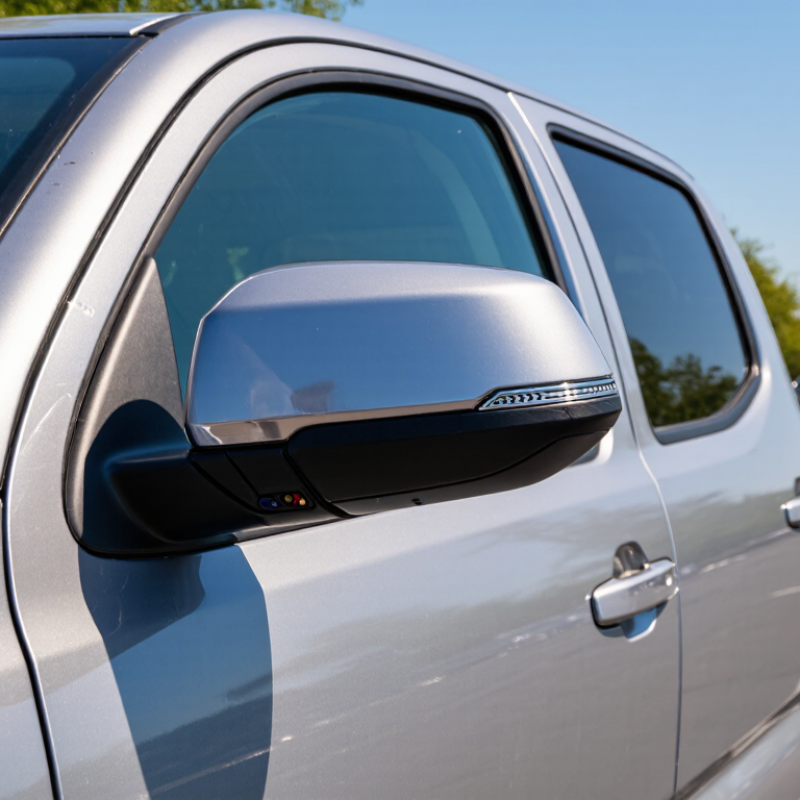
Define Tacoma Year, Cab Style, and OEM Mirror Specifications
How to Choose the Best Toyota Tacoma Side Mirror?
A correct side mirror starts with the Tacoma’s model year. Mirror mounts, wiring, glass shape, and connector layouts can change after a redesign. S&P Global Mobility reported that the average U.S. vehicle age reached 12.6 years in 2024. Older trucks often need careful fitment checks, not assumptions based on appearance.
Cab style matters just as much. A regular cab, access cab, and double cab may use different door frames and mirror arms. Check the driver-side and passenger-side mounting points separately. Then compare OEM specifications, including manual or power adjustment, heating, turn signals, blind-spot sensors, and folding functions. A connector can look similar while using different pin positions. That mistake is easy to miss.
Field of view deserves serious attention. NHTSA’s 2022 Traffic Safety Facts recorded 7,388 pedestrian deaths in 2021, highlighting the value of effective visibility systems. Confirm that replacement glass matches the original viewing area and curvature. SAE J941 provides recognized guidance for driver eye position and mirror field of view, although real-world seating varies. Measure twice. I would also photograph the old connector before ordering; catalogs are useful, but they are not always perfect. A mirror that bolts on may still create warning lights, weak heating, or an unsafe blind spot.
Compare OEM and Aftermarket Options by FMVSS No. 111 and DOT Compliance
Choosing the best Toyota Tacoma side mirror begins with visibility, not appearance. In the United States, FMVSS No. 111 sets rear visibility requirements for many light vehicles. It covers mirror coverage, field of view, adjustment, and convex-mirror warnings. A mirror may look identical but provide less coverage after installation. Measure from the driver’s normal seating position. Check the view.
An OEM replacement usually matches mounting points, wiring, heating, turn signals, and camera systems. This can reduce fitting mistakes, although the price may be higher. A suitable aftermarket mirror should list the exact model year, body style, and equipment. Look for clear compliance statements and traceable manufacturer information. DOT is not an approval label issued for every individual mirror. Manufacturers certify that applicable equipment meets federal standards. Be careful with vague “DOT approved” claims that offer no supporting details.
After installation, compare both side views from the driver’s seat. Check for vibration at highway speed, loose glass, and limited adjustment. If the mirror is convex, keep the required warning text visible. Objects may appear farther away. Recheck visibility at night and during rain. Small alignment errors matter. One honest concern remains: a cheap mirror can fit physically yet leave a dangerous blind area. Documentation helps, but it cannot replace a careful real-world inspection.
Select Manual, Power, Heated, or Towing Mirrors by Vehicle Use
Choosing the Best Side Mirror for Your Pickup
Your driving routine should decide the mirror type. Manual mirrors suit older vehicles or simple work use. They cost less and have fewer parts to fail. However, adjusting one from the driver’s seat can be inconvenient. I once ignored this problem during winter and regretted it in a crowded parking lot.
Power mirrors are better for daily commuting, family use, and frequent parking. A cabin-mounted switch lets you adjust the viewing angle quickly. Look for smooth movement and a firm housing. Loose controls can make precise alignment difficult. Check that the replacement matches your vehicle’s connector and mounting points.
Heated mirrors help drivers who face rain, frost, or morning condensation. They improve visibility, but they do not replace proper cleaning. Towing mirrors are more useful when hauling trailers or wide loads. Their extended glass provides a broader rearward view. Some models include adjustable sections for close and distant traffic. Measure your trailer before buying. I underestimated mirror width once, and tight garage entry became stressful. Also inspect the folding design, glass stability, and electrical compatibility. A mirror that looks impressive may still create blind spots when adjusted poorly. Test the viewing angle from your normal seating position, not from outside the vehicle.
How to Choose the Best Toyota Tacoma Side Mirror?
Select Manual, Power, Heated, or Towing Mirrors by Vehicle Use
The chart rates each mirror type from 1 to 5 for common driving situations. Manual mirrors are simple and cost-effective, power mirrors improve everyday convenience, heated mirrors help maintain visibility in cold or wet weather, and towing mirrors provide the widest rearward view when hauling a trailer.
Evaluate Mirror Glass Size, Convex Field of View, and SAE J964 Testing
How to Choose the Best Toyota Tacoma Side Mirror?
Choosing a side mirror requires more than matching the housing shape. Start with the mirror glass size. Larger glass can reduce blind spots, especially when changing lanes on crowded roads. However, oversized glass may limit adjustment or interfere with the mirror frame. Measure the original glass before ordering. A close fit matters.
Convex glass offers a wider field of view than flat glass. It can reveal a vehicle hiding near the rear quarter panel. Yet distant objects may appear smaller than expected. That difference can affect distance judgment. During installation, adjust the mirror from the driver’s position, not from outside the vehicle. Check the lower and outer edges carefully. I have found that a wide view feels safer, but it can still mislead unfamiliar drivers.
Tips: Look for clear SAE J964 testing information. Reliable documentation should identify the test method and performance criteria. Do not rely on vague claims such as “premium quality.” Inspect the glass for distortion by viewing a straight fence or window frame. The line should remain steady across the surface. Recheck the adjustment after a short drive. Small errors become obvious later. Specification sheets are useful, but real-world visibility deserves equal attention.
Check Plug Compatibility, Bolt Pattern, Adjustment Range, and Warranty Terms
How to Choose the Best Toyota Tacoma Side Mirror?
Plug compatibility should be checked before comparing appearance or price. Match the vehicle year, cab style, mirror functions, and connector shape. Count the pins carefully. A similar plug can still support different heating, signal, or power-folding functions. Compare the replacement connector with the original one in bright light. A small mismatch can stop installation.
Bolt pattern matters just as much. Measure the distance between mounting studs and inspect the triangular base behind the door panel. The replacement should sit flat without forcing the bolts into place. Use the original fasteners when their threads remain clean. Loose mounting can create vibration at highway speed. I once trusted a product photo and ignored the mounting diagram. That mistake cost extra time.
Adjustment range affects daily visibility. Sit in the driver’s seat and check whether the glass reaches the blind-spot area without touching its housing. Manual and powered designs may offer different movement limits. Test every direction after installation. Do not judge alignment from the driveway alone. Warranty terms also deserve close reading. Look for coverage length, exclusions, return shipping rules, and requirements for installation records. Keep the receipt, photos, and removed part. Some policies sound generous but exclude labor or damage from incorrect fitting. That detail is easy to miss.
Skip to content
