
FAQS
How to Choose Commercial Outdoor Heaters for Your Business
Choosing commercial outdoor heaters for your business affects comfort, operating costs, and customer satisfaction. A cold patio can shorten visits, reduce table turnover, and make an otherwise attractive space feel unfinished. Guests notice the difference quickly.
This guide explores practical factors before you purchase. Fuel type matters. Electric models offer clean, targeted heat and simple installation. Gas heaters can provide stronger warmth across larger areas, but they require careful ventilation and fuel planning. Heat output alone cannot guarantee comfort. Wind, ceiling height, furniture placement, and local weather can change performance significantly. Measure the patio first. Then compare coverage claims with real site conditions. Manufacturer specifications are useful, but they are not always perfect.
Safety should guide every decision. Follow installation instructions, maintain safe clearances, and use approved equipment for the intended setting. Check local requirements and ask a qualified professional about electrical connections or fuel systems. Regular inspections can identify damaged cords, blocked vents, unstable bases, or worn controls before they create problems. Keep maintenance records. They support reliable operation and responsible business management.
No heater is perfect. A powerful unit may waste energy in an exposed corner, while a compact model may disappoint during colder evenings. I would avoid choosing from price alone. Review purchase cost, energy use, repairs, storage, and expected service life together. Test one unit during actual business hours when possible. That small trial may reveal uncomfortable glare, uneven warmth, or controls staff dislike using. The best commercial outdoor heaters fit your space, climate, budget, and daily routine—not just the product brochure.
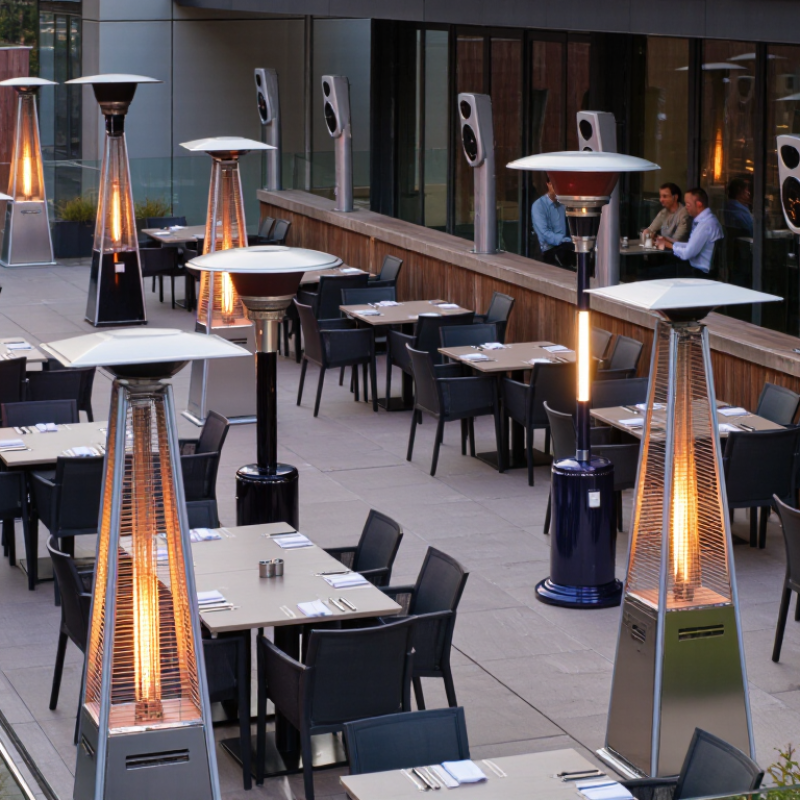
Understanding Commercial Outdoor Heater Types and Their Heat Coverage
Choosing a commercial outdoor heater starts with heat coverage, not appearance. Electric infrared units warm people and tables directly, so they suit patios with seating zones. Gas radiant heaters can cover wider areas, but wind can weaken their effective reach. Enclosed gas units may feel warmer nearby, yet they need careful ventilation planning.
A practical planning range is about 100 to 200 square feet per standard outdoor heater. Treat that figure as an estimate, not a guarantee. Ceiling height, wind, humidity, furniture, and surrounding walls can change comfort quickly. ASHRAE Handbook—HVAC Applications, 2023, explains that thermal comfort depends on mean radiant temperature, air movement, and clothing. This matters outdoors. A heater may warm a customer’s shoulders while cold air reaches their feet.
Energy use also deserves attention. The U.S. Energy Information Administration’s Commercial Buildings Energy Consumption Survey reports that space heating represents roughly one-third of commercial building site energy use. Outdoor equipment operates differently, but the comparison highlights why zoning matters. Heating every empty table wastes fuel or electricity. During site checks, I would map seating in small rectangles, observe prevailing wind, and test comfort at table height. Real conditions often expose weak assumptions.
Avoid placing units too far apart. Overlapping radiant zones can improve comfort, though excessive overlap may create hot spots. Manufacturer coverage charts help, but field testing remains essential. The imperfect part is obvious: weather changes faster than a drawing. Permits, clearances, fuel storage, and electrical protection should be verified with qualified local professionals and applicable safety standards.
Assessing Your Business’s Space, Climate, and Heating Requirements
How to Choose Commercial Outdoor Heaters for Your Business
Start with the space, not the heater. Measure the usable seating area, ceiling height, wind exposure, and nearby walls. A covered patio needs different heating from an open rooftop. Radiant systems warm people and surfaces directly. Forced-air systems warm moving air, but wind can carry that heat away quickly. I have seen businesses overheat a small zone while leaving entrance tables uncomfortable.
Climate data should guide the heating requirement. NOAA’s 1991–2020 Climate Normals provide local temperature, wind, and seasonal records. Use these records with ASHRAE Handbook—Fundamentals design conditions. ASHRAE commonly uses the 99% heating design temperature for sizing decisions. This means the system should handle nearly all expected cold hours, without sizing for an extreme event that rarely occurs. Check humidity, gusts, and exposure. They matter.
Efficiency deserves equal attention. The 2024 Global Status Report for Buildings and Construction reports that buildings consumed 32% of global energy in 2023. It also attributes 34% of global energy-related emissions to the sector. Outdoor heating can waste energy when doors remain open or zones are empty. Install controls by seating area, and schedule operation around reservations. Keep heaters away from obstructions, combustible materials, and poorly ventilated enclosures. Local safety requirements still control the final layout.
A precise calculation can still be wrong. Customer movement changes everything. Test the coldest seating area during service, then adjust output, spacing, and controls. Temperature comfort is personal. Record complaints, energy use, and occupancy before expanding the system.
Comparing Fuel Sources, Energy Efficiency, and Operating Costs
Choosing a commercial outdoor heater starts with the fuel source, not the advertised heat output. Propane models offer portability and quick installation. They suit patios where gas lines are unavailable. However, cylinder changes add labor and delivery costs. Natural gas can provide a lower hourly fuel cost in high-use locations. Installation may require professional planning and permanent connections. Electric heaters produce no combustion emissions at the seating area. They also need suitable electrical capacity, which can increase setup costs.
Energy efficiency depends on how well the heater directs warmth. Infrared elements heat people and nearby surfaces instead of wasting energy on moving air. This matters in windy spaces. Compare useful heat per operating hour, not only the purchase price. A low-cost unit may consume more energy during a long dinner service. Check the rated input, heating area, controls, and expected runtime. Small details matter.
I once underestimated electricity demand by comparing wattage alone. That estimate ignored local peak rates and several heaters running together. It needed revision. Track actual usage for two or four weeks after installation. Record operating hours, fuel consumption, weather, and customer comfort. This creates a more reliable cost picture. Maintenance also affects efficiency. Clean reflectors, sound connections, and accurate controls help preserve performance. Leave room for uncertainty. Weather changes everything.
Checking Safety Features, Durability, and Local Compliance
Choosing commercial outdoor heaters requires more than comparing heat output. Safety features should match the patio’s layout, fuel type, and daily operating routine. Look for automatic shutoff systems, tip-over protection, flame-failure controls, guarded heating elements, and clearly visible operating instructions. Carbon monoxide monitoring may also be appropriate where ventilation is limited. NFPA’s Home Heating Fires report recorded an average of 44,210 heating-related fires annually from 2016 to 2020. That figure covers residential heating, not commercial patios, but it still shows why basic controls deserve careful attention.
Durability matters when equipment faces wind, rain, cleaning chemicals, and constant public use. Choose corrosion-resistant materials, stable bases, weather-rated electrical components, and replacement parts that remain available. Inspect hoses, regulators, cables, reflectors, and fasteners on a documented schedule. A heater can look clean while hiding weakened seals. That mistake is easy to make. I would also test each unit before opening, especially after seasonal storage.
Local compliance can change by city, building type, and fuel source. Confirm permits, required clearances, ventilation rules, accessibility needs, and fire-code restrictions with the local authority having jurisdiction. Fuel-burning models may involve requirements from NFPA 58, while electrical installations should follow applicable provisions of NFPA 70 and local amendments. OSHA guidance also supports documented training and hazard checks for workplace equipment. Keep certification labels and inspection records accessible. Do not assume a product approved elsewhere is automatically acceptable locally.
Selecting, Installing, and Maintaining the Right Heating System
Choosing a commercial outdoor heater starts with the space, not the catalogue. Measure the seating area, ceiling height, wind exposure, and expected occupancy. A radiant system suits open patios because it warms people and surfaces directly. Forced-air equipment may perform poorly in exposed areas.
Energy efficiency deserves careful attention. The International Energy Agency’s Buildings 2023 report states that building operations produce about 26% of global energy-related emissions. Efficient controls can reduce unnecessary runtime. Use timers, occupancy sensors, and adjustable heat levels where practical. A smaller heater may work better when seating is arranged beneath its radiant pattern. Bigger is not always better.
Installation requires disciplined site checks. Follow the manufacturer’s clearance instructions, confirm ventilation needs, and keep heaters away from awnings, paper décor, and stored materials. Local fire and electrical requirements still apply. Ask a qualified technician to verify fuel connections, wiring, mounting strength, and emergency shutoff access. Do not improvise.
Maintenance should be scheduled before peak season. Inspect burners, reflectors, cables, fasteners, and protective guards. Clean dust from air inlets and check for corrosion after wet weather. The U.S. Department of Energy recommends regular inspection and control of heating equipment to support safe, efficient operation. Keep a simple service log. It exposes recurring faults.
No selection method is perfect. Wind changes, customers move, and energy prices fluctuate. Test one zone first, record comfort complaints, and adjust coverage before expanding. A heater that looks efficient on paper may disappoint beside an unprotected doorway.
Related Posts
-
The Ultimate Guide to China Best Outdoor Heaters UK for Your Garden?
-
Top 10 Outdoor Heaters UK Buyers Must Consider for 2026?
-
2026 How to Choose the Best Porch Heaters for Your Home?
-
Top 10 Best Wall Mounted Patio Heaters for Global Buyers?
-
Top 10 Tips for Using an Electric Space Heater Efficiently and Safely
-
Top 10 Electric Heaters for House Efficient Heating Solutions You Can Trust
Skip to content
