What Is the Best Natural Gas Patio Heater from China?
Choosing the best natural gas patio heater from China requires more than comparing prices or polished product photos. A reliable model should provide steady warmth, controlled combustion, durable outdoor materials, and clear installation guidance. The right choice also depends on your climate, patio size, gas supply, and local safety requirements.
John Drengenberg, former Consumer Safety Director at UL, emphasizes, “Read and follow the manufacturer’s instructions.” That advice sounds basic. It is often ignored. A serious evaluation should examine burner design, flame-failure protection, ignition performance, heat distribution, and access to replacement parts. Stainless steel may resist rain better, but its quality varies widely. A thick reflector can improve radiant coverage, while poor assembly may create rattling, uneven heating, or disappointing fuel efficiency.
This guide explores Chinese manufacturers through practical evidence rather than marketing language. We will consider factory experience, product testing, quality-control records, warranty support, and export documentation. Buyers should check whether the heater carries certifications accepted in the destination market. Certification names alone do not prove consistent production quality. Samples, inspection reports, and traceable components matter.
There is no perfect heater.
Even a well-built natural gas patio heater can perform poorly when exposed to strong wind or incorrect gas pressure. Some product pages also provide vague heating-area claims. Those figures deserve scrutiny. We will compare real-world design details, supplier reliability, operating costs, and maintenance needs. The goal is a balanced decision, not a convenient sales conclusion.
Types of Natural Gas Patio Heaters Made in China
What Is the Best Natural Gas Patio Heater from China?
Types of Natural Gas Patio Heaters Made in China
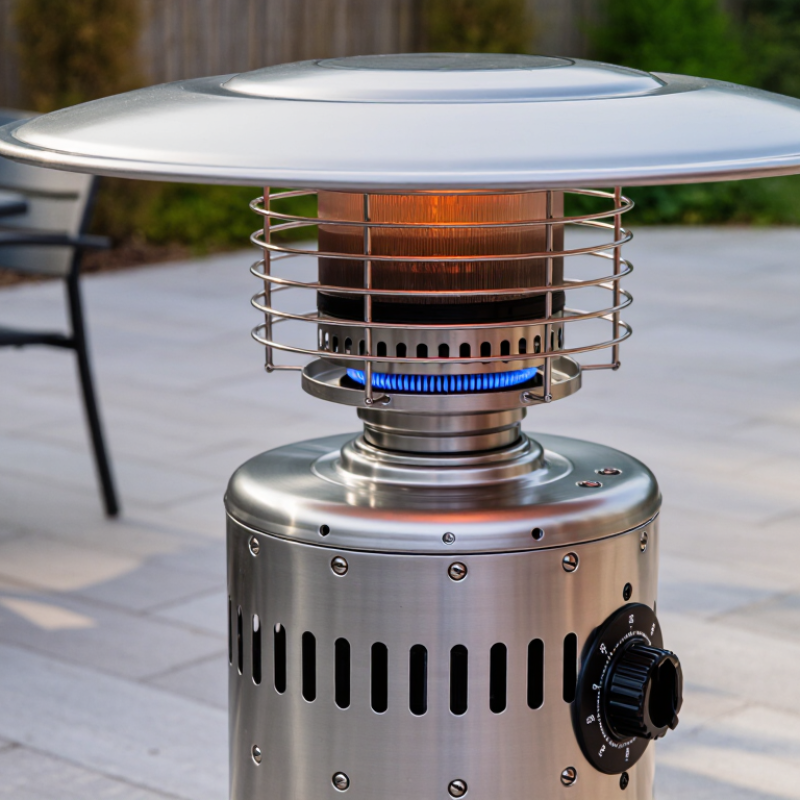
Chinese manufacturers produce several natural gas patio heater types for different outdoor spaces. Freestanding mushroom heaters suit restaurants, terraces, and open gardens. Their round reflectors spread warmth across nearby tables. Pyramid flame heaters create a visible vertical flame inside a glass tube. They look attractive, but their heat may feel less even in windy areas. Tabletop models fit small balconies and private seating areas. Wall-mounted heaters save floor space and work well beneath covered patios. Fixed commercial heaters usually connect to permanent gas lines and offer stronger, steady performance.
A practical choice depends on coverage, fuel use, wind protection, and installation conditions. Look for stainless steel or coated metal housing, stable bases, flame-failure protection, and tilt shutoff devices. Check the burner design carefully. Uneven flames may indicate poor adjustment or weak airflow control. Request product testing documents and installation instructions before ordering. Local gas requirements still apply, even when the heater is manufactured in China. Professional installation is safer for fixed systems. Appearance alone is not enough.
Tips: Measure the seating area first. A larger heater is not always better. Compare heat output, reflector size, hose length, and replacement-part access. Test the control knob before accepting delivery. Small details matter. I would also inspect packaging closely, because a bent reflector can reduce heating performance. That is an easy issue to overlook.
How Natural Gas Patio Heaters Work
Natural gas patio heaters from China use a simple but carefully controlled heating process. A fixed gas line supplies fuel to the burner through a regulator. The burner mixes gas with air and creates a steady blue flame. That flame heats a metal emitter above it. The emitter produces infrared heat, which warms people, chairs, and tables directly rather than heating the entire outdoor space.
A reflector sits above the emitter and directs warmth downward. On a cool evening, you can feel the heat on your hands within seconds. Many units include a piezo ignition system and a flame-failure device. If the flame goes out, the gas supply should stop automatically. Reliable models also use stable bases, weather-resistant components, and clearly marked controls. Small construction details matter.
In my experience, performance depends heavily on installation and wind. A powerful burner may still feel weak beside an open fence. Natural gas heaters should operate outdoors with proper clearance from roofs, walls, and combustible materials. A qualified technician should check the gas connection and pressure. Never use an outdoor heater inside an enclosed room.
Choosing the best model means examining heat output, burner materials, reflector size, stability, and maintenance access. Product descriptions can sound impressive. Real conditions may disagree. Some surfaces discolor over time, and ignition can become less consistent after exposure to moisture. Regular inspection remains necessary. No heater is perfect.
Key Features of the Best Models
Choosing the best natural gas patio heater from China starts with measurable features, not polished photographs. Industry market reports estimate the global outdoor heating market at roughly USD 1.3 billion in 2023, with continued growth driven by restaurants and residential terraces. That demand makes specification checking essential. A practical model should deliver about 30,000–50,000 BTU, provide stable heat across a seating area, and include a properly matched regulator and hose.
Safety components matter more than decorative stainless steel.
Look for flame-failure protection, automatic gas shutoff, a tilt switch, and a thermocouple that responds quickly when the flame disappears. The burner should resist corrosion, while the reflector needs firm mounting and even heat distribution. UL, CSA, CE, or other destination-market certifications should be verified through test documents, not printed symbols alone. The U.S. Consumer Product Safety Commission repeatedly warns about fire and carbon-monoxide risks from fuel-burning equipment, even outdoors.
Installation details reveal product quality.
Confirm the gas type, inlet pressure, connector size, and ventilation requirements before ordering. A heater that feels powerful in calm factory testing may perform poorly in coastal wind. I would request wind-test data, spare-part availability, and packaging photos. This step is easy to skip. It should not be. The IEA’s Gas 2024 report also highlights continued attention to gas efficiency and supply resilience, reminding buyers that fuel consumption deserves comparison alongside heat output.
Safety and Installation Requirements
What Is the Best Natural Gas Patio Heater from China?
Safety and Installation Requirements
A reliable natural gas patio heater begins with correct outdoor installation, not attractive appearance. The unit should carry test documentation for its destination market, such as ANSI Z83.26 or EN 14543 requirements. These standards address combustion, stability, flame failure, and outdoor operation. Never place the heater inside a garage, tent, enclosed balcony, or poorly ventilated room. Carbon monoxide has no smell. The U.S. Energy Information Administration estimates that burning 1,000 cubic feet of natural gas produces about 117 pounds of carbon dioxide, showing why complete combustion matters.
Installation needs a correctly sized gas pipe, approved flexible connector, manual shutoff valve, and accessible regulator. A qualified gas technician should check operating pressure and test every joint with leak-detection solution. Never use a flame. Keep the manufacturer’s stated clearance from ceilings, curtains, furniture, and combustible walls. A stable, level base is essential, especially on tiled patios or windy terraces. The heater should also include flame-failure protection and automatic gas shutoff.
Small details prevent serious accidents. Check ventilation before every use. Inspect the hose for cracks. Remove leaves from the burner area. NFPA 54 emphasizes proper appliance connections and gas piping practice, but local codes still control the final installation. A certificate alone is not proof of safety. I would recheck the paperwork, fittings, and installer’s qualifications before buying. That extra step can feel excessive, yet outdoor gas systems often fail through installation mistakes.
What Is the Best Natural Gas Patio Heater from China?
The best model should provide suitable heat output while meeting local gas, ventilation, clearance, and installation requirements. The chart below shows typical natural-gas patio-heater input ranges by common installation type.
How to read the chart: Freestanding and overhead infrared heaters commonly provide higher heat output than wall-mounted units. Actual performance depends on outdoor conditions, heater design, gas pressure, and installation height. Always follow the product manual and have gas connections completed and tested by a qualified professional.
How to Choose and Maintain the Right Heater
Choosing a natural gas patio heater from China requires more than comparing heat output and price. Measure the space, check the required gas type, and confirm the local pressure specification. A heater made for one system may perform poorly on another. Do not guess. Ask the supplier for test reports, installation instructions, material details, and approvals accepted in your country. Reliable documentation matters more than polished product photos.
Look for stable stainless steel or treated aluminum construction, a protected burner, a reliable flame-failure device, and a tip-over safety switch. Check the heating area against the stated output, but remember that wind can reduce warmth dramatically. A practical inspection should include welds, fasteners, the reflector, hose, and regulator. I once focused too heavily on output and overlooked wind protection. That was a useful mistake. Keep it simple.
Maintenance begins with a cool, disconnected heater. Inspect the hose and connections for cracks, stiffness, or corrosion. Apply soapy water to connections and watch for bubbles; never test with a flame. Remove dust, leaves, and insects from the burner openings with suitable tools. Keep the reflector clean and check that ventilation remains unobstructed. Store the unit in a dry, covered area during long periods of non-use. If the flame turns yellow, smells unusual, or repeatedly goes out, stop using the heater and contact a qualified gas technician. Local regulations and professional installation should guide every final decision.