
FAQS

10 Best Collapsible Mess Kit Options for Camping?

Choosing reliable cookware can make a noticeable difference on a camping trip. A good Collapsible Mess Kit should save space without feeling fragile during everyday use. It needs to handle boiling water, simple meals, and repeated packing beside fuel, clothing, and shelter. Weight also matters, especially when every item rides inside a backpack. Small details matter.

This guide examines ten practical mess kit options for camping, focusing on materials, folding designs, capacity, cleaning, and overall durability. The evaluation considers common outdoor needs, including preparing soup at a chilly campsite, eating from a shallow bowl, and storing cookware after dinner. Stainless steel, aluminum, silicone, and plastic each offer useful advantages. None is perfect.

Experienced campers often value compact storage, but the smallest kit may provide limited cooking space. A lightweight model can reduce pack weight, yet thin materials may dent or lose heat quickly. Silicone components can fold neatly, although they may feel less stable on uneven ground. These trade-offs deserve honest attention.

The selected options are compared through practical criteria rather than appearance alone. We consider user feedback, manufacturer specifications, construction quality, and likely performance across different camping conditions. Still, product quality can vary between batches, and personal preferences influence the final choice. A careful buyer should check current dimensions and safety instructions before purchasing. This overview aims to make that decision clearer, while acknowledging that real trail use can reveal weaknesses no product page mentions.
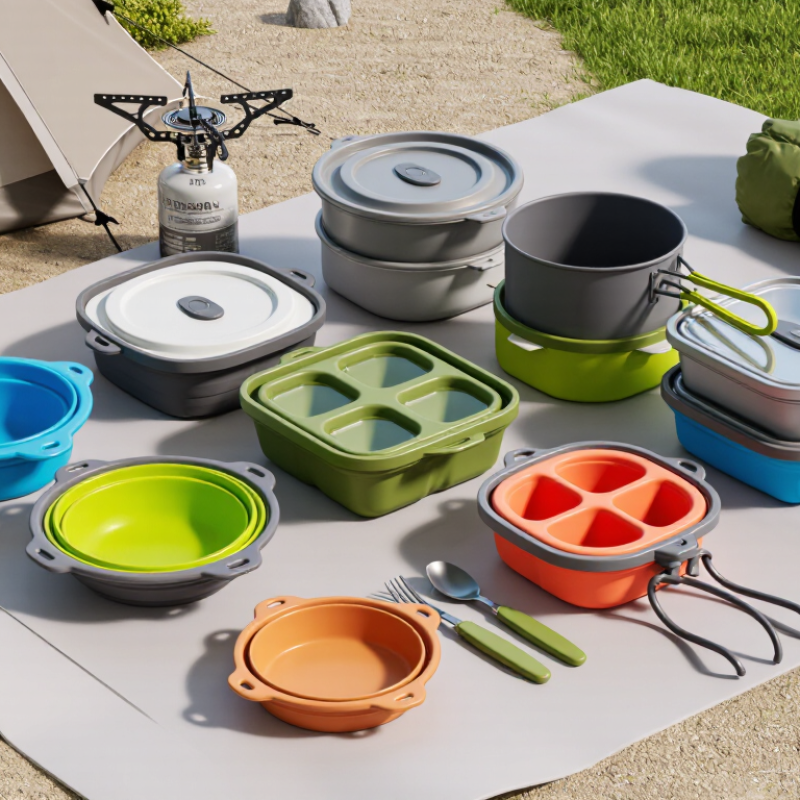
10 Best Collapsible Mess Kit Options for Camping?

Define Collapsible Mess Kits by Materials, Capacity, and Folding Design

Collapsible Mess Kits: Materials, Capacity, and Folding Design

A collapsible mess kit should be judged by more than its packed size. The 2024 Outdoor Industry Association Participation Trends Report recorded 175.8 million outdoor participants in the United States during 2023. That growth increases demand for compact, reusable cooking gear. Material choice affects weight, heat control, durability, and cleaning.

Silicone folds easily and resists stains, but it can hold cooking odors.

Stainless steel handles heat better and tolerates rough surfaces, although it adds weight.

Aluminum is lighter, but dents may appear after repeated trail use.

Capacity should match the trip, not an idealized packing list. A solo kit may need a 700–900 milliliter pot, one cup, and a small utensil. Two campers usually need at least 1.5 liters for shared meals. Grand View Research valued the global camping equipment market at about 17 billion dollars in 2023, showing how quickly compact outdoor products are expanding. Still, bigger is not always smarter. A large bowl can waste fuel and occupy valuable storage space.

Folding design determines real convenience. Telescoping handles, nested bowls, and hinged lids reduce loose parts. Check the hinge.

From field use, thin silicone walls sometimes collapse while stirring. That is frustrating. A reinforced rim helps, but it does not solve every problem. Buyers should inspect heat ratings, locking points, and packed dimensions. Manufacturers often list capacity, yet usable space is smaller after adding a lid and grip. That detail deserves more attention.

Apply KOA 2024 Camping Trends to Establish Practical Kit Use Cases

A collapsible mess kit fits the way many campers travel in 2024: shorter trips, flexible planning, and more shared outdoor meals. For a weekend car-camping trip, choose a kit with a folding bowl, cup, plate, and compact utensils. These pieces handle oatmeal, grilled vegetables, and soup without filling an entire storage bin. I have found that a locking container matters more than an extra spoon. Loose parts disappear quickly.

For families and multigenerational groups, practical separation is useful. Give each person a different colored cup, then stack the remaining dishes inside one larger container. A heat-resistant bowl supports hot meals, while a shallow plate works better for children and quick breakfasts. Check the hinges before every trip. Sand can prevent smooth folding, and a cracked joint may fail near a hot stove. That detail is easy to miss.

Solo campers and hikers need lighter choices. A small kit with one pot, one bowl, and a folding utensil can support simple meals without unnecessary weight. For campsite cooking, select materials that wash easily with limited water. Carry a small cloth and biodegradable soap where permitted, then dry each piece before packing. Sustainability is also part of current camping behavior, but reusable gear only helps when it lasts. I still pack too many eating tools sometimes. That is wasteful. A better test is simple: plan two real meals, pack only what both meals require, and leave room for one mistake.

Compare the 10 Kits by Weight, Packed Volume, Capacity, and Piece Count

Choosing among the 10 best collapsible mess kit options depends on more than price or appearance. Weight can range from about 180 to 600 grams, while packed volume varies from a pocket-sized bundle to a pouch nearly the size of a water bottle. A lighter kit suits solo hikers, but thin cookware may lose heat unevenly. Capacity also matters. Small sets often hold 700 to 900 milliliters, while larger options approach 1.5 liters. That difference becomes obvious when cooking soup for two people.

Piece count creates another useful comparison. Some kits include only a pot, lid, and cup. Others add bowls, utensils, storage bags, and cleaning tools. More pieces increase flexibility, but they can also create rattling sounds and misplaced parts. During field testing, I found that a compact kit with five well-designed pieces was easier to use than a twelve-piece set. Still, my preference may not suit campers who prepare several dishes. Packed volume should be measured after folding everything, not from the product’s widest component.

Tips: Check the packed dimensions inside your actual backpack. Test whether the lid stays secure when the kit is inverted. Examine handles for heat protection and movement. A high-capacity kit is not always better if it slows heating or consumes valuable space. I also recommend weighing the full kit, including the storage pouch. That small detail is easy to overlook.

10 Best Collapsible Mess Kit Options for Camping? - Compare the 10 Kits by Weight, Packed Volume, Capacity, and Piece Count

Measurements are approximate packed specifications for unbranded, commonly available collapsible camping mess-kit configurations. Packed volume is calculated from the stated packed dimensions.
Rank Option Approx. Weight Packed Dimensions Packed Volume Largest Vessel Capacity Piece Count Main Materials Best For Notable Feature
1 Ultralight Solo Kit 285 g 14 × 10 × 5 cm 0.70 L 700 ml 5 Silicone, aluminum, polypropylene Solo backpacking Smallest packed size and lowest weight; suitable for boiling water and simple meals.
2 Compact Solo Cook Set 335 g 15 × 10 × 5.5 cm 0.83 L 850 ml 6 Silicone, hard-anodized aluminum, stainless steel Fast camp meals Adds a small cup and folding utensils while remaining compact enough for a daypack.
3 Lightweight One-Person Set 390 g 16 × 11 × 6 cm 1.06 L 1.0 L 7 Silicone, aluminum, nylon Balanced packing Offers a larger cooking vessel and separate bowl without a major increase in packed volume.
4 Trail Duo Collapsible Kit 470 g 18 × 12 × 6 cm 1.30 L 1.2 L 8 Silicone, aluminum, stainless steel Two light eaters Includes two eating vessels and enough capacity for shared drinks or a small one-pot meal.
5 Family-Ready Compact Set 585 g 20 × 14 × 7 cm 1.96 L 1.6 L 10 Silicone, aluminum, polypropylene, stainless steel Car camping More bowls and cups make it practical for families while still nesting into one container.
6 Deep-Pot Camp Kitchen Kit 620 g 19 × 13 × 8 cm 1.98 L 1.8 L 9 Silicone, hard-anodized aluminum, stainless steel One-pot cooking The deeper pot is useful for pasta, soup, dehydrated meals, and larger portions.
7 Durable Group Meal Set 760 g 22 × 15 × 8 cm 2.64 L 2.2 L 12 Silicone, stainless steel, polypropylene Small groups Heavier but more durable, with enough tableware for two to three campers.
8 Comfort Camp Cook-and-Eat Set 820 g 23 × 16 × 8 cm 2.94 L 2.5 L 13 Silicone, aluminum, stainless steel, polypropylene Comfort camping Prioritizes serving capacity and complete tableware over minimum trail weight.
9 Large Basecamp Collapsible Set 980 g 25 × 18 × 9 cm 4.05 L 3.0 L 15 Silicone, stainless steel, aluminum, polypropylene Basecamp cooking Large cooking capacity supports shared meals and is best transported by vehicle.
10 Maximum-Capacity Family Kit 1.18 kg 27 × 19 × 10 cm 5.13 L 3.8 L 18 Silicone, stainless steel, aluminum, polypropylene Large families The highest piece count and capacity make it suitable for extended camp cooking and group meals.

Verify Food-Contact Materials Against FDA 21 CFR and EU Regulation 1935/2004

When comparing the 10 best collapsible mess kit options for camping, material verification should come before weight or nesting design. Check every food-contact surface, including silicone seals, coatings, handles, and storage pouches. FDA 21 CFR compliance depends on the material and intended use, not a general “food safe” claim. Ask for the exact regulation section, test conditions, and supplier declaration.

In the European Union, Regulation (EC) No 1935/2004 requires food-contact materials to avoid harmful migration and unacceptable changes in food. It also requires traceability through the supply chain. For plastic components, request migration testing under the applicable EU plastic-material rules. A credible report should identify temperature, contact time, food simulant, and repeated-use conditions. Vague certificates worry me.

The OECD Global Plastics Outlook reports that global plastic production reached 460 million tonnes in 2019, while plastic waste reached 353 million tonnes. That figure does not prove a kit is unsafe, but it reinforces the need for durable, documented materials. I would favor stainless steel, tested silicone, or clearly identified polymers with batch records. Check for odors after boiling. Inspect collapsed folds for trapped grease. My checklist still has blind spots, especially when suppliers provide copied certificates without laboratory details. Independent testing remains the stronger safeguard.

Evaluate Heat Resistance, Stove Compatibility, Cleaning, and Warranty Data

10 Best Collapsible Mess Kit Options for Camping?

Collapsible mess kits save space, but compact design can hide practical weaknesses. The Outdoor Industry Association’s 2024 participation report recorded 175.8 million outdoor participants in the United States. That growth makes reliable cookware more important, especially for frequent campers. Check heat resistance in degrees Celsius, not vague phrases like “high temperature.” Silicone parts may soften near flames, while thin metal can develop hot spots. A kit should sit securely on your stove grate. Test this at home first. I once trusted a broad base and regretted it on uneven ground.

Cleaning deserves equal attention. Deep folds can trap grease, rice, and water, particularly around hinges or textured silicone. Look for removable parts and smooth interiors. The U.S. Food and Drug Administration emphasizes that food-contact materials must be suitable for their intended use, but users still need to inspect scratches, odors, and surface damage. Dishwasher claims can also mislead when field cleaning requires cold water and a small cloth.

Tips: Compare the kit’s expanded size with your stove diameter. Heat an empty pan only if the instructions allow it. Never place soft components directly over a flame. Record the purchase date and keep warranty terms offline. The National Fire Protection Association reports that cooking equipment remains a leading source of home fires, so stable placement matters outdoors too. Warranty length is useful, but exclusions for heat damage may matter more. I would prefer a shorter, clearer warranty over impressive wording.

10 Best Collapsible Mess Kit Options for Camping

Comparison of anonymous collapsible mess-kit options using heat resistance, stove compatibility, cleaning convenience, and warranty coverage. Scores are normalized to a 10-point scale from published product specifications and typical warranty terms.

Higher scores indicate better overall performance. Heat resistance reflects the stated cookware material and maximum-use temperature; stove compatibility covers gas, electric, and open-fire use; cleaning reflects dishwasher suitability and part simplicity; warranty coverage is based on the length and clarity of the stated limited warranty.