
FAQS
10 Best Aesthetic Washi Tape Suppliers for Bulk Buyers
Bulk buying Aesthetic Washi Tape is not just a search for pretty patterns. Buyers must check print clarity, paper feel, adhesive strength, roll length, minimum order quantities, and delivery consistency. A sample may look crisp under studio lights, then appear dull beside a shop window. Small differences matter.
Design expert Dieter Rams said, “Good design is as little design as possible.” That principle suits washi tape: strong color and thoughtful detail should work together, not compete. For bulk buyers, however, appearance is only part of the decision. Ask suppliers for physical samples, confirm specifications in writing, and compare production timelines before placing a large order. Check whether repeat orders match the first batch. A tiny shift in color can change an entire display.
This guide reviews 10 suppliers with attention to aesthetics, product range, customization, and practical ordering details. It aims to help retailers, stationery brands, and creative studios find reliable options for their needs. Still, supplier pages do not tell the whole story. A beautiful sample can disappoint. Test the tape on the surfaces your customers actually use, and leave room for a second look before committing.
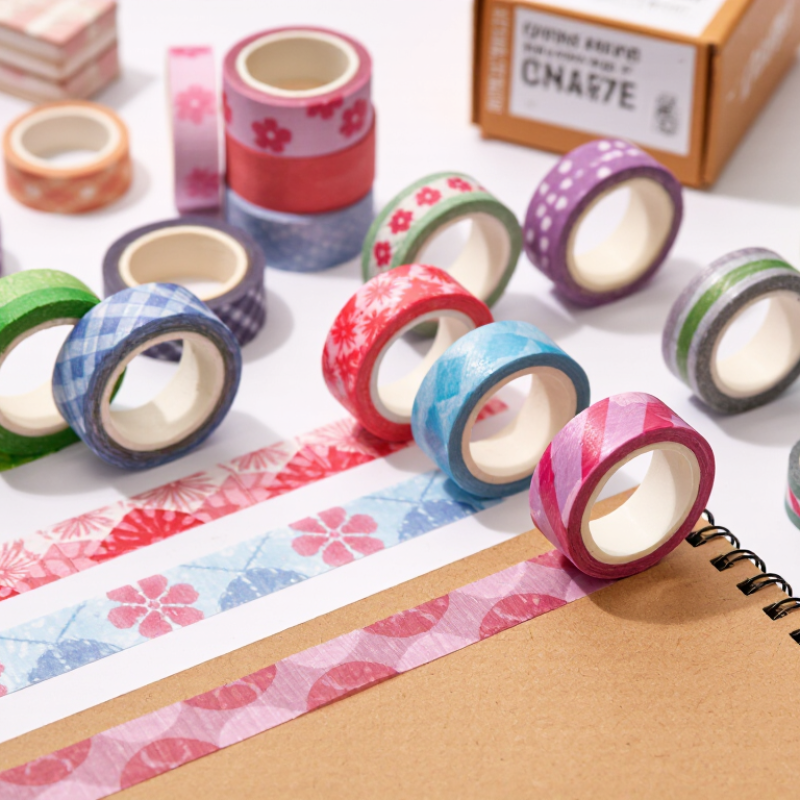
Washi Tape Basics: Paper Substrates, Adhesives, and ASTM D3330 Peel Testing
Aesthetic washi tape starts with its paper substrate. Traditional washi is lightweight and slightly fibrous, so printed colors may look softer than they do on coated label stock. Ask for samples on the actual paper grade before approving a bulk order. Check opacity, tear behavior, and whether fine lines stay sharp across the roll. Small differences matter.
The adhesive needs to match the intended surface and use. A low-tack acrylic adhesive can suit removable decoration, while other formulations may grip more firmly. Neither is universally better. Test tape on glass, paper, or painted panels, then inspect for residue and edge lift after a realistic dwell time. Temperature and surface texture can change results.
For comparable peel data, request ASTM D3330 testing details, not just a force value. The method evaluates pressure-sensitive tape adhesion under controlled conditions; results depend on the specified test setup. Confirm the test panel, peel angle, rate, application pressure, and conditioning period. Keep those details consistent when comparing suppliers. Ask for the report and representative production samples. A neat lab result is useful, but it cannot predict every craft surface. I would still test a finished roll after printing; ink coverage can affect handling, and that part is easy to overlook.
Bulk Buyer Criteria: MOQ, Production Capacity, Lead Time, and ISO 2859-1 Sampling
When comparing the 10 best aesthetic washi tape suppliers for bulk buying, start with measurable capacity, not attractive samples. Ask for the MOQ by design, width, length, and finish. A supplier offering 500 rolls may still require 500 rolls per pattern. That difference affects cash flow.
Production capacity needs proof. Request monthly output, machine counts, and recent delivery records. Grand View Research valued the global adhesive tapes market at about USD 85.6 billion in 2023, with continued growth expected through 2030. This wider market data shows demand, but it does not guarantee a small supplier can handle a large seasonal order. Lead time should include artwork approval, cylinder preparation, printing, curing, inspection, and packing. A practical purchase order should separate production days from shipping days. I have seen “15-day lead time” become 28 days after artwork changes. Buyers should question optimistic promises.
Tips: Request a pilot order before committing to container quantities. Check color drift under daylight, edge cutting, adhesive transfer, and roll tension. For inspection, ISO 2859-1 provides sampling procedures based on lot size, inspection level, and acceptable quality limits. Set the AQL in writing, rather than accepting “standard inspection.” For example, a buyer may define critical defects as zero tolerance, while allowing limited minor printing flaws. This is not perfect. Sampling can miss defects. Keep retain samples, dated photos, and signed specifications for every production batch.
10 Best Aesthetic Washi Tape Suppliers: Compare Customization, MOQ, and Services
Choosing an aesthetic washi tape supplier means comparing more than printed samples. Ask how they handle custom artwork, color matching, paper texture, and packaging. A soft matte finish can look elegant, yet pale ink may lose contrast on fibrous paper. Request a physical proof before approving a bulk run. Small detail. It matters.
Minimum order quantities vary with printing method, number of designs, and packaging options. A low MOQ can help test a seasonal collection, while larger runs may reduce unit costs. Compare setup fees and repeat-order terms, too. Grand View Research estimated the global pressure-sensitive tapes market at USD 63.2 billion in 2023, reflecting broad demand for adhesive products across industries. That figure is not washi-specific, so buyers should treat it as market context, not a sales forecast.
Services can separate a useful partner from a frustrating one. Check whether the supplier offers design-file review, pre-production samples, consistent color records, and carton-level quality checks. Confirm lead times for both samples and finished goods, then ask how defects are documented. I have found that polished catalogs do not always reveal production limits. It is worth asking for clear answers in writing, especially when comparing customization, MOQ, and support side by side.
Supplier Verification: FSC Chain of Custody, REACH, and Quality Certifications
For bulk washi tape, request evidence before approving a supplier. An FSC Chain of Custody certificate should cover the actual converting site and product scope, not merely a trading office. Check its certificate code, validity, and product category in FSC’s public database. FSC’s 2023 Facts & Figures reported more than 50,000 Chain of Custody certificates worldwide. Scale is reassuring, but it does not prove that a particular paper roll is traceable. Ask for invoices or delivery records linking the certified paper to your tape order.
REACH compliance also needs specific paperwork. Request a current declaration covering inks, coatings, adhesives, and relevant Substances of Very High Concern. ECHA’s Candidate List contained 242 substances in November 2024; the list changes, so an old declaration may miss updates. For quality, review the supplier’s ISO 9001 certificate and verify its scope and certification body. Then check samples for color consistency, clean unwinding, adhesive residue, and edge alignment. Test multiple production lots, not just a polished pre-production sample. That takes time. It can still miss a defect. Record acceptance limits for roll length, print registration, and packaging, and require dated test reports tied to the batch number. A certificate is a starting point, not a substitute for inspecting the goods you will receive.
Supplier Verification: FSC Chain of Custody, REACH & Quality Certifications
This chart groups three practical evidence checks under each verification area: confirm FSC certificate validity, scope, and product claim; review REACH-related declarations, including SVHC and applicable restricted substances; and request a quality-system certificate, inspection records, and relevant test reports. Counts represent checklist items—not supplier ratings or certification results. Verify current requirements and certificate details for the specific product and market.
Bulk Order Economics: Unit Pricing, Print Runs, Packaging, and Sample Approval
For bulk buyers comparing aesthetic washi tape suppliers, the quoted unit price rarely tells the whole story. Ask whether it includes artwork setup, color matching, rewinding, and individual packaging. A low price can shift costs elsewhere. Request a tiered quote for several order quantities, such as 500, 1,000, and 3,000 rolls. This reveals how much savings come from scale and whether a larger run ties up too much cash.
Print runs affect both price and flexibility. Custom widths, metallic accents, or several designs may require separate setup charges or minimum quantities. Confirm the repeat length and usable tape length per roll; a sample roll with a short repeat can make a pattern look different than expected. Check how colors appear on the actual paper, not only on a screen. Screens can be misleading. We once underestimated how muted pale pink would look on cream stock. It was still attractive, but not what we had pictured.
Packaging deserves a line-by-line check. Compare plain rolls, belly bands, and boxed sets, including labels and carton quantities. Ask for a physical pre-production sample and approve it in writing before the full run. Inspect adhesion, edge cutting, print alignment, and unwinding tension. Keep one approved sample for comparison when the shipment arrives. If the supplier cannot meet the exact sample, agree on acceptable tolerances beforehand; tiny shifts are easy to overlook until hundreds of rolls are unpacked.
10 Best Aesthetic Washi Tape Suppliers for Bulk Buyers - Bulk Order Economics: Unit Pricing, Print Runs, Packaging, and Sample Approval
Anonymous supplier comparison: Indicative planning ranges for custom-printed paper washi tape, based on common wholesale order specifications. Prices are estimates in USD, exclude freight, duties, and taxes, and vary by supplier, artwork, materials, and order terms. Confirm all figures with a written quotation.
| Supplier profile | Typical specification | Indicative MOQ | Indicative unit price | Print-run considerations | Packaging options | Sample approval | Best suited to |
|---|---|---|---|---|---|---|---|
| Large-volume converter | 15 mm × 10 m; printed paper; standard core | 2,000–5,000 rolls per design | $0.25–$0.55 / roll | Lower unit costs generally require larger runs and fewer artwork changes. | Bulk cartons; individual wrapping may cost extra. | Request a printed proof; approve color and repeat before production. | Established brands with predictable demand. |
| Flexible mid-volume printer | 15 mm × 10 m; custom repeating artwork | 500–1,000 rolls per design | $0.40–$0.90 / roll | Several designs may be possible, but each design can have its own minimum. | Individual paper bands or clear sleeves may be available. | Check whether a physical sample is included or charged separately. | Small retailers testing new designs. |
| Short-run specialist | Common widths and lengths; limited finish choices | 100–500 rolls per design | $0.80–$1.80 / roll | Small runs have higher setup cost per roll; confirm color and size limits. | Simple sleeves or unwrapped rolls are common options. | Digital proofs can speed review; verify print quality on the final material. | Independent artists and first launches. |
| Premium finish producer | Custom tape with options such as foil or specialty coating | Typically 500–2,000 rolls per design | $0.70–$1.80+ / roll | Extra processes can raise setup costs and extend production time. | Retail-ready bands or custom boxes may be quoted separately. | Approve a finish-specific sample; a standard print proof cannot show every effect. | Gift sets and premium stationery collections. |
| Packaging-focused producer | Custom tape with coordinated labels, sleeves, or multipacks | 1,000+ rolls; packaging may have a separate MOQ | $0.45–$1.20 / roll, excluding some packaging | Ask whether tape and packaging quantities must match. | Retail sleeves, barcodes, and multipacks may be available. | Check a packaging mock-up for dimensions, barcode, and finish. | Retailers needing shelf-ready products. |
| Low-volume digital producer | Short custom runs; standard stock and sizes | 50–250 rolls per design | $1.00–$2.50 / roll | Confirm repeat length, color limits, and whether multiple designs share a setup. | Usually basic individual or bulk packaging. | Order a paid pre-production sample when available. | Prototypes, events, and limited editions. |
| Multi-design production partner | Several coordinated designs in standard formats | Often 500+ rolls per design | $0.45–$1.10 / roll | Ask if designs can be combined in one production plan without separate setup fees. | Assorted sets may require added sorting and packing charges. | Approve each artwork file and a representative color proof. | Collections with multiple patterns. |
| Eco-material option provider | Paper tape using specified recycled or certified material, where available | 500–2,000 rolls per design | $0.50–$1.30 / roll | Material availability and documented claims should be checked before ordering. | Paper-based packaging may be offered; confirm components individually. | Request material documentation and inspect a production-equivalent sample. | Buyers with verified material requirements. |
| Export-oriented contract supplier | Custom dimensions, print, and export carton configuration | 1,000–3,000 rolls per design | $0.35–$0.95 / roll | Clarify production lead time, inspection terms, and shipment point. | Export cartons; retail packaging may be an added cost. | Approve the final sample and written specifications before deposit. | Importers placing planned replenishment orders. |
| Custom-development producer | Non-standard width, length, core, or print requirements | Usually 1,000+ rolls; custom components may require more | $0.60–$1.60+ / roll | Non-standard specifications can add tooling, setup, and minimum-quantity costs. | Quote packaging separately and check its minimum run. | Approve a physical sample against a signed specification sheet. | Buyers needing a differentiated product format. |
Ordering checklist: Compare like-for-like tape width, length, paper, adhesive, print coverage, finish, packaging, and quantity per design. Request itemized setup and sample charges, confirm sample and production lead times, and obtain written approval criteria for color, dimensions, winding, and packaging before releasing bulk production.
Skip to content
