
FAQS
7 Tips for Choosing Stainless Threaded Rod?
Choosing the right Stainless Threaded Rod can determine whether a connection remains stable or slowly develops play, corrosion, and alignment problems. In workshops, construction sites, and equipment repairs, small specification errors often create expensive rework. A rod may look suitable on the shelf, yet fail under vibration, moisture, or repeated tightening.
This guide presents seven practical tips for selecting the correct product. It considers stainless steel grade, thread size, length, strength, surface condition, compatibility, and supplier reliability. Grade matters because a clean indoor application differs greatly from a coastal installation exposed to salt spray. Thread accuracy matters too. A nut should turn smoothly, without binding or excessive looseness.
Details matter.
Experienced installers also check the complete connection, not only the rod. Washers, nuts, drilled holes, load direction, and installation tools can influence performance. A corrosion-resistant rod paired with unsuitable hardware may still create staining or premature failure. Measurements should be taken carefully, preferably with calibrated tools, because even a few millimeters can affect fit and thread engagement.
The recommendations below are based on common fastening practices and practical material-selection principles. However, no general guide replaces engineering review for critical structures or unusual loads. Some choices remain application-specific. That is where mistakes happen. By comparing technical data, inspecting finish quality, and questioning vague supplier claims, buyers can make a more reliable decision and avoid choosing only by price.
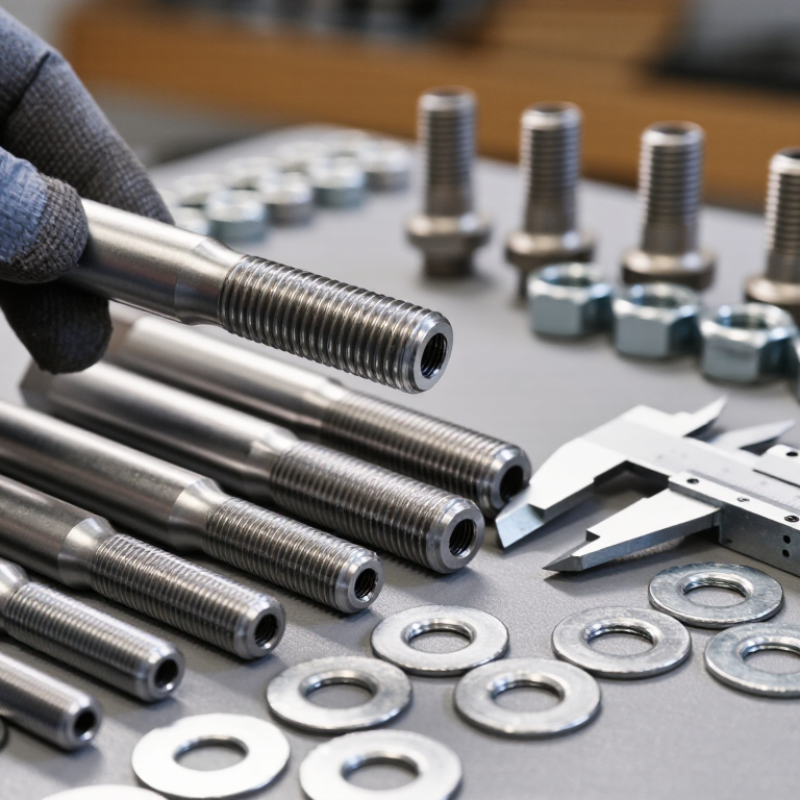
Define the Purpose and Application of the Threaded Rod
7 Tips for Choosing Stainless Threaded Rod
Define the Purpose and Application of the Threaded Rod
Start by defining what the threaded rod must do. It may suspend pipework, secure equipment, join structural parts, or support a light fixture. Each application creates different demands. A ceiling support needs reliable tension strength. A machine assembly may also face vibration, movement, and repeated loading.
Examine the installation environment carefully. Outdoor assemblies may face rain, salt spray, temperature changes, and trapped moisture. Indoor use is not always gentle. Cleaning chemicals, condensation, and dissimilar metals can still cause corrosion. Stainless steel offers useful resistance, but it is not automatically suitable for every exposure. That assumption needs challenging.
Measure the required diameter, thread length, and installation clearance before ordering. Match the rod’s strength rating with the expected load, including a practical safety margin. Check whether the load is pulling, bending, or twisting the rod. Thread engagement also matters; shallow engagement can weaken an otherwise sound connection. Use compatible nuts and washers, and prevent galling during assembly with suitable installation practices. A dry fit can reveal problems early. It is worth checking twice. Review technical data, drawings, and applicable engineering requirements when the rod supports people, machinery, or critical equipment. A small mismatch in thread form or material can cause expensive rework.
Choose the Right Stainless Steel Grade
Choosing the correct stainless steel grade is the most important step when selecting a threaded rod. A shiny surface does not guarantee long-term corrosion resistance.
Tip 1: Identify the environment. Indoor, dry applications may suit 304 stainless steel. Outdoor, coastal, or chemical areas often require 316 stainless steel because molybdenum improves resistance to chloride corrosion.
Tip 2: Check temperature exposure. Grade 321 can perform better near repeated heat, while ordinary 304 may lose reliability under demanding thermal conditions. Temperature cycling matters.
Tip 3: Match the rod to the load. Stainless steel offers corrosion resistance, but its strength varies by grade and condition. Confirm tensile requirements before ordering.
Tip 4: Inspect the threads closely. Clean, consistent threads should engage smoothly with the matching nut. Rough threads can cause galling, especially during dry installation. I have seen hand-tight assemblies seize unexpectedly.
Tip 5: Ask for material documentation. A credible supplier should provide grade information, mechanical data, and traceability records. Do not rely only on a stamped marking.
Tip 6: Consider installation conditions. Use compatible nuts, avoid contaminated tools, and apply suitable anti-seize when permitted. Carbon-steel particles can leave rust stains on stainless surfaces.
Tip 7: Test uncertain choices. A small sample exposed to moisture, salt, or process chemicals can reveal weaknesses before full installation. It is not a laboratory qualification, but it can challenge assumptions. I would still request professional corrosion guidance for critical structures.
Select the Correct Diameter, Length, and Thread Type
7 Tips for Choosing Stainless Threaded Rod?
Selecting stainless threaded rod starts with the joint, not the catalog. The World Stainless Association reported about 58.4 million tonnes of stainless steel production in 2023, yet alloy choice still depends on service conditions. Tip 1: Measure the required diameter after checking load, hole clearance, and washer size. A larger rod is not automatically safer. Tip 2: Calculate length from total grip thickness, washers, nuts, and exposed thread. Leave sufficient engagement without allowing excessive projection. Tip 3: Match the thread type exactly. Metric coarse, metric fine, UNC, and UNF threads are not interchangeable. Confirm pitch with a gauge, not visual judgment.
Tip 4: Verify the material designation and mechanical properties. ISO 3506-1:2020 provides requirements for corrosion-resistant stainless steel fasteners. Check whether the selected rod meets the required strength class. Tip 5: Consider the environment. Moisture, salt spray, cleaning chemicals, and trapped water can change performance. A corrosion-resistant surface does not mean corrosion-proof service. Tip 6: Inspect straightness, thread sharpness, burrs, and end chamfer before installation. Small defects can prevent full nut engagement. Tip 7: Test-fit one sample before ordering a full batch. Measure actual thread fit and available length. A catalog match can still fail in the field.
The common shortcut is choosing diameter first. That approach deserves reconsideration. Confirm the nut standard, thread tolerance, installation torque, and contact materials. ASTM F593 and F594 are useful references for stainless fastener material and mechanical requirements, but project specifications should control when they are stricter.
7 Tips for Choosing Stainless Threaded Rod
Select the correct diameter, length, and thread type by comparing the rod’s intended load, installation environment, and connection requirements.
Chart: Approximate tensile stress area for common ISO metric coarse-thread sizes. A larger tensile stress area generally provides greater axial load capacity, but final selection must also consider stainless-steel grade, unsupported length, buckling, corrosion, installation method, and safety factors.
- Diameter: Choose a size appropriate for the expected axial load and bending risk.
- Length: Measure the complete connection and allow sufficient engagement for nuts, washers, and adjustments.
- Thread type: Match ISO metric threads with ISO metric nuts; do not mix metric and inch-based UNC or UNF threads.
- Pitch: Coarse threads are common for general assembly, while fine threads can provide more adjustment per length.
- Stainless grade: Select a corrosion-resistant grade suitable for the environment, such as indoor, outdoor, or marine exposure.
- Thread engagement: Ensure adequate nut engagement and avoid relying on only a few threads.
- Installation: Use compatible washers, nuts, and tightening practices to reduce galling and uneven loading.
Check Strength, Corrosion Resistance, and Environmental Needs
Choosing Stainless Threaded Rod: 7 Tips for Strength, Corrosion Resistance, and Environmental Needs
A threaded rod may look simple, but its failure can affect an entire assembly. Check the required tensile load, shear load, and bending exposure before selecting a grade. Compare the rod’s proof strength with the design load, not just its advertised maximum. Leave a sensible safety margin. I have seen light-duty rods installed where vibration demanded a stronger option. That mistake appeared only after loosening began. Inspect thread engagement and nut compatibility. Full, clean engagement transfers load more reliably. Match the diameter and pitch to the connected parts.
Check corrosion resistance against the real environment, including moisture, salt spray, chemicals, and temperature changes. Stainless steel is not automatically immune to corrosion. In coastal or chlorinated areas, a more resistant alloy may be necessary. Avoid mixing unsuitable metals, because galvanic corrosion can attack the joint. Keep surfaces clean during installation. Small iron particles from tools can create confusing rust marks. Consider outdoor exposure, washdown routines, and hidden condensation. Ask whether the rod will contact food-processing fluids or industrial chemicals.
Verify material certificates and test data from a traceable supplier. Look for dimensional accuracy, straightness, and consistent thread quality. Inspect several pieces, not only one sample. Torque control matters, but values depend on diameter, lubrication, nuts, and joint design. Over-tightening can damage threads or distort the connection. I once trusted a torque chart without checking lubrication, and the result was misleading. Recheck the specification when conditions change.
7 Tips for Choosing Stainless Threaded Rod? - Check Strength, Corrosion Resistance, and Environmental Needs
| Tip | What to Check | Common Stainless Options | Relevant Material Data | Environmental Considerations | Practical Recommendation |
|---|---|---|---|---|---|
| 1 | Match the rod to the required load | 304 316 410 | Austenitic 304 and 316 are generally supplied in annealed or cold-worked conditions, so tensile and yield strength can vary significantly. Martensitic 410 can provide higher hardness and strength but usually offers lower corrosion resistance. | Structural, lifting, or vibration-loaded applications require verified mechanical properties rather than grade selection alone. | Confirm nominal diameter, thread size, stress area, material condition, proof load, tensile strength, and the applicable fastener standard before sizing the rod. |
| 2 | Evaluate corrosion resistance | 304 316 316L | 316 and 316L contain molybdenum, which generally improves resistance to localized corrosion compared with 304. The “L” designation indicates lower carbon content, which helps reduce sensitization risk after welding. | 304 is commonly suitable for indoor, dry, and mildly corrosive conditions. 316 or 316L is usually preferred for marine atmospheres, de-icing salt, and chloride exposure. | Do not treat stainless steel as corrosion-proof. Specify surface condition, cleaning requirements, and inspection for staining, pitting, or crevice corrosion. |
| 3 | Consider temperature and oxidation | 304 316 Heat-rated grade | Stainless strength decreases as temperature rises. Thermal expansion is also important; 304 and 316 have a typical coefficient of thermal expansion of approximately 16–17 × 10−6/°C near room temperature. | Hot equipment, thermal cycling, and high-temperature oxidation can change preload and service life. Cryogenic service also requires qualified impact and toughness data. | Select materials using temperature-specific mechanical data and account for thermal expansion when clamping dissimilar materials. |
| 4 | Prevent thread galling | Austenitic grades | 304 and 316 are susceptible to galling because they work-harden and have relatively ductile mating surfaces. Galling risk increases with high friction, rapid installation, damaged threads, and excessive tightening. | Dry assembly, repeated adjustment, and high preload make galling more likely. Contamination or incompatible lubricants can also affect torque and cleanliness. | Use compatible anti-seize or assembly lubricant, clean and undamaged threads, controlled installation speed, and a torque method validated for the lubricant used. |
| 5 | Check galvanic compatibility | 304/316 Isolation hardware | Galvanic corrosion can occur when dissimilar metals are electrically connected in the presence of an electrolyte. The risk depends on the metal pairing, exposed area ratio, moisture, and electrical isolation. | Wet, salty, or continuously damp locations are more demanding than dry indoor environments. A small stainless fastener connected to a large less-noble metal surface can be especially vulnerable. | Use compatible washers, coatings, sleeves, or sealants where needed. Design to prevent water traps and inspect joints exposed to saltwater or condensation. |
| 6 | Select the correct thread and fit | Coarse thread Fine thread Metric or inch | Coarse threads generally assemble more easily and tolerate minor damage or contamination. Fine threads provide more thread engagement per unit length and finer adjustment but are more sensitive to damage and cross-threading. | Dirt, ice, paint, and corrosion products can reduce engagement. Different thread systems or incompatible pitches can cause poor fit and unsafe load transfer. | Verify nominal diameter, pitch, tolerance class, thread length, nut compatibility, and required engagement. Never force a mismatched nut onto the rod. |
| 7 | Verify standards and traceability | ASTM specifications ISO dimensions Mill test data | Stainless threaded rods may differ in chemical composition, mechanical condition, dimensions, and surface finish even when they appear visually similar. Mechanical values should be tied to a stated standard and product condition. | Critical, regulated, outdoor, and corrosive installations need documented material identity and quality control. | Request grade, standard, heat or lot identification, dimensional inspection, surface-finish requirements, and material certificates. Use engineering approval for safety-critical applications. |
Verify Standards, Quality, and Supplier Reliability
Choosing stainless threaded rod starts with verification, not appearance. Confirm the required standard, such as ISO 3506 or ASTM A193, based on the application. Match the grade to the environment, because 304 and 316 do not resist chlorides equally. Check thread size, pitch, length, and tolerance with a gauge and caliper. A shiny rod can still have poor threads. Request the material test certificate, heat number, chemical composition, and mechanical results. Compare those details with the purchase specification. World Stainless reported approximately 58.4 million tonnes of stainless steel production in 2023, showing the market’s scale and the need for disciplined identification.
Inspect sample rods before approving a full order. Look for rolled threads, clean crests, straightness, and sealed packaging. Ask the supplier how each batch is traced from mill certificate to shipping label. Verify inspection equipment calibration, nonconformance records, and corrective-action procedures. An ISO 9001 certificate helps, but it does not replace product testing; the ISO Survey reports more than 1.2 million ISO 9001 certificates worldwide. Check the certificate’s scope and validity. Request independent testing for critical assemblies. Confirm lead times in writing, including replacement terms for rejected material. Supplier reliability is operational, not promotional. No checklist catches every failure. Still, photographs, test records, and a small trial order expose weaknesses early. I would also question unusually low pricing; savings may reflect reduced testing, mixed grades, or inconsistent thread tolerances.
Skip to content
