

FAQS
7 Best Water Recycling Industry Companies for Global Buyers
Water scarcity is reshaping industrial purchasing decisions across manufacturing, energy, agriculture, and municipal services. The Water Recycling Industry now offers practical systems for treating wastewater and returning it to productive use. Buyers can find solutions for cooling towers, process water, irrigation, and non-potable municipal applications.
This guide examines seven companies serving global buyers. Their capabilities may include membrane bioreactors, ultrafiltration, reverse osmosis, dissolved air flotation, and advanced disinfection. These technologies address different contaminants and operating conditions. A food-processing plant may need strong organic-load control. A semiconductor facility may require highly purified water. The right supplier must match equipment design with local water quality, discharge rules, energy costs, and maintenance capacity.
Experience matters here. A polished brochure cannot replace pilot testing, transparent performance data, and responsive technical support. Buyers should review recovery rates, reject-water handling, automation, spare-parts access, and lifecycle costs. Site references can reveal details that specifications overlook, such as membrane fouling during seasonal changes or difficult cleaning routines.
No single company fits every project. That matters. Some providers have stronger global service networks, while others offer deeper expertise in specialized treatment. Company rankings can also change as technology, ownership, and regional support develop. This overview therefore treats the seven firms as credible options, not automatic choices. Careful evaluation remains essential before signing a contract or approving a full-scale installation.
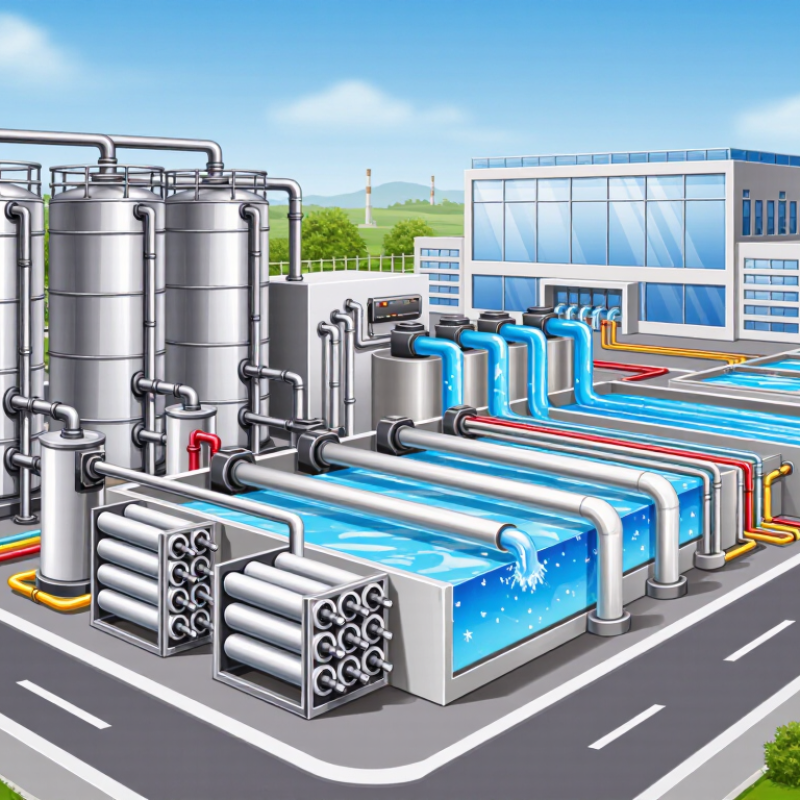
How Water Recycling Companies Are Evaluated for Global Buyers
Global buyers should evaluate water recycling companies through evidence, not polished claims. The review begins with source-water analysis, treatment objectives, and the intended reuse application. A reliable supplier explains each treatment stage in plain technical language. Membranes, biological systems, disinfection, and monitoring must work as one process. Recovery rate matters, but so do energy use, chemical demand, and concentrate management. Data matters.
Experienced buyers request pilot results from water with similar salinity, temperature, and contamination levels. Laboratory results alone may not predict full-scale performance. Ask how the system responds to flow changes, membrane fouling, and power interruptions. Operators should provide maintenance schedules, spare-part plans, training records, and measurable service targets. I would question any proposal that hides cleaning frequency or assumes perfect feedwater.
Authority comes from verifiable certifications, qualified engineers, audited performance records, and credible project references. Global buyers should also check local permits, discharge rules, worker protection requirements, and import conditions. Total cost should include installation, energy, consumables, upgrades, and disposal. A low purchase price can become expensive after one year. No supplier is perfect. Even strong systems may need redesign when climate, staffing, or water chemistry changes. Transparent companies admit these limits and explain their corrective process. That honesty often reveals more than a long list of technical features.
7 Best Water Recycling Industry Companies for Global Buyers - How Water Recycling Companies Are Evaluated for Global Buyers
Anonymized buyer-screening comparison based on commonly documented water-reuse capabilities, delivery requirements, and international procurement criteria.
| Evaluation Profile | Primary Recycling Technologies | Typical Treatment Capacity | Typical Reuse Applications | International Delivery Capability | Important Compliance Evidence | Technical Fit Score / 5 | Buyer Priority Score / 5 |
|---|---|---|---|---|---|---|---|
| Profile 01 Advanced municipal reuse specialist | Membrane bioreactor, ultrafiltration, reverse osmosis, ultraviolet or advanced oxidation | Approximately 1,000–100,000+ m³/day, depending on project scale | Industrial supply, irrigation, groundwater recharge, and indirect potable reuse | Strong for EPC projects, packaged systems, commissioning, and operator training | Independent water-quality testing, validated treatment targets, ISO 9001, and local regulatory approval | 5.0 | 5.0 |
| Profile 02 Industrial wastewater recovery specialist | Equalization, dissolved air flotation, biological treatment, ultrafiltration, and reverse osmosis | Approximately 100–20,000 m³/day | Process water, cooling towers, boiler feed, wash water, and zero-liquid-discharge pretreatment | Suitable for modular exports, factory acceptance testing, and site installation support | Mass-balance calculations, chemical-resistance data, pilot-test results, ISO 9001, and safety documentation | 4.8 | 4.8 |
| Profile 03 Containerized and decentralized systems provider | Moving-bed biofilm reactor, membrane filtration, disinfection, and remote monitoring | Approximately 20–2,000 m³/day per modular unit | Hotels, construction camps, remote facilities, commercial buildings, and small communities | High suitability for containerized shipping and rapid deployment in locations with limited infrastructure | Factory testing, electrical certificates, operating manuals, spare-parts lists, and local discharge permits | 4.6 | 4.7 |
| Profile 04 High-purity water recycling specialist | Ultrafiltration, reverse osmosis, electrodeionization, ultraviolet treatment, and polishing systems | Approximately 10–5,000 m³/day | Electronics, pharmaceutical production, laboratories, food processing, and precision manufacturing | Strong documentation and factory integration capability for quality-sensitive export projects | Conductivity and total-organic-carbon monitoring, validated cleaning procedures, material certificates, and GMP-aligned documentation where applicable | 4.7 | 4.5 |
| Profile 05 Energy-efficient membrane systems provider | Low-pressure ultrafiltration, reverse osmosis, energy recovery, and digital process optimization | Approximately 500–50,000 m³/day | Cooling-water makeup, industrial process water, desalination pretreatment, and water-stressed facilities | Well suited to lifecycle-cost projects requiring energy studies and performance guarantees | Guaranteed flux and recovery data, energy-consumption testing, membrane compatibility records, and ISO 14001 or equivalent environmental systems | 4.5 | 4.4 |
| Profile 06 Resource-recovery and brine-management specialist | Reverse osmosis, evaporators, crystallizers, brine concentration, and beneficial-reuse processes | Approximately 50–10,000 m³/day | Mining, chemicals, power generation, inland desalination, and industrial sites with discharge restrictions | Appropriate for technically complex projects requiring process modeling and long-term operating support | Salt and concentrate characterization, corrosion analysis, waste-classification records, environmental permits, and verified recovery calculations | 4.3 | 4.2 |
| Profile 07 Operation, maintenance, and retrofit specialist | Aerobic treatment upgrades, tertiary filtration, ultraviolet disinfection, chemical optimization, and SCADA integration | Approximately 100–30,000 m³/day for retrofit or operation-support projects | Existing municipal plants, industrial facilities, cooling systems, irrigation networks, and water-loss reduction programs | Best suited to sites requiring local service partners, remote diagnostics, operator training, and spare-parts planning | Baseline testing, preventive-maintenance schedules, response-time commitments, training records, service-level agreements, and documented performance history | 4.2 | 4.3 |